Best Lighting for Shrimp Tanks (2026 Guide)
Last updated: February 2026 | 10 min read
Lighting might be the most overlooked part of setting up a shrimp tank. Most beginners grab whatever cheap LED strip comes with their tank kit and call it done. That can work for a shrimp-only setup with no plants, but if you want healthy plant growth, bright shrimp colors, and a tank that actually looks good, your light choice matters more than you think.
The tricky part is that shrimp don't need much light themselves. They actually prefer dimmer environments and will hide when lighting is too intense. But the plants that make your shrimp tank thrive - the moss, the java fern, the carpeting plants - those need adequate light to grow. So you're really balancing two needs at once.
This guide covers everything you need to know about choosing, setting up, and dialing in the right light for your shrimp tank.
Do Shrimp Even Need Light?
Short answer: not really. Shrimp don't photosynthesize. They don't need light to eat, breed, or survive. In the wild, many freshwater shrimp species live in shaded streams under dense vegetation.
But here's the thing: you need light for everything else in the tank.
What light does for your shrimp tank:
- •Grows the plants that provide hiding spots, biofilm surfaces, and grazing areas
- •Supports algae growth (in controlled amounts) that shrimp feed on
- •Establishes a day/night cycle that reduces stress
- •Makes your shrimp visible so you can actually enjoy them
- •Enhances shrimp coloration under the right spectrum
Without any light, you'll get leggy, dying plants, no algae for grazing, and shrimp that are stressed from inconsistent light exposure whenever you flip the room lights on and off.
Light Intensity: The Biggest Mistake Beginners Make
The number one lighting mistake in shrimp tanks is going too bright. High-intensity lights designed for high-tech planted tanks will cause two problems in a typical shrimp setup:
- •Algae explosions - Too much light without matching CO2 and fertilizers creates the perfect conditions for hair algae, green water, and black beard algae
- •Stressed shrimp - Your shrimp will spend all day hiding instead of grazing and breeding
As one Reddit user in r/shrimptank put it when asking about lighting: the fancy sunrise/sunset cycles aren't necessary. A simple on/off schedule works fine for most shrimp tanks.
◆Light Level Guidelines
| Plant Type | Light Level | PAR Range | Good For |
|---|---|---|---|
| Low-light plants (java moss, anubias, java fern) | Low | 15-30 PAR | Most shrimp tanks |
| Medium plants (crypts, dwarf sag, stem plants) | Medium | 30-50 PAR | Planted shrimp tanks |
| Carpeting plants (monte carlo, dwarf baby tears) | High | 50-80+ PAR | Advanced setups with CO2 |
For a standard 5-10 gallon shrimp tank with low to medium light plants, you want a light in the 15-40 PAR range at substrate level. That's enough to grow java moss, anubias, crypts, and most beginner-friendly plants without turning your tank into an algae farm.
Types of Aquarium Lights
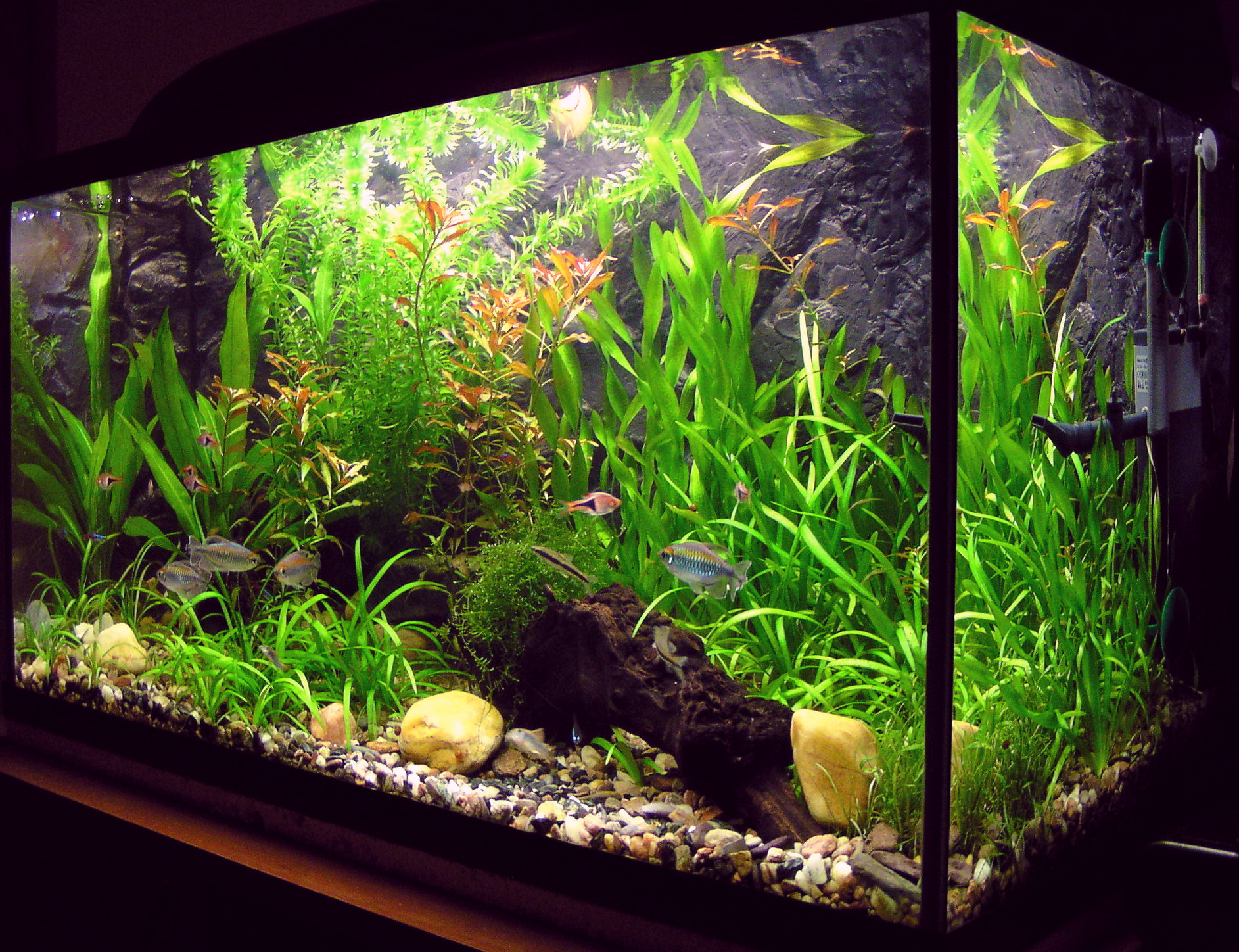
◆LED Lights (Best for Shrimp Tanks)
LEDs are the standard now, and for good reason. They run cool, use minimal electricity, last for years, and come in a huge range of options from budget to premium.
Pros:
- •Low heat output (won't warm your water)
- •Energy efficient
- •Long lifespan (50,000+ hours on most units)
- •Many options have dimmable and programmable features
- •Available in every price range
Cons:
- •Cheap LEDs may have poor spectrum for plant growth
- •Some budget lights have uneven light spread
◆Fluorescent (T5/T8)
Older technology that still works but is being phased out. T5 high output tubes can grow plants well, but they run hotter, use more power, and bulbs need replacing every 6-12 months as the spectrum degrades.
Unless you already own a fluorescent fixture, go with LED. There's no reason to buy fluorescent for a new shrimp tank in 2026.
◆Clip-On and Desktop Lights
For nano tanks (5 gallons and under), small clip-on LED lights are popular and practical. They're cheap, easy to position, and provide enough light for a small planted shrimp tank.
What to Look for in a Shrimp Tank Light
◆1. Color Temperature (Kelvin)
For planted shrimp tanks, look for lights in the 6500K-7000K range. This is close to natural daylight and provides the full spectrum that plants need for photosynthesis.
- •Below 5000K: Warm/yellowish tones. Not ideal for plant growth.
- •6000K-7000K: Natural daylight. Best for plant growth and natural-looking shrimp colors.
- •Above 8000K: Cool/bluish tones. Can make shrimp look washed out.
Some lights include RGB LEDs that let you adjust color temperature. This is nice for aesthetics but not necessary. A standard 6500K white LED will grow plants just fine.
◆2. Adjustable Brightness
This is the single most important feature for a shrimp tank light. You want the ability to dim the light so you can find the sweet spot between healthy plant growth and manageable algae.
Start at about 50-60% intensity and adjust from there. If you see algae building up faster than your shrimp and snails can eat it, dim the light. If plants are growing slowly or getting leggy, turn it up slightly.
◆3. Timer Compatibility
Shrimp benefit from a consistent photoperiod. A light with a built-in timer, or one that you can plug into a simple outlet timer, is important.
Recommended photoperiod for shrimp tanks: 6-8 hours per day.
That's shorter than what most people expect. Beginners often run lights for 10-12 hours and then wonder why they're fighting constant algae problems. For a low-tech shrimp tank without CO2 injection, 6-8 hours is the sweet spot.
◆4. Size and Fit
Make sure the light actually fits your tank. Measure the tank rim or the area where you plan to mount it. Common sizing:
- •5 gallon: 8-12 inch light or clip-on
- •10 gallon: 18-20 inch light
- •20 gallon long: 24-30 inch light
Best Lights for Shrimp Tanks: Our Picks
◆Budget: NICREW Classic LED
The NICREW Classic LED is the most recommended budget aquarium light on r/shrimptank, and for good reason. It's cheap, reliable, and grows low to medium light plants without issues.
Key specs:
- •White + blue LEDs
- •Extendable brackets fit various tank sizes
- •Two switches for white and blue channels
- •6500K color temperature
Best for: Beginners, budget setups, tanks with low-light plants like java moss and anubias.
Limitations: No dimming. The blue-only mode isn't useful for plant growth. Not strong enough for demanding carpet plants.
◆Mid-Range: Finnex Planted+ 24/7
The Finnex Planted+ line is popular among planted tank hobbyists who want more control. The 24/7 feature simulates a natural day cycle with gradual sunrise and sunset, though as mentioned, this isn't necessary for shrimp.
Key specs:
- •Full spectrum LEDs (red, blue, green, white)
- •Built-in 24/7 automated lighting cycle
- •Manual mode with adjustable intensity
- •Good PAR output for medium-light plants
Best for: Planted shrimp tanks with medium-light plants, anyone who wants better color rendition.
◆Premium: Chihiros WRGB II
If you're running a high-tech planted shrimp tank with CO2, the Chihiros WRGB series is hard to beat. Full RGB spectrum control through a phone app, excellent PAR values, and a slim design.
Key specs:
- •WRGB LED chips with app control
- •Bluetooth connectivity for scheduling
- •Adjustable spectrum and intensity
- •High PAR output for demanding plants
- •Slim, modern design
Best for: Advanced planted tanks, aquascaping, high-tech setups with CO2 injection.
◆Best Nano/Clip-On: Aqueon Clip-On LED
For small 3-5 gallon shrimp tanks, a simple clip-on light does the job. The Aqueon clip-on is affordable and fits most rimless nano tanks.
Best for: Nano tanks, desktop shrimp setups, minimal planted bowls.
Setting Up Your Lighting Schedule
Here's a practical lighting schedule that works for most shrimp tanks:
◆Low-Tech Shrimp Tank (No CO2)
- •Light on: 6-7 hours per day
- •Intensity: 40-60% if dimmable
- •Timing example: 2 PM to 9 PM (so you enjoy the tank during evening hours)
◆Planted Shrimp Tank (Low to Medium Light)
- •Light on: 7-8 hours per day
- •Intensity: 50-70% if dimmable
- •Timing example: 1 PM to 9 PM
◆High-Tech Planted Tank (CO2 Injected)
- •Light on: 8-10 hours per day
- •Intensity: 70-100%
- •CO2 on: 1 hour before lights, off 1 hour before lights off
- •Timing example: 12 PM to 9 PM
◆The Siesta Method
Some shrimp keepers use a split photoperiod: 4 hours on, 2 hours off, 4 hours on. The theory is that the midday break disrupts algae growth patterns while plants can store enough energy to power through the dark period.
Does it work? Results are mixed. It can help with algae in some tanks, but a properly balanced tank with the right light intensity shouldn't need it. Try it if you're fighting algae, but it's not necessary as a default strategy.
Common Lighting Problems in Shrimp Tanks
◆Problem: Algae Explosion After Adding a New Light
Cause: The new light is too strong for your tank's current balance of nutrients and CO2.
Fix:
- •Reduce the photoperiod to 5-6 hours
- •Dim the light to 30-40% if possible
- •Add fast-growing floating plants (red root floaters, duckweed, frogbit) to absorb excess light and nutrients
- •Gradually increase light over 2-3 weeks as plants adjust
◆Problem: Shrimp Hiding All Day
Cause: Light is too bright, or there aren't enough shaded areas.
Fix:
- •Add floating plants to create dappled shade
- •Dim the light intensity
- •Make sure there are plenty of hiding spots (moss clumps, driftwood, cholla wood)
- •Shrimp are naturally more active at dawn and dusk - this is normal behavior
◆Problem: Plants Growing Tall and Leggy
Cause: Not enough light. Plants are stretching toward the light source.
Fix:
- •Increase light intensity gradually
- •Make sure the light is positioned directly above the tank (not at an angle)
- •Consider upgrading to a stronger light if you've maxed out your current one
- •Some plants (like vallisneria) naturally grow tall regardless of light
◆Problem: Shrimp Colors Look Washed Out
Cause: Wrong color spectrum or too much blue light.
Fix:
- •Switch to a 6500K daylight spectrum
- •Reduce blue light if your fixture has separate channels
- •Dark substrate reflects less light and makes shrimp colors pop more
- •Note that shrimp genetics play a bigger role than lighting in coloration
Does Moonlight/Night Mode Help Shrimp?
Many LED lights include a blue "moonlight" mode. It looks cool, but does it help your shrimp?
Not really. Shrimp don't need any light at night. In fact, they're most active in darkness. If you want to watch your shrimp at night, a dim moonlight won't hurt them, but it's purely for your benefit.
The one argument for moonlight mode: it can provide a gradual transition between light and dark, which some keepers believe reduces stress. But most shrimp adapt just fine to lights suddenly turning on and off.
Quick Lighting Tips for Shrimp Keepers
- •Start dim, adjust up. It's much easier to increase light than to fight algae from too much light.
- •Use a timer. Consistency matters more than the exact number of hours.
- •Floating plants are your friend. They diffuse light naturally and give shrimp a sense of security.
- •Don't leave the room lights on as "tank light." Inconsistent ambient light stresses shrimp and messes with plant growth cycles.
- •Clean your light. Mineral deposits and water splash on the lens reduce output over time. Wipe it down monthly.
- •Replace or check LEDs after 3-4 years. Even LEDs lose intensity over time, though they last much longer than fluorescents.
Frequently Asked Questions
Can I use a desk lamp for my shrimp tank? In a pinch, yes. A 6500K LED desk lamp can grow low-light plants. But you'll get better coverage and more consistent results from an actual aquarium light, even a cheap one.
Do shrimp like colored lights? Shrimp don't have a strong preference. Colored LED modes (red, blue, green) are for your viewing enjoyment. For plant growth, stick with white/daylight spectrum during the main photoperiod.
Will too much light kill my shrimp? Light alone won't kill shrimp directly. But excessive light causes algae blooms that crash water quality, and bright lights stress shrimp into hiding, which can reduce feeding and breeding.
Should I turn off the light when I'm away on vacation? Use a timer and leave your normal schedule running. Plants and the tank ecosystem need consistent light even when you're not watching.
Bottom Line
For most shrimp keepers, a budget LED like the NICREW Classic on a 6-7 hour timer is all you need. If you want to grow more demanding plants, step up to something like the Finnex Planted+ and pair it with proper fertilization.
The golden rule: your shrimp will tell you if the light is wrong. If they're hiding all day, it's too bright. If algae is taking over, it's too much light or too long a photoperiod. If plants are dying, it's not enough. Watch your tank, make small adjustments, and you'll find the right balance.
This article contains affiliate links. If you purchase through these links, we earn a small commission at no extra cost to you. This helps support ShrimpTank101 and allows us to keep creating free guides for shrimp keepers.
Found this helpful?
Check out our other shrimp care guides