Shrimp Water Parameters: The Complete Guide
📅 Updated February 2026 | 12 min read
Water parameters make or break a shrimp tank. Get them right, and your shrimp will breed like crazy. Get them wrong, and you'll be fishing out bodies.
This guide covers everything you need to know about shrimp water parameters, including the ideal ranges for different species, how to test, and what to do when things go sideways.
Why Parameters Matter So Much for Shrimp
Shrimp are invertebrates with thin exoskeletons. Unlike fish with scales and mucus coatings, shrimp absorb everything directly from the water. This makes them sensitive to:
- •Ammonia and nitrite (toxic even in tiny amounts)
- •pH swings (even 0.5 in a day can stress them)
- •Temperature fluctuations
- •Mineral content (needed for molting)
""Fish can tough out bad parameters for a while. Shrimp just die." - common wisdom from r/shrimptank
The Essential Parameters
◆Ammonia (NH3/NH4+)
Ideal: 0 ppm. Always.
Ammonia is produced by shrimp waste, decaying food, and dead plant matter. Any detectable ammonia means something is wrong.
- •0.25 ppm - Stress begins
- •0.5 ppm - Lethargy, hiding
- •1.0+ ppm - Deaths within hours
If you detect ammonia:
- •Do an immediate 25-50% water change
- •Check for dead shrimp or rotting food
- •Test your filter (is it running?)
- •Reduce feeding
◆Nitrite (NO2-)
Ideal: 0 ppm. Always.
Nitrite is the second stage of the nitrogen cycle. Like ammonia, it should never be detectable in a cycled tank.
Nitrite interferes with shrimp blood's ability to carry oxygen. They essentially suffocate even in well-oxygenated water.
◆Nitrate (NO3-)
Ideal: Under 20 ppm
Nitrate is the end product of the nitrogen cycle. It's far less toxic than ammonia or nitrite, but high levels still cause problems:
- •Under 20 ppm - Ideal
- •20-40 ppm - Acceptable
- •40+ ppm - Do water changes
- •80+ ppm - Emergency
Keep nitrates low with:
- •Regular water changes (10-20% weekly)
- •Live plants (they consume nitrate)
- •Not overfeeding
- •Not overstocking
pH: Stability Over Perfection
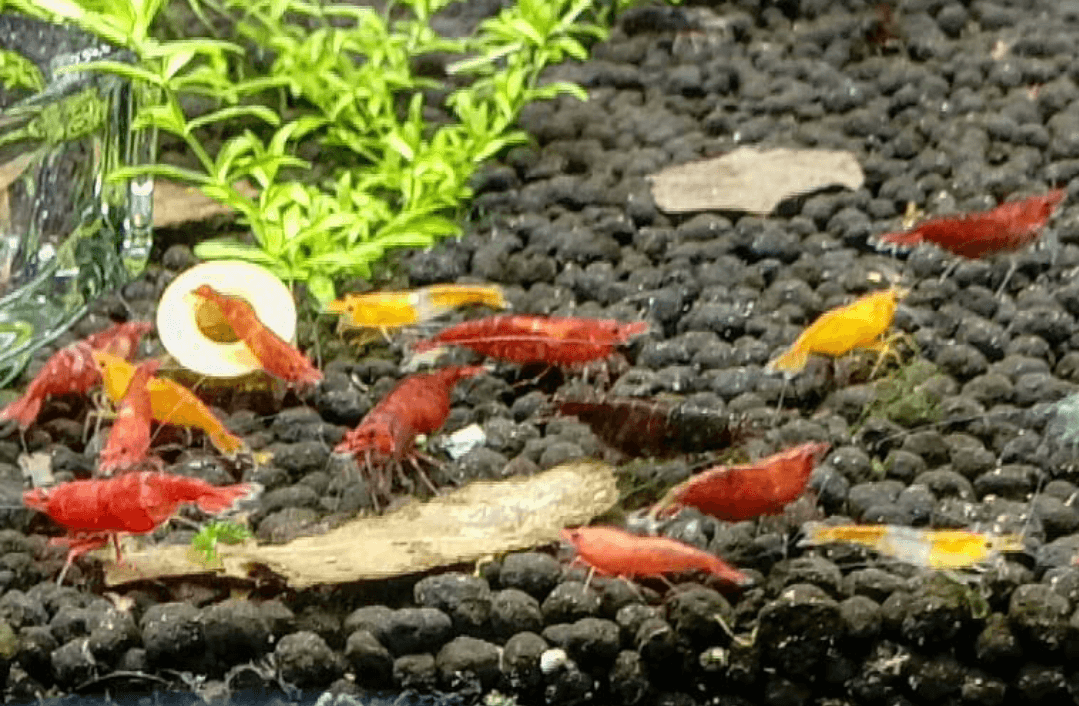
Neocaridina (Cherry Shrimp): 6.5-8.0 Caridina (Bee Shrimp): 5.5-6.5
Here's the truth about pH: stability matters more than hitting a perfect number.
A tank with steady pH of 7.8 is better for shrimp than one that swings between 7.0 and 7.4 daily.
""My cherries breed like rabbits at pH 8.0. Your local parameters don't matter as much as keeping them stable." - r/shrimptank community experience
◆What Causes pH Swings?
- •CO2 injection (pH drops during the day)
- •Driftwood (slowly lowers pH)
- •Crushed coral or limestone (raises pH)
- •Overstocked tanks (waste acids lower pH)
- •Infrequent water changes
◆Testing pH
Test at the same time each day. pH naturally fluctuates slightly between morning and evening due to plant respiration and CO2 levels.
GH (General Hardness)
Neocaridina: 6-12 dGH Caridina: 4-6 dGH
GH measures dissolved calcium and magnesium, minerals shrimp need for healthy shells and successful molts.
◆Low GH Problems
- •Failed molts (shrimp can't form new shells)
- •Soft, weak shells
- •Death during molting
- •Poor breeding
◆High GH Problems
- •Less common in shrimp
- •Can cause molting difficulties if extreme
- •Usually not a concern under 15 dGH
◆Raising GH
If your water is too soft:
- •Salty Shrimp GH+ - For Caridina
- •Salty Shrimp GH/KH+ - For Neocaridina
- •Crushed coral in filter (slow release)
- •Wonder shells
- •Cuttlebone
KH (Carbonate Hardness)
Neocaridina: 2-8 dKH Caridina: 0-2 dKH
KH acts as a pH buffer. It prevents rapid pH swings by neutralizing acids.
◆Why KH Matters
- •Low KH = pH can crash suddenly
- •Higher KH = More stable pH
- •Caridina prefer low KH (they come from soft, acidic waters)
- •Neocaridina are flexible
""My shrimp tank KH dropped to zero and pH crashed to 5.5 overnight. Lost half my colony." - cautionary tale from r/shrimptank
◆The Caridina Exception
Bee shrimp, Crystal Red Shrimp, and Taiwan Bees actually prefer very low KH and acidic conditions. For them:
- •Use RO/DI water
- •Remineralize with GH-only products
- •Active buffering substrate (maintains low pH)
TDS (Total Dissolved Solids)
Neocaridina: 150-300 TDS Caridina: 100-200 TDS
TDS measures everything dissolved in your water, including minerals, salts, and organic compounds.
◆TDS as a Quick Check
TDS meters are cheap and give instant readings. Use TDS to:
- •Match water change water to tank water
- •Check if RO water is remineralized correctly
- •Spot contamination (sudden TDS spike)
Note: TDS doesn't tell you what's dissolved, just how much. Low TDS could mean clean water or could mean missing minerals. Always pair TDS with GH/KH testing.
◆TDS Creep
Over time, TDS rises as water evaporates and minerals concentrate. Regular water changes prevent this.
Temperature
Neocaridina: 65-78°F (18-26°C) Caridina: 68-74°F (20-23°C)
Shrimp are cold-blooded. Temperature affects:
- •Metabolism (warmer = faster)
- •Breeding (warmer = more active)
- •Lifespan (warmer = shorter lives)
- •Molting frequency
◆The Breeding-Longevity Tradeoff
Warmer water (76-78°F):
- •More breeding
- •Faster growth
- •Shorter lifespan (1-1.5 years)
Cooler water (68-72°F):
- •Slower breeding
- •Slower growth
- •Longer lifespan (2+ years)
Most keepers aim for 72-76°F as a balance.
◆Temperature Stability
Avoid rapid temperature changes. Shrimp can handle gradual seasonal changes but struggle with:
- •Heater malfunctions
- •AC blasting on tank
- •Direct sunlight
- •Large, cold water changes
Always match water change water temperature to tank temperature.
Species-Specific Parameters
◆Neocaridina (Cherry Shrimp, Blue Dreams, etc.)
| Parameter | Ideal Range |
|---|---|
| Temperature | 68-78°F |
| pH | 6.5-8.0 |
| GH | 6-12 dGH |
| KH | 2-8 dKH |
| TDS | 150-300 |
| Ammonia | 0 ppm |
| Nitrite | 0 ppm |
| Nitrate | <20 ppm |
Neocaridina are the "beginner shrimp" for a reason. They tolerate a wide range of parameters and adapt to most tap water.
◆Caridina (Crystal Red, Bee Shrimp, Taiwan Bees)
| Parameter | Ideal Range |
|---|---|
| Temperature | 68-74°F |
| pH | 5.5-6.5 |
| GH | 4-6 dGH |
| KH | 0-2 dKH |
| TDS | 100-200 |
| Ammonia | 0 ppm |
| Nitrite | 0 ppm |
| Nitrate | <10 ppm |
Caridina require more care. Most keepers use:
- •RO/DI water
- •Active buffering substrate (ADA Amazonia, Fluval Stratum)
- •GH-only remineralizers
◆Sulawesi Shrimp
| Parameter | Ideal Range |
|---|---|
| Temperature | 78-84°F |
| pH | 7.5-8.5 |
| GH | 4-8 dGH |
| KH | 2-6 dKH |
| TDS | 150-250 |
Sulawesi are the experts-only shrimp. They come from hot, alkaline Indonesian lakes and need specific conditions.
Testing Equipment
◆Must-Have
API Freshwater Master Test Kit - Tests ammonia, nitrite, nitrate, pH. Essential for any shrimp keeper.
API GH & KH Test Kit - Tests mineral content. Critical for molting health.
◆Nice to Have
TDS Meter - Instant readings, great for matching water during changes.
Digital Thermometer - More accurate than stick-on strips.
◆Testing Schedule
| Test | Frequency |
|---|---|
| Ammonia | Weekly (daily if issues) |
| Nitrite | Weekly |
| Nitrate | Weekly |
| pH | Weekly |
| GH | Monthly |
| KH | Monthly |
| TDS | At water changes |
| Temperature | Daily (visual check) |
When Parameters Go Wrong
◆Ammonia/Nitrite Spike
Immediate action:
- •25-50% water change with matched parameters
- •Add Seachem Prime (detoxifies for 24-48 hours)
- •Remove any dead shrimp or rotting food
- •Reduce or stop feeding
- •Check filter function
◆pH Crash
Signs: Lethargic shrimp, deaths, pH below 6.0
Action:
- •Small water change (10-15%) with slightly higher pH water
- •Don't overcorrect - slow adjustment is safer
- •Add KH buffer gradually
- •Check for causes (dead shrimp, overstocking)
◆Failed Molts
Signs: Shrimp stuck in old shell, white ring of death
Causes: Usually low GH
Action:
- •Test GH immediately
- •Add GH+ or mineral supplements
- •Consider cuttlebone or wonder shell
- •Check for copper contamination
Using RO Water
Reverse osmosis (RO) or deionized (DI) water strips out everything, giving you a blank slate.
◆Why Use RO?
- •Removes chlorine, chloramine, heavy metals
- •Eliminates unpredictable tap water
- •Lets you control exact parameters
- •Essential for Caridina
◆Remineralizing RO Water
Pure RO water will kill shrimp (no minerals). You must add minerals back:
For Neocaridina:
- •Salty Shrimp GH/KH+ - Add to target 6-8 GH, 2-4 KH
For Caridina:
- •Salty Shrimp Bee Shrimp GH+ - Add to target 4-6 GH, 0 KH
Always mix remineralizer in a separate container and test before adding to tank.
Common Parameter Myths
◆"You Need Exactly X pH"
False. Shrimp adapt to stable conditions. Chasing a "perfect" number causes more swings than stable "imperfect" parameters.
◆"High Nitrate Is Fine for Shrimp"
Partially false. While shrimp tolerate higher nitrate than ammonia/nitrite, chronic high nitrate (40+ ppm) stresses them and reduces breeding.
◆"Tap Water Is Always Bad"
False. Many keepers successfully use tap water for Neocaridina. Test your tap water - it might be perfect already.
◆"TDS Tells You Everything"
False. TDS measures quantity, not quality. 200 TDS from minerals is good; 200 TDS from contaminants is deadly.
Quick Reference Card
Print this and stick it near your tank:
Neocaridina Safe Ranges:
- •Temp: 68-78°F
- •pH: 6.5-8.0
- •GH: 6-12
- •KH: 2-8
- •TDS: 150-300
- •NH3/NO2: 0
- •NO3: <20
Emergency Actions:
- •Ammonia detected → 25-50% water change + Prime
- •pH crash → Small water change, add KH slowly
- •Failed molt → Test GH, add minerals
Final Thoughts
Parameters can seem overwhelming at first, but they become second nature. Test regularly, keep a log, and your shrimp will show you if they're happy through their behavior and breeding.
Stable parameters beat perfect parameters every time. Don't chase numbers - chase consistency.
Related Articles
Frequently Asked Questions
◆What is TDS and why does it matter for shrimp?
TDS (Total Dissolved Solids) measures everything dissolved in your water. For Neocaridina, aim for 150-250 TDS. For Caridina, 100-150 TDS. It's a quick way to check if your water chemistry is in the right ballpark between test kit readings.
◆What is the best pH for cherry shrimp?
Cherry shrimp (Neocaridina) thrive at pH 6.5-8.0, with 7.0-7.5 being the sweet spot. They're adaptable to a range of pH levels. What matters most is stability. Avoid chasing a specific pH number and focus on keeping it consistent.
◆How do I lower GH in my shrimp tank?
Mix your tap water with RO or distilled water to lower GH. You can also use Indian almond leaves or peat moss to slightly reduce hardness. Never use chemical pH/GH adjusters as they cause dangerous swings.
◆Do I need a TDS meter for shrimp?
A TDS meter is a useful tool but not strictly required for Neocaridina shrimp. It's more important for Caridina keepers using RO water. A basic GH/KH test kit gives you more specific information about water hardness than TDS alone.
Found this helpful?
Check out our other shrimp care guides