Best Substrate for Shrimp Tanks (2026)
Last updated: February 2026 | 12 min read
Picking the right substrate for your shrimp tank is more than just an aesthetic choice. The substrate you choose directly affects water parameters, plant growth, and whether your shrimp thrive or struggle. Get this decision wrong, and you might be fighting pH swings and mysterious deaths for months.
This guide breaks down every substrate option, explains the critical difference between active and inert substrates, and helps you pick the right one for your specific shrimp species.
Quick Picks: Best Shrimp Substrates at a Glance
| Substrate | Type | Best For | Price Range |
|---|---|---|---|
| Fluval Plant & Shrimp Stratum | Active | Caridina (CRS, Taiwan Bee) | $$ |
| SL-Aqua Nature Soil | Active | Premium Caridina breeding | $$$ |
| CaribSea Eco-Complete | Inert | Neocaridina + Plants | $$ |
| Black Diamond Blasting Sand | Inert | Budget Neocaridina | $ |
| Pool Filter Sand | Inert | Ultra budget | $ |
Active vs. Inert Substrates: The Critical Difference
Before we talk about specific products, you need to understand the single most important concept in shrimp substrate selection: active vs. inert substrates.
◆Active Substrates (Aquasoils)
Active substrates are made from baked volcanic soil or clay that chemically interacts with your water. They:
- •Lower pH to acidic levels (6.0-6.8)
- •Soften water by reducing KH (carbonate hardness)
- •Buffer parameters to maintain stable levels
- •Release nutrients for plant growth
- •Have a lifespan of 1-3 years before buffering capacity depletes
Best for: Caridina shrimp (Crystal Red, Crystal Black, Taiwan Bee, Tiger shrimp) that require soft, acidic water.
◆Inert Substrates
Inert substrates don't change your water chemistry at all. Sand, gravel, and certain plant substrates like Eco-Complete fall into this category. They:
- •Don't alter pH or hardness - your tap water stays as-is
- •Last forever - no buffering capacity to deplete
- •Are beginner-friendly - one less variable to manage
- •Support plants when combined with root tabs
Best for: Neocaridina shrimp (Cherry, Blue Velvet, Orange, etc.) that prefer neutral to slightly alkaline water with moderate hardness.
◆Why This Matters So Much
Using the wrong substrate type is one of the most common mistakes new shrimp keepers make. The r/shrimptank community consistently emphasizes this:
""Active substrates, period, are not the best substrate for Neocaridina, as these shrimp prefer alkaline water." - u/afbr242 on r/shrimptank
If you put Neocaridina in a tank with active soil designed for Caridina, you'll constantly fight against the substrate trying to lower your pH into a range your shrimp don't thrive in.
Bottom line:
- •Keeping Cherry shrimp, Blue Velvet, or other Neocaridina? Go inert.
- •Keeping Crystal Red, Crystal Black, or Taiwan Bee? Go active.
- •Not sure? Start with Neocaridina and inert substrate. They're far more forgiving.
Best Active Substrates for Caridina Shrimp
If you're keeping Caridina species that need soft, acidic water (pH 5.8-6.8, GH 4-6, KH 0-2), these are your best options.
◆1. Fluval Plant & Shrimp Stratum - Best Overall
Fluval Stratum has become the go-to active substrate for shrimp keepers who want reliable buffering without breaking the bank.
The Good:
- •Maintains pH between 6.0-6.8
- •Light and porous - great for beneficial bacteria
- •Reasonably priced compared to premium brands
- •Doesn't require rinsing before use
- •Excellent for plant growth
The Not-So-Good:
- •Lightweight granules can float when disturbed
- •Breaks down faster than some competitors (1-2 years)
- •Not ideal for burrowing fish or heavy root feeders
What the Community Says:
""Fluval Stratum will work. Some people have commented that it's 'light' so it doesn't hold down plants that well. I can see that happening but it's never been a big issue from experience." - u/Elhazar on r/shrimptank
Some keepers solve the lightweight issue by capping Stratum with a thin layer of sand or darker gravel:
""These days I still prefer stratum over other substrates because it's so good for plants - better than Eco-Complete or Seachem Fluorite. I just like to put some other substrate like Eco-Complete or sand on top of my stratum to make sure it stays in place." - u/MoistAsscheeks on r/shrimptank
Best For: Beginner Caridina keepers who want reliable results without premium prices.
◆2. ADA Amazonia - Premium Performance
ADA (Aqua Design Amano) Amazonia is the gold standard that professional planted tank enthusiasts and serious shrimp breeders swear by.
The Good:
- •Exceptional plant growth - nutrient-rich from day one
- •Strong, consistent pH buffering (around 6.0-6.5)
- •Lasts longer than most competitors (2-3 years)
- •Beautiful natural appearance
- •Used by championship-level aquascapers worldwide
The Not-So-Good:
- •Expensive - roughly 2x the cost of Fluval Stratum
- •Requires extended cycling - leaches ammonia heavily for 4-8 weeks
- •Can be hard to find locally
The Ammonia Issue:
New ADA Amazonia releases significant ammonia during the first month or two. This is actually beneficial if you're patient: it jumpstarts your nitrogen cycle and grows massive bacterial colonies. But it means you cannot add shrimp until the tank is fully cycled.
For keepers who want the benefits without the wait, ADA offers Amazonia Light, which doesn't leach ammonia but has slightly less plant-boosting power.
Best For: Experienced keepers setting up a high-tech planted Caridina tank who can wait for proper cycling.
◆3. SL-Aqua Nature Soil - Breeder's Choice
SL-Aqua Nature Soil comes from Taiwan, where the most dedicated shrimp breeders in the world operate. This substrate is specifically formulated for Caridina breeding.
The Good:
- •Developed specifically for Taiwan Bee and Crystal shrimp
- •Excellent buffering capacity (pH 5.8-6.5)
- •Minimal ammonia release compared to ADA Amazonia
- •Contains trace minerals beneficial for shrimp molting
- •Brown and black color options
The Not-So-Good:
- •Premium pricing
- •Can be harder to source than mainstream brands
- •Less plant growth compared to ADA (optimized for shrimp, not plants)
Best For: Serious Caridina breeders who prioritize shrimp health over plant growth.
◆4. Brightwell Aquatics FlorinVolcanit - Budget Active
If you want an active substrate without the premium price, FlorinVolcanit is worth considering.
The Good:
- •Significantly cheaper than ADA or SL-Aqua
- •Effective pH buffering
- •Dense granules won't float around
- •Good color options
The Not-So-Good:
- •Less consistent batch-to-batch
- •Buffering capacity may deplete faster
- •Not as well-known in the community
Best For: Budget-conscious Caridina keepers or those setting up multiple tanks.
Best Inert Substrates for Neocaridina Shrimp
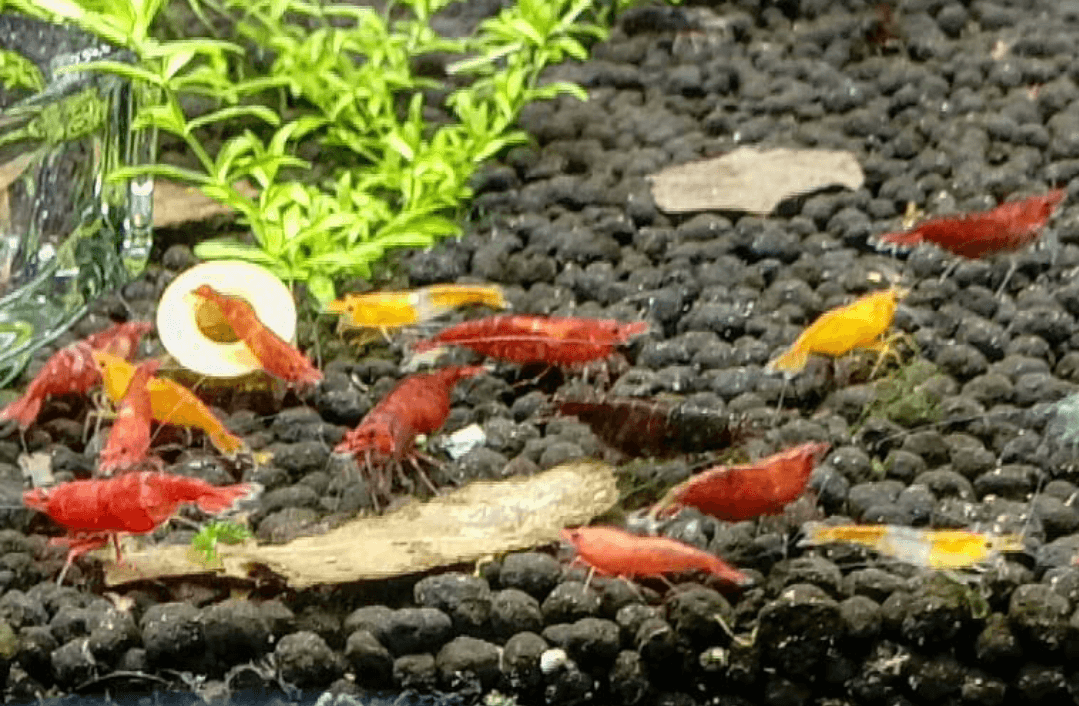
If you're keeping Neocaridina (Cherry, Blue Velvet, Orange, Yellow, etc.), you want a substrate that won't mess with your water parameters. These shrimp prefer pH 7.0-7.8, GH 6-12, and KH 2-8.
◆1. CaribSea Eco-Complete - Best for Planted Tanks
Eco-Complete is an inert substrate packed with volcanic basalt that comes pre-seeded with beneficial bacteria. It's the sweet spot between plant growth and parameter stability.
The Good:
- •Doesn't alter pH or KH
- •Contains iron and other minerals plants love
- •Pre-colonized with beneficial bacteria
- •No rinsing required
- •Dense granules stay in place
- •Dark color makes shrimp colors pop
The Not-So-Good:
- •More expensive than sand
- •Some reports of parameter fluctuation (may be batch dependent)
- •Doesn't buffer parameters - your source water matters
What the Community Says:
""For Neocaridina, Eco-Complete is the best inert substrate that won't mess with your water parameters." - u/thisisvvrandom on r/shrimptank
""Eco-Complete is heavier and will not break down. If you don't need to keep pH low, I'd go with Eco-Complete." - PlantedTank Forum
Best For: Neocaridina keepers who want a planted tank without pH management headaches.
◆2. Black Diamond Blasting Sand - Best Budget Option
Check available at Tractor Supply
This coal slag abrasive sold at Tractor Supply has become a cult favorite in the aquarium hobby. At around $10 for 50 lbs, it's insanely economical.
The Good:
- •Cheap - pennies per gallon of tank
- •Beautiful jet-black color
- •Totally inert - zero effect on parameters
- •Heavy - won't cloud or shift easily
- •Fine enough for plants to root in
The Not-So-Good:
- •Requires thorough rinsing - very dusty out of the bag
- •Only available in-store at Tractor Supply (or similar farm stores)
- •No nutrients for plants - need root tabs
- •May contain very sharp particles (rare, but rinse well)
Rinsing Tip: Put small amounts in a bucket and run water through it for 15+ minutes, stirring occasionally. The black dust seems endless but eventually clears. Do NOT skip this step or your tank will look like an oil spill.
Best For: Budget-conscious keepers setting up multiple tanks or large colonies.
◆3. Pool Filter Sand - Ultra Budget
Pool filter sand is another budget favorite that creates a clean, natural look. It's available at hardware stores and pool supply shops for about $15 per 50 lb bag.
The Good:
- •Very cheap and widely available
- •Natural appearance
- •Easy for shrimp to forage through
- •Completely inert
- •Fine grain is gentle on shrimp
The Not-So-Good:
- •Needs thorough rinsing
- •Light color shows detritus more easily
- •No nutrients - heavy root feeders need supplements
- •Can compact over time
Best For: Budget setups or keepers who like a sandy, natural look.
◆4. Seachem Fluorite Black - Plant-Focused Inert
Fluorite is a porous clay gravel that's technically inert (won't alter pH) but provides excellent plant support.
The Good:
- •Very porous - great surface area for beneficial bacteria
- •Doesn't break down over time
- •Works well for rooted plants
- •Clean, consistent appearance
The Not-So-Good:
- •Requires extensive rinsing (dusty)
- •Can be sharp - some keepers report issues with cory catfish
- •Pricier than other inert options
Best For: Planted Neocaridina tanks where you want longevity without buffering.
Substrate Depth and Layering
◆How Deep Should Substrate Be?
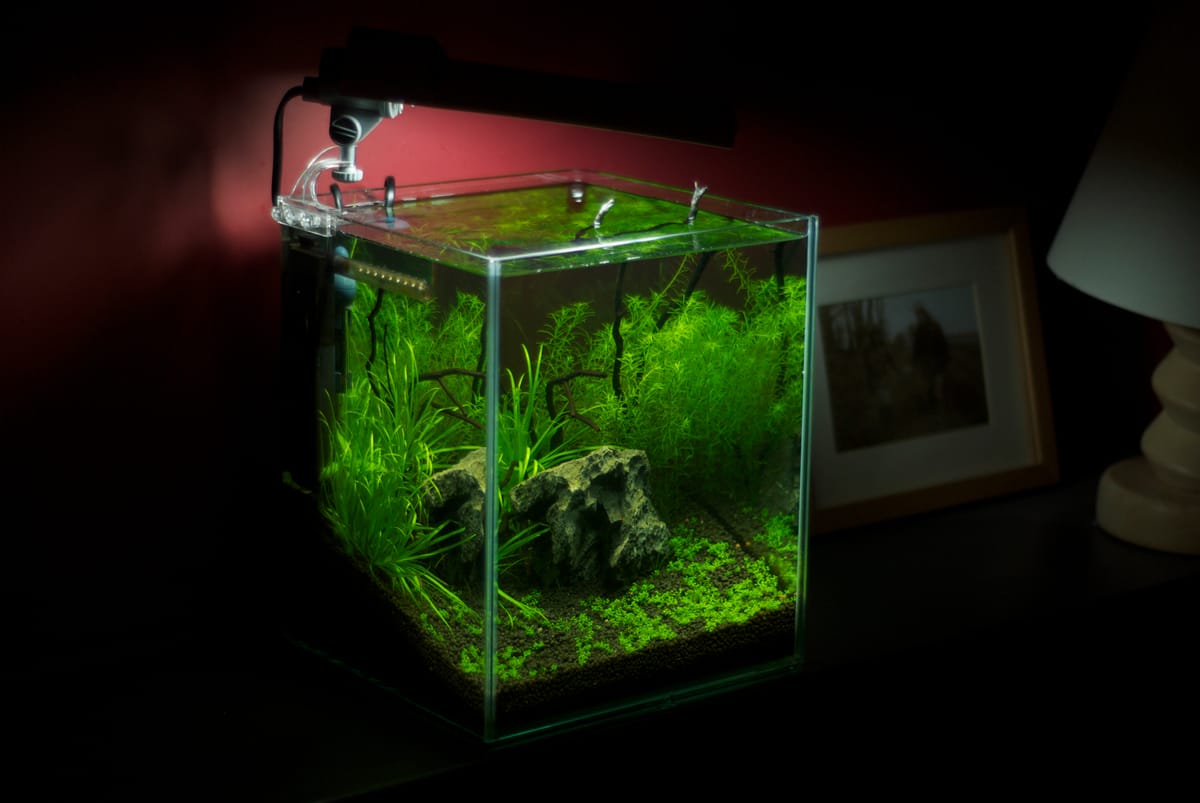
For shrimp tanks, aim for 1-2 inches (2.5-5 cm) of substrate depth. This provides:
- •Enough depth for plants to root
- •Space for beneficial bacteria colonies
- •Room for natural detritus processing
Going deeper than 2 inches in a shrimp-only tank can create anaerobic pockets where hydrogen sulfide builds up. This is less of a concern with heavy planting and Malaysian trumpet snails, but for beginners, stick to 2 inches max.
◆The Layered Approach
Some keepers use multiple substrate layers for different benefits:
Option 1: Nutrient Layer + Cap
- •Bottom: 0.5 inch nutrient-rich base (organic potting soil, ADA Power Sand)
- •Top: 1-1.5 inch cap (sand, gravel, or aquasoil)
This gives plants nutrients while preventing the messy soil from disturbing water clarity.
Option 2: Aquasoil + Sand Cap
""I just like to put some other substrate like Eco-Complete or sand on top of my stratum to make sure it stays in place." - Reddit user
A thin sand cap over lightweight aquasoil keeps things tidy and prevents floating particles.
Option 3: Keep It Simple
For most beginners, a single layer of appropriate substrate works perfectly. Don't overcomplicate things on your first tank.
Special Considerations
◆Dark Substrates Make Colors Pop
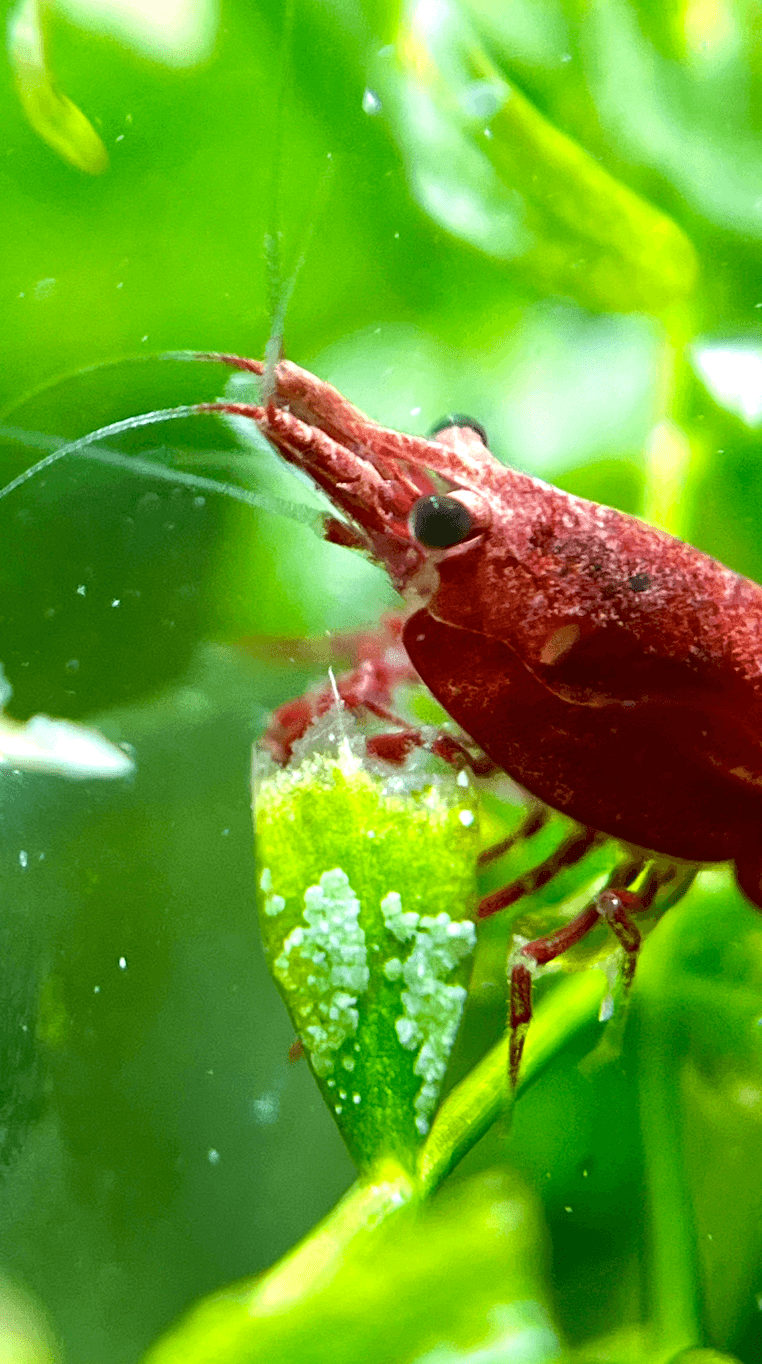
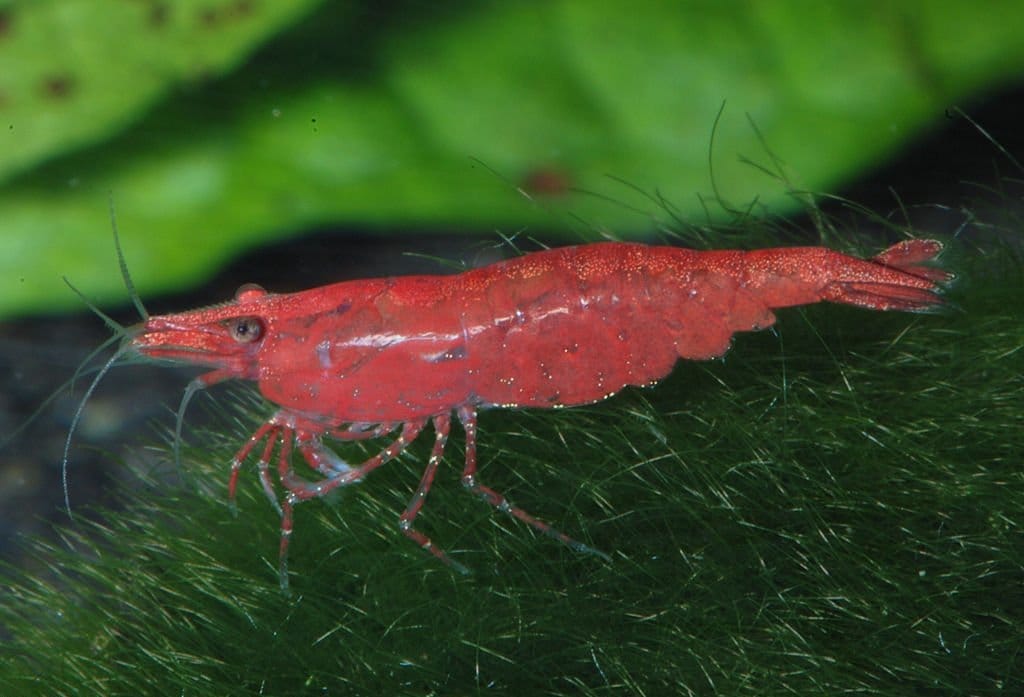
One thing most shrimp keepers agree on: dark substrates make your shrimp look better. On light sand, shrimp often appear washed out as they try to blend in. On black substrate, Cherry Reds look like tiny rubies.
""Dark substrate but avoid generic Petco black gravel which might be causing problems for a couple of us." - u/atoyot86 on r/shrimptank
If you want to show off your shrimp's colors, go dark.
◆Biofilm and Grazing
Shrimp spend most of their day grazing on biofilm. Substrates with more surface texture and porosity naturally grow more biofilm, giving your shrimp more food.
This is one reason many keepers combine their substrate with:
- •Cholla wood - porous surface covered in grazing opportunities
- •Indian almond leaves - decompose into shrimp snacks
- •Driftwood - biofilm magnet
The substrate is just one part of creating a grazing paradise.
◆What About Gravel?
Standard aquarium gravel (smooth, rounded pebbles) works fine for shrimp but has some drawbacks:
- •Large gaps trap food and waste where shrimp can't reach
- •Harder to plant in
- •Less surface area for beneficial bacteria
- •Less natural appearance
If you want the easy maintenance of gravel, look for smaller grain sizes (3-5mm) rather than large pebbles.
Matching Substrate to Your Setup
◆New Keeper + Neocaridina (Cherry, Blue Velvet)
Recommendation: CaribSea Eco-Complete or Black Diamond Blasting Sand
Why: Neocaridina are hardy and thrive in most tap water. An inert substrate keeps things simple - no buffering to deplete, no pH management needed. Focus on cycling your tank properly and maintaining stable parameters.
◆Experienced Keeper + Caridina (Crystal Red, Taiwan Bee)
Recommendation: Fluval Stratum or ADA Amazonia
Why: These shrimp need specific soft, acidic water. Active substrate does the heavy lifting by buffering pH and softening water. Just be prepared for proper cycling time, especially with ADA.
◆Heavily Planted Tank + Any Shrimp
Recommendation: Your species-appropriate substrate + root tabs if inert
Why: Match the substrate to your shrimp first, then supplement for plants. Eco-Complete or Fluorite work great for planted Neocaridina tanks. Fluval Stratum or ADA excels for planted Caridina tanks.
◆Budget Multi-Tank Setup
Recommendation: Black Diamond Blasting Sand (Neocaridina) or Brightwell FlorinVolcanit (Caridina)
Why: When you're setting up 5+ tanks, substrate costs add up fast. These options deliver results without emptying your wallet.
Avoiding Common Mistakes
◆Mistake 1: Using Active Soil for Neocaridina
Active substrates constantly try to lower pH and soften water. Neocaridina prefer neutral to slightly alkaline conditions with moderate hardness. Fighting your substrate is exhausting and often leads to stressed shrimp.
◆Mistake 2: Not Cycling Properly
No substrate, no matter how good, replaces proper cycling. Wait until ammonia and nitrite read zero before adding shrimp. This takes 4-8 weeks minimum.
◆Mistake 3: Skipping the Rinse
Many substrates (especially Black Diamond and Fluorite) need extensive rinsing. Skipping this step means cloudy water for weeks.
◆Mistake 4: Overspending on Your First Tank
Premium substrates like ADA Amazonia are fantastic, but you don't need them to succeed. Fluval Stratum or even plain sand with root tabs grows beautiful tanks. Save the expensive stuff for when you've mastered the basics.
◆Mistake 5: Mixing Incompatible Substrates
Layering active soil under inert sand doesn't give you the best of both worlds - it usually creates inconsistent buffering zones. Pick one approach and commit to it.
Final Recommendations
Best Overall for Neocaridina: CaribSea Eco-Complete - stable, plant-friendly, and doesn't mess with your water.
Best Overall for Caridina: Fluval Plant & Shrimp Stratum - reliable buffering at a reasonable price.
Best Budget: Black Diamond Blasting Sand (Neocaridina) or Fluval Stratum (Caridina) - both deliver excellent results without breaking the bank.
Best for Plants: ADA Amazonia (active) or CaribSea Eco-Complete (inert) - both grow plants beautifully while keeping shrimp happy.
Remember: the "best" substrate is the one that matches your shrimp species and your tap water. A $10 bag of sand can grow a thriving colony just as well as premium aquasoil if you get the fundamentals right.
Related Articles
- •Best Filters for Shrimp Tanks
- •Cherry Shrimp Care Guide
- •Complete Shrimp Tank Setup Guide
- •Best Shrimp Tank Kits
This article contains affiliate links. If you purchase through these links, we earn a small commission at no extra cost to you. This helps support ShrimpTank101 and allows us to keep creating helpful content for the shrimp keeping community.
Frequently Asked Questions
◆Do shrimp need special substrate?
Neocaridina shrimp (like cherry shrimp) do fine with inert substrates like sand or gravel. Caridina shrimp (like crystal reds) need active buffering substrate to lower pH and soften water. Choose based on your shrimp species.
◆Can shrimp live on bare bottom tanks?
Shrimp can survive in bare bottom tanks, but they won't thrive as well. Substrate provides surface area for beneficial bacteria, biofilm for grazing, and a more natural environment. Even a thin layer of sand helps significantly.
◆How deep should substrate be in a shrimp tank?
Aim for 1-2 inches of substrate in a shrimp tank. This provides enough depth for plants to root and bacteria to colonize without creating anaerobic dead zones. Active substrates like ADA Amazonia work best at 1.5-2 inches.
◆How long does active substrate last?
Active buffering substrates typically last 12-18 months before their buffering capacity is depleted. You'll notice pH gradually rising as the substrate wears out. At that point, you'll need to replace it or switch to remineralized RO water.
Found this helpful?
Check out our other shrimp care guides