How to Breed Cherry Shrimp: A Beginner's Guide
📅 Updated February 2026 | 10 min read
Cherry shrimp are one of the easiest freshwater creatures to breed. Put some healthy adults in a well-maintained tank and they pretty much take care of the rest. But if you want a thriving colony that grows quickly, there are specific steps you can take to encourage successful breeding.
This guide covers everything from setting up a breeding-friendly tank to caring for newborn shrimplets.
Why Cherry Shrimp Are Perfect for Beginners
Unlike Amano shrimp (which require brackish water for their larvae), cherry shrimp breed entirely in freshwater. The babies are born as tiny versions of the adults - no special larval stage, no complicated care requirements.
As one experienced keeper on Reddit's r/shrimptank put it: "They multiply fast when the tank is healthy."
That's really the core message here. Healthy tank equals breeding shrimp.
Setting Up a Breeding Tank
You don't need anything fancy, but a few specific choices will make a big difference.
◆Tank Size
A 10-gallon tank is ideal for a breeding colony. You can start with a 5-gallon, but you'll quickly run out of space as your colony grows. Larger tanks are also more stable - water parameters don't swing as dramatically.
◆Filtration: Sponge Filters Only
This is critical. Regular hang-on-back filters and canister filters will suck up baby shrimp. They're tiny when born - about 2mm - and have no defenses against strong intake currents.
Sponge filters are the standard for shrimp tanks. They provide gentle flow, tons of surface area for beneficial bacteria, and double as a grazing surface for shrimp. The babies love picking at the biofilm that grows on the sponge.
Recommended: Hygger Double Sponge Filter - rated for tanks up to 55 gallons, quiet operation.
◆Substrate
Active substrates like Fluval Stratum or Controsoil are popular because they can lower pH and soften water slightly. But cherry shrimp are adaptable - plain gravel or sand works fine too.
The key is having some surface area where biofilm can grow. Baby shrimp rely heavily on biofilm as their first food source.
◆Plants Are Essential
A heavily planted tank dramatically improves breeding success. Plants do several things:
- •Provide hiding spots for molting shrimp and babies
- •Create biofilm surfaces for grazing
- •Help keep water quality stable
- •Reduce stress by breaking up sightlines
The best plants for shrimp breeding tanks:
- •Java moss - The gold standard. Dense growth provides perfect hiding spots for shrimplets.
- •Subwassertang - Creates floating mats that babies love
- •Guppy grass - Fast growing, easy to maintain
- •Anubias - Hardy, develops biofilm on leaves
One keeper mentioned that adding an Indian almond leaf after each water change helped start their "shrimpire." The leaves create hiding spots and release beneficial tannins as they decompose.

Water Parameters for Breeding
Cherry shrimp (Neocaridina davidi) are hardy and adapt to a wide range of conditions. But for optimal breeding, aim for:
| Parameter | Target Range |
|---|---|
| Temperature | 72-78°F (22-26°C) |
| pH | 6.8-7.8 |
| GH | 6-8 dGH |
| KH | 2-6 dKH |
| Ammonia | 0 ppm |
| Nitrite | 0 ppm |
| Nitrate | Under 20 ppm |
◆Temperature and Breeding Speed
Higher temperatures within the safe range will speed up breeding. At 78°F, females are "constantly berried" according to many keepers. However, there's a trade-off: warmer water means faster metabolism, which leads to shorter lifespans.
At 72°F, shrimp live longer but breed less frequently. Most keepers aim for around 74-76°F as a balance.
◆The Importance of Consistency
More than hitting exact numbers, what matters is stability. Shrimp can adapt to conditions outside the ideal range, but sudden swings will stress them and cause problems.
One common issue: the "ring of death." This happens when water is too hard and shrimp can't molt properly. Their shells get stuck around their body. Keep GH and KH in the moderate range and you'll avoid this.
Getting Your First Breeding Colony Started
◆How Many Shrimp to Start With
Start with at least 10-12 shrimp. This ensures you have a good mix of males and females, and provides genetic diversity for a healthy colony.
You can visually sex adult cherry shrimp:
- •Females are larger, more colorful, and often have a visible saddle (eggs forming in the ovaries) behind their head
- •Males are smaller, thinner, and less intensely colored
A ratio of 2-3 females per male works well, but honestly, shrimp sort it out themselves.
◆The Settling-In Period
New shrimp need time to acclimate. Expect 2-4 weeks before you see any breeding activity. During this time:
- •Avoid major water parameter changes
- •Don't add new tank mates
- •Keep lighting consistent
- •Feed lightly to avoid water quality issues
Once they're comfortable, breeding happens naturally.
Understanding the Breeding Process
◆The Saddle
Female cherry shrimp develop eggs in their ovaries, visible as a "saddle" - a yellowish patch behind the head. This means she's sexually mature and ready to breed.
◆Mating
When a female molts, she releases pheromones that drive males crazy. You'll see a "mating frenzy" - males swimming frantically around the tank looking for her. This is normal and entertaining to watch.
Mating itself takes just seconds. The male deposits sperm, and the female passes her eggs through it as she moves them to her swimmerets (the small legs under her abdomen).
◆The Berried Female
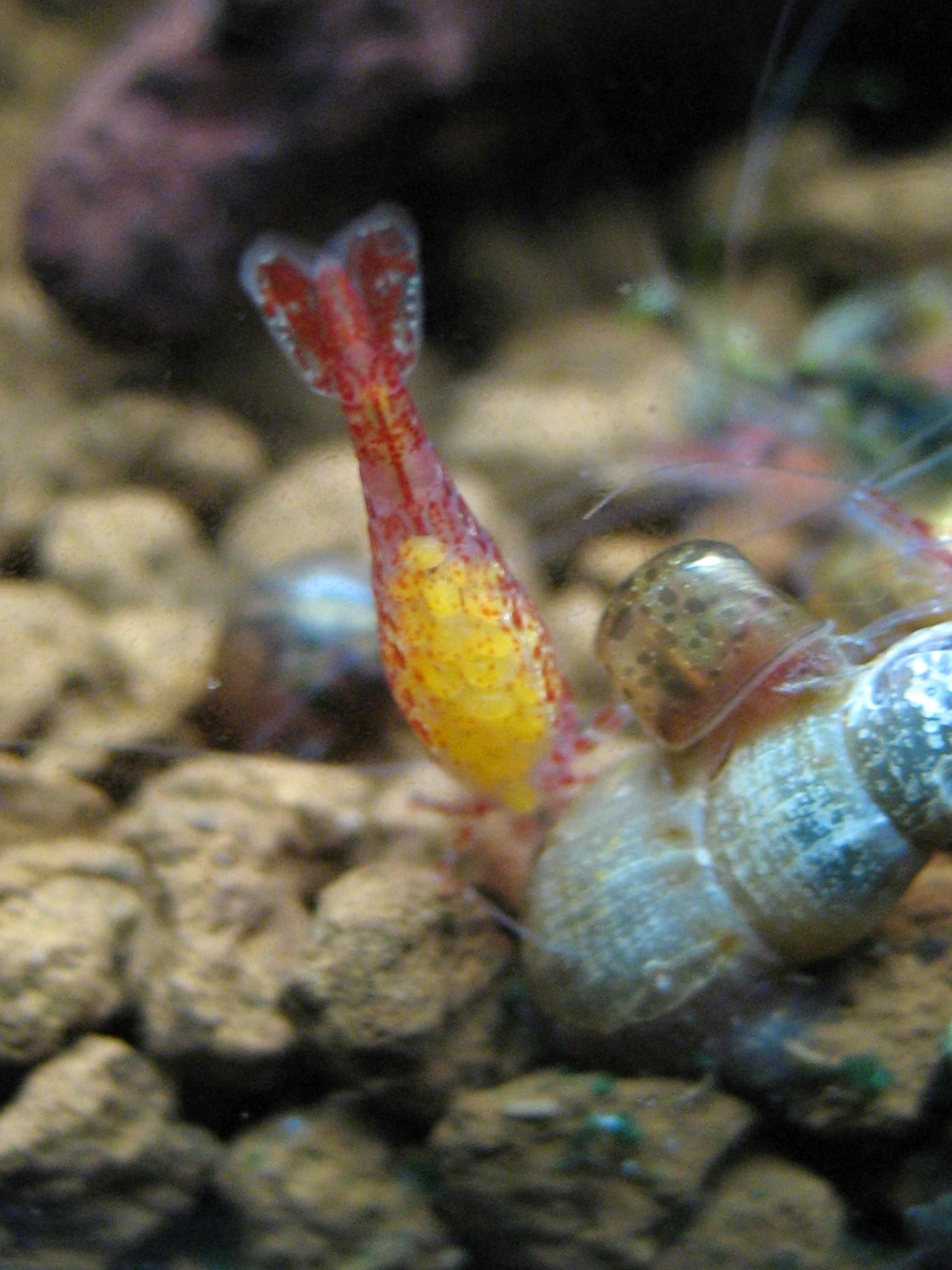
A "berried" female carries anywhere from 20-50 eggs tucked under her tail. She constantly fans them with her swimmerets to keep them oxygenated and clean.
The eggs start yellow or greenish and gradually develop. Near the end, you can see tiny black dots - those are the babies' eyes developing inside the eggs.
Gestation takes about 3-4 weeks depending on temperature. Warmer water speeds it up.
◆What About Dropped Eggs?
Sometimes females drop their eggs prematurely. Common causes:
- •Stress from water changes or parameter swings
- •First-time mothers (inexperience)
- •Poor water quality
- •Harassment from tank mates
If you see dropped eggs, don't panic. Experienced females rarely have this problem. Improve conditions and the next clutch should go smoothly.
Feeding for Maximum Breeding Success
Good nutrition is essential for healthy eggs and frequent breeding.
◆Daily Feeding Schedule
A popular approach from r/shrimptank:
""Shrimp pellets on day 1, skip the 2nd day, Bacter AE on the 3rd day, skip the 4th, veggies on the 5th, skip the sixth, repeat."
This rotation provides variety while avoiding overfeeding. Shrimp don't need food every day - they graze constantly on biofilm.
◆Best Foods for Breeding Shrimp
- •High-quality shrimp pellets - Hikari Shrimp Cuisine is a solid choice
- •Bacter AE - Powdered bacteria supplement that grows biofilm. Especially good for babies.
- •Blanched vegetables - Zucchini, spinach, cucumber. Remove within 24 hours to avoid rotting.
- •Protein supplements - Frozen bloodworms or daphnia occasionally. Protein helps with egg development.
◆Don't Overfeed
More food doesn't mean more babies. Overfeeding leads to:
- •Water quality problems
- •Algae blooms
- •Bacterial infections
If there's food left after 2-3 hours, you're feeding too much.
Caring for Baby Shrimp (Shrimplets)
◆What They Look Like
Newborn cherry shrimp are about 2mm long - basically tiny replicas of adults. They're usually clear or lightly colored at first, developing their red coloration over weeks.

◆Do You Need to Separate Them?
No. Adult cherry shrimp don't eat their young. The babies can stay in the main tank safely.
The only reason to separate would be if you have tank mates that might prey on shrimplets - which brings us to...
◆Tank Mates to Avoid
If you want maximum baby survival, keep the tank shrimp-only. Fish eat shrimplets. Even "peaceful" fish like neon tetras will snack on babies small enough to fit in their mouths.
As one keeper warned: "I can tell you they [tetras] eat a lot of new-born shrimplets."
If you must have tank mates, the safest options are:
- •Snails (nerite, ramshorn, mystery)
- •Otocinclus catfish (if the tank is large enough)
- •Adult Amano shrimp
◆Feeding Baby Shrimp
Shrimplets are self-sufficient from birth. They graze on biofilm, and that's usually enough for the first few weeks.
To boost survival rates:
- •Add Bacter AE to encourage biofilm growth
- •Keep the sponge filter mature (lots of biofilm)
- •Crush regular shrimp food into powder occasionally
- •Leave Indian almond leaves or alder cones in the tank
Troubleshooting Common Breeding Issues
◆"My Shrimp Aren't Breeding"
Give it time. New colonies can take 1-2 months to start breeding. Make sure:
- •You have both males and females
- •Water parameters are stable
- •Temperature is at least 72°F
- •The tank has been cycled properly
◆"My Berried Female Dropped Her Eggs"
Usually stress-related. Check for:
- •Recent water parameter changes
- •Harassment from other tank inhabitants
- •Temperature fluctuations
- •First-time mother (normal to drop first clutch)
◆"I See Saddles But No Berried Females"
Could indicate:
- •No males in the tank (rare if you bought 10+ shrimp)
- •Males haven't matured yet (give it time)
- •Mating is happening but you're missing it
◆"My Baby Shrimp Are Disappearing"
If you have fish, they're likely eating the babies. In a shrimp-only tank, baby shrimp are very good at hiding - they might be in the moss, under leaves, or inside the sponge filter. Give it a few weeks and you'll suddenly notice a lot more tiny shrimp.
Growing Your Colony: What to Expect
A healthy breeding colony can double in size every 2-3 months. Here's a rough timeline:
Month 1-2: First berried females appear. First batch of babies born.
Month 3-4: Multiple generations overlapping. Babies from first clutches are now breeding.
Month 6+: Population explosion. You may need to start selling or giving away shrimp.
At some point, population growth will slow naturally based on available space and food. A 10-gallon tank can comfortably support 100+ cherry shrimp.
Improving Color Quality Over Time
With uncontrolled breeding, colors can fade over generations as lower-grade genetics spread. To maintain or improve coloration:
- •Cull regularly - Remove the palest shrimp (give to friends or use as fish food)
- •Add new blood occasionally - Introduce high-grade shrimp from a different source every year or two
- •Select your best breeders - Keep the most intensely colored shrimp
This isn't necessary if you just want a healthy colony, but matters if you plan to sell or trade shrimp.
Essential Equipment for Breeding Cherry Shrimp
Here's a shopping list if you're starting from scratch:
- •Tank: 10-gallon minimum - Aqueon 10 Gallon Tank
- •Sponge Filter: Hygger Double Sponge Filter
- •Air Pump: Tetra Whisper
- •Heater (optional for temp control): Fluval E50
- •Test Kit: API Freshwater Master Kit
- •Food: Hikari Shrimp Cuisine
Final Tips for Breeding Success
- •Patience is key. It takes time for shrimp to settle in and start breeding.
- •Stability over perfection. Consistent parameters matter more than hitting exact numbers.
- •Feed well but don't overfeed. Quality food, proper portions.
- •Plants, plants, plants. Dense vegetation makes shrimp feel safe and provides grazing surfaces.
- •Avoid tank mates. Fish eat babies. Keep it shrimp-only for maximum breeding.
- •Don't touch the berried females. Leave them alone and let nature do its work.
Cherry shrimp breeding is genuinely hands-off once you have the basics right. Create a stable, planted environment, add healthy shrimp, and watch your colony grow.
Have questions about breeding cherry shrimp? The r/shrimptank community is a great resource for advice from experienced keepers.
Frequently Asked Questions
◆How long does it take cherry shrimp to breed?
Cherry shrimp reach breeding age around 4-6 months old. Once a female is berried (carrying eggs), the eggs hatch in about 25-35 days. In good conditions, a female can produce a new batch of eggs every 5-6 weeks.
◆How many babies do cherry shrimp have?
A single female cherry shrimp carries 20-50 eggs per batch, depending on her size and age. Larger, more mature females tend to carry more eggs. Not all eggs will hatch, but survival rates are high in a predator-free tank.
◆Do I need to separate baby shrimp?
You don't need to separate baby cherry shrimp from adults. Adult shrimp won't eat their young. The babies are fully independent from birth and will find food on their own by grazing on biofilm and algae in the tank.
◆What does a berried shrimp look like?
A berried female carries a cluster of tiny eggs under her tail (swimmerets). The eggs look like a bunch of small yellow, green, or brown dots tucked against her belly. She'll constantly fan them with her swimmerets to keep them oxygenated.
Found this helpful?
Check out our other shrimp care guides