Ghost Shrimp Care Guide: The Budget-Friendly Beginner Shrimp
Ghost shrimp are cheap, transparent, and surprisingly fun to keep. Learn their care needs, best tank mates, feeding tips, and why they're great for beginners.
📅 Published 2026-02-06
Ghost shrimp are the gateway drug of the shrimp keeping hobby. At just 30-50 cents each, they are dirt cheap, surprisingly interesting, and far more rewarding than their "feeder shrimp" reputation suggests. Their transparent bodies let you watch their internal organs working in real time - watching their tiny heart beat and food pass through their digestive tract is genuinely fascinating.

Quick Facts: Ghost Shrimp at a Glance
| Attribute | Details |
|---|---|
| Scientific Name | Palaemonetes paludosus (and related species) |
| Common Names | Ghost shrimp, glass shrimp, grass shrimp |
| Origin | North America (eastern United States) |
| Size | 1-1.5 inches (2.5-4 cm) |
| Lifespan | 1 year (often less in pet stores) |
| Temperature | 65-82°F (18-28°C) |
| pH | 7.0-8.0 |
| GH | 3-10 dGH |
| KH | 3-15 dKH |
| Diet | Omnivore - algae, biofilm, detritus, commercial foods |
| Difficulty | Easy |
| Breeding | Difficult (larvae require special care) |
What Makes Ghost Shrimp Unique?
Ghost shrimp are not your typical dwarf shrimp. They are actually a different family entirely - Palaemonidae rather than Atyidae (where cherry and Amano shrimp belong). This means they have some quirks that set them apart.
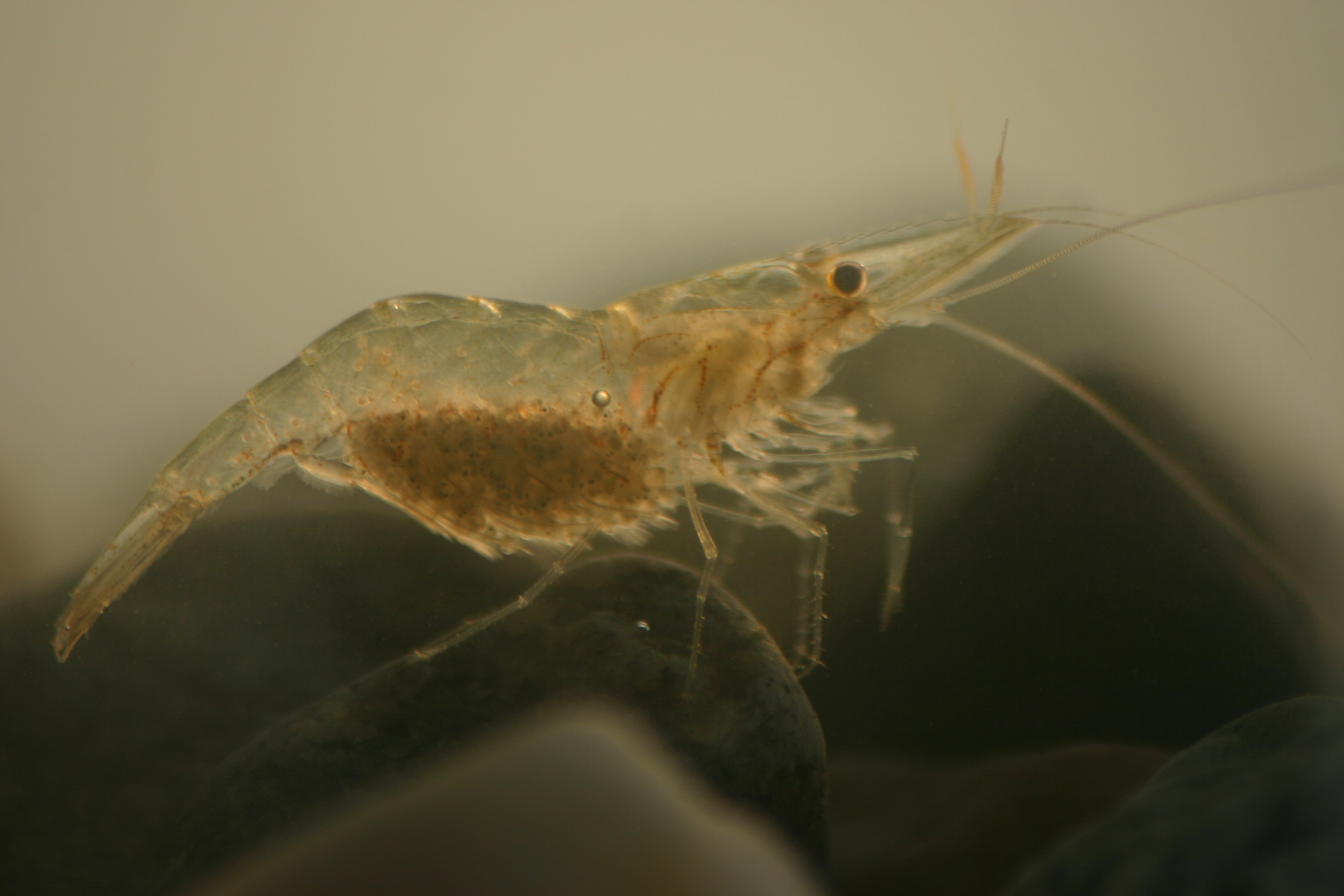
◆The Transparency Factor
The most obvious feature is their clear body. You can literally see through them:
- •Heart beating in the thorax area
- •Eggs in females (green, yellow, or orange colored)
- •Digestive tract showing what they recently ate
- •Developing embryos in berried females
This transparency evolved as camouflage in their native habitat - murky ponds, streams, and ditches across eastern North America. In an aquarium, it makes them one of the most educational invertebrates you can keep.
◆The "Feeder" Problem
Here is the harsh truth: most ghost shrimp sold at pet stores are bred as feeder animals. They are mass-produced in outdoor ponds, shipped in poor conditions, and arrive at stores already stressed and potentially carrying diseases.
As one Redditor on r/shrimptank noted: "Expect a 50% casualty rate. Some may just disappear (ghosts are opportunistic feeders, so their fallen comrades may get eaten) or you might find bodies."
The good news? Once they survive the initial acclimation period, ghost shrimp are actually quite hardy. They just need to overcome the stress of poor handling first.
Ghost Shrimp vs Other Shrimp Species
Before you buy ghost shrimp, understand how they differ from popular alternatives:
◆Ghost Shrimp vs Cherry Shrimp
| Factor | Ghost Shrimp | Cherry Shrimp |
|---|---|---|
| Price | $0.30-0.50 each | $2-5 each |
| Size | 1-1.5 inches | 0.75-1 inch |
| Breeding | Difficult (larval stage) | Easy (miniature adults) |
| Aggression | Can be opportunistic | Peaceful |
| Lifespan | 1 year | 1-2 years |
| Color | Transparent | Red, orange, yellow, blue |
| Colony building | Slow | Fast |
Verdict: Cherry shrimp are better for breeding projects and building a self-sustaining colony. Ghost shrimp are better for budget-conscious beginners who want interesting tank cleaners.
◆Ghost Shrimp vs Amano Shrimp
| Factor | Ghost Shrimp | Amano Shrimp |
|---|---|---|
| Price | $0.30-0.50 each | $3-6 each |
| Size | 1-1.5 inches | 1.5-2 inches |
| Algae eating | Moderate | Excellent |
| Breeding | Difficult | Nearly impossible |
| Hardiness | Moderate (if healthy) | Excellent |
Verdict: Amano shrimp are superior algae eaters and more reliably hardy. Ghost shrimp are cheaper and more accessible.
Tank Setup for Ghost Shrimp
Ghost shrimp are not demanding, but they do best with proper setup from the start.
◆Minimum Tank Size
A 5-gallon tank is the minimum for a small group of ghost shrimp. They are more active than dwarf shrimp and appreciate swimming room. A 10-gallon is ideal for a proper colony.
Recommended starter kit: Aqueon 10 Gallon LED Aquarium Kit - includes tank, LED hood, and filter.
◆Filtration
Ghost shrimp need gentle filtration. Strong currents will stress them, and powerful intakes can trap baby shrimp (if you manage to breed them).
Best filter options:
- •
Sponge filter - The gold standard for shrimp tanks. Gentle, provides grazing surface, shrimp-safe. Hygger Sponge Filter
- •
HOB with intake cover - If you prefer hang-on-back filters, add a sponge pre-filter to protect shrimp. Fluval Intake Sponge
◆Substrate
Ghost shrimp are not picky about substrate. Good options include:
- •Sand - Natural look, easy for shrimp to forage through
- •Gravel - Fine gravel works, avoid sharp edges
- •Inert plant substrates - Eco-Complete or similar
Unlike Caridina shrimp, ghost shrimp do not require buffering substrates and actually prefer harder, more alkaline water.
◆Plants and Hiding Spots

Ghost shrimp love hiding spots, especially during molting when they are vulnerable. Include:
- •Java moss - Perfect for grazing and hiding. Covers biofilm, shelters babies.
- •Anubias - Hardy, grows anywhere, provides resting spots
- •Java fern - Requires no special care, grows on driftwood
- •Driftwood - Provides hiding crevices and grows beneficial biofilm
- •Shrimp tubes - Ceramic or terracotta tubes give molting shrimp security

For a planted tank bundle, check out: Live Aquarium Plants Variety Pack
Water Parameters for Ghost Shrimp
Ghost shrimp come from a variety of habitats in the wild, so they tolerate a wide range of conditions. However, stable parameters matter more than hitting perfect numbers.
◆Ideal Parameters
| Parameter | Ideal Range | Notes |
|---|---|---|
| Temperature | 70-78°F (21-26°C) | Room temp often works |
| pH | 7.0-8.0 | Slightly alkaline preferred |
| GH | 4-8 dGH | Moderate hardness |
| KH | 3-12 dKH | Higher is fine |
| Ammonia | 0 ppm | Always |
| Nitrite | 0 ppm | Always |
| Nitrate | Under 20 ppm | Under 40 tolerable |
| TDS | 150-400 ppm | Not critical |
◆The Hard Water Advantage
Unlike cherry shrimp or crystal shrimp that prefer softer water, ghost shrimp actually do well in harder, more alkaline conditions. If you have hard tap water that makes keeping other shrimp species difficult, ghost shrimp might be perfect for you.
One helpful tip from r/shrimptank: "Shrimp salts are great - it's GH/KH 2:1, perfect for throwing in distilled. I use a cheap TDS meter and just aim for something close to my tank numbers."
If you need to remineralize RO or distilled water, try: SaltyShrimp GH/KH+
◆Testing Your Water
Regular testing catches problems before they kill your shrimp. Essential tests:
- •API Freshwater Master Test Kit - Covers ammonia, nitrite, nitrate, pH
- •GH & KH Test Kit - Important for shrimp health
◆Temperature: Room Temp Works
Ghost shrimp do not need a heater in most homes. They tolerate temperatures from 65-82°F (18-28°C), so average room temperature is fine. If your home gets cold in winter or you want stable temps, a small adjustable heater helps: Cobalt Aquatics Neo-Therm
Acclimating New Ghost Shrimp
Proper acclimation is critical for ghost shrimp. Remember, most arrive stressed from poor conditions. Rushing the process kills them.
◆Drip Acclimation Method
- •Float the bag in your tank for 15-20 minutes to equalize temperature
- •Open bag and pour shrimp and water into a clean bucket
- •Start a siphon from your tank using airline tubing with a knot to control flow
- •Drip 2-3 drops per second
- •Continue until the water volume has tripled (about 1-2 hours)
- •Net the shrimp into your tank - discard the bucket water
Never dump pet store water into your tank. It likely contains parasites, bacteria, and accumulated waste.
◆The First 48 Hours
Do not panic if shrimp hide or seem inactive at first. Stress from the move is normal. Signs to watch for:
Normal behavior:
- •Hiding for the first day
- •Reduced appetite initially
- •Staying near substrate or plants
Warning signs:
- •White/milky coloring (not just pre-molt)
- •Laying on their side
- •Erratic swimming (spinning, corkscrewing)
- •Refusing to leave one spot for 24+ hours
Feeding Ghost Shrimp
Ghost shrimp are opportunistic omnivores. In a mature tank with plants and biofilm, they can find much of their own food. But supplemental feeding keeps them healthy and colorful.
◆What Ghost Shrimp Eat
Natural foods (always available):
- •Biofilm on surfaces
- •Algae (all types)
- •Detritus and decaying plant matter
- •Microorganisms
Commercial foods:
- •Hikari Shrimp Cuisine - Sinking pellets, well-balanced
- •Shrimp King Complete - Premium option, great nutrition
- •Algae wafers - Any sinking wafer works
- •Bottom feeder pellets - Crush for easier eating
Blanched vegetables:
- •Zucchini (most popular)
- •Spinach
- •Cucumber
- •Peas (remove skin)
Protein treats (weekly):
- •Frozen bloodworms
- •Brine shrimp
- •Daphnia
◆Feeding Schedule
Feed a small amount every 1-2 days. Remove uneaten food after 2-3 hours to prevent water quality issues. Ghost shrimp are scavengers, not gluttons - they will constantly graze between feedings.
◆The Cannibalism Warning
Ghost shrimp are opportunistic feeders. This has a dark side.
From r/shrimptank: "Ghost shrimps are opportunistic feeders though, so take care not to keep smaller fish and shrimps with a large ghost shrimp population."
They will eat:
- •Dead or dying tank mates (including each other)
- •Very small fish fry
- •Baby shrimp of any species (including their own)
- •Injured animals
This is not aggression per se - they are simply scavengers that eat what they can catch. Keep them well-fed to minimize this behavior.
Tank Mates for Ghost Shrimp
Ghost shrimp can coexist with many peaceful community fish, but their small size makes them potential prey.
◆Safe Tank Mates
- •Small tetras (neon, ember, cardinal)
- •Rasboras (chili, harlequin)
- •Otocinclus catfish - Peaceful algae eaters
- •Corydoras - Gentle bottom dwellers
- •Snails - Nerites, mystery snails, ramshorn
- •Other shrimp - Amano, cherry (with caution)
- •Small livebearers - Endlers, some guppies
◆Risky Tank Mates
- •Bettas - Highly individual. Some ignore shrimp, others hunt them relentlessly
- •Gourami - Often pick at shrimp
- •Angelfish - Will eat adult ghost shrimp
- •Larger tetras - Buenos Aires, Congo tetras may prey on shrimp
- •Cichlids - Most will eat shrimp
As noted in one Reddit post: "She mentioned ghost shrimp as a possible addition... Said they also do fine in room temp water and shouldn't be bothered by the beta... Beta still seems to be doing fine, but all the shrimp died?"
This is common - bettas can stress shrimp to death even without directly attacking them.
◆Ghost Shrimp with Other Shrimp
Ghost shrimp can be kept with other shrimp species, but monitor them. Large ghost shrimp may harass smaller species like cherry shrimp, especially at feeding time. They are not aggressive, but their larger size and more assertive feeding behavior can intimidate dwarf shrimp.
Molting and the Molt Cycle
Like all shrimp, ghost shrimp must molt (shed their exoskeleton) to grow. This is when they are most vulnerable.
◆Signs of Impending Molt
- •Reduced activity
- •Hiding more than usual
- •Not eating
- •Slightly duller coloration
- •A clear line appearing behind the head (the old shell separating)
◆During and After Molting
The molt itself takes seconds. The shrimp will emerge soft and vulnerable, hiding until their new shell hardens (12-48 hours). During this time:
- •Do not disturb them
- •Ensure hiding spots are available
- •Leave the old molt in the tank (calcium source)
- •Do not do water changes right after a molt
◆Molting Problems
Failed molts are a leading cause of shrimp death. They are usually caused by:
- •Mineral deficiency - Not enough calcium and magnesium
- •Parameter swings - Temperature or pH changes triggering premature molts
- •Poor water quality - Stress weakens shrimp
Prevention:
- •Maintain stable GH (4-8 dGH)
- •Do not change more than 10-15% water at a time
- •Add mineral supplements: Shrimp Mineral
- •Leave old molts in the tank for shrimp to eat
Breeding Ghost Shrimp
Here is where ghost shrimp get tricky. Unlike cherry shrimp that produce miniature adults, ghost shrimp have a larval stage that requires specific conditions.
◆The Larval Challenge
Ghost shrimp reproduce through these stages:
- •Mating - Male deposits sperm packet on female
- •Berried female - Female carries 20-50 eggs under her tail
- •Hatching - Eggs hatch into free-swimming larvae (zoea)
- •Larval stage - Larvae drift in water column for 1-2 weeks
- •Metamorphosis - Larvae settle and become miniature shrimp
The larval stage is the problem. These tiny larvae:
- •Cannot eat regular shrimp food
- •Require infusoria, green water, or commercial larval food
- •Are eaten by adult shrimp and fish
- •Need brackish or freshwater (species-dependent)
As one Redditor explained in r/shrimptank: "If you wanna ensure the babies are okay, you relocate mama to a separate tank, wait til she drops her eggs, put her back in the main tank, then wait til the larvae get to be mini-shrimp."
◆If You Want to Try Breeding
- •Set up a separate breeding tank - No filter intakes, no adult shrimp
- •Add green water or infusoria culture before larvae hatch
- •Transfer berried female when eggs are nearly ready (dark coloration)
- •Remove female immediately after eggs hatch
- •Feed larvae powdered spirulina, liquifry, or green water
- •Maintain water quality carefully - larvae are delicate
- •Wait 2-4 weeks for metamorphosis
Most hobbyists do not bother breeding ghost shrimp because they are so cheap to replace. But if you want to try, it is a rewarding challenge.
Common Health Issues
◆White or Cloudy Coloration
Some cloudiness before a molt is normal. Persistent white/milky coloration indicates:
- •Bacterial infection
- •Poor water quality
- •Muscular necrosis (fatal)
- •Stress
Isolate affected shrimp. Often there is nothing to do but improve conditions and hope.
◆Lethargy and Loss of Appetite
Usually indicates:
- •Recent stress (new tank, water change)
- •Impending molt (normal)
- •Disease
- •Ammonia/nitrite spike
Test your water immediately. If parameters are fine and shrimp recently arrived, give them a few days to settle.
◆Parasites
Ghost shrimp from pet stores sometimes carry:
- •Vorticella - White fuzzy growths, treat with salt dips
- •Scutariella japonica - Worm-like organisms on head, usually harmless
- •Ellobiopsidae - Green fuzzy growth, fatal and contagious (cull affected shrimp)
Quarantine new shrimp for 2-4 weeks before adding to an established tank.
Ghost Shrimp Buying Guide
◆Where to Buy
- •
Local fish stores - Quality varies wildly. Look for active, clear shrimp in clean tanks.
- •
Big box pet stores - Usually feeders, often stressed. Expect some losses.
- •
Online retailers - Higher quality, better survival rates, but shipping costs add up. Check reviews.
◆What to Look For
Good signs:
- •Active, moving around the tank
- •Clear body with visible internal organs
- •Long, intact antennae
- •Responsive to movement outside the tank
Red flags:
- •Milky/cloudy coloration
- •Lethargy, laying on bottom
- •Red discoloration (often bacterial infection)
- •Missing appendages or antennae
- •Dead shrimp in the display tank
◆How Many to Buy
Start with at least 6-10 shrimp. Some will inevitably die from shipping and acclimation stress, and having a group reduces individual stress. For a 10-gallon tank, 10-15 ghost shrimp is a good starting population.
At typical pet store prices ($0.50 each), buying 10-12 adds up to around $5-6 - an low-risk investment to get started in shrimp keeping.
Final Thoughts: Are Ghost Shrimp Right for You?
Ghost shrimp are ideal if you:
- •Want interesting shrimp without a big investment
- •Have hard or alkaline water that kills fancier species
- •Are looking for active tank cleaners
- •Want to observe invertebrate biology up close
- •Accept that some losses are normal with feeder-quality stock
They are not ideal if you:
- •Want to breed shrimp easily
- •Want colorful display shrimp
- •Keep predatory fish
- •Expect 100% survival rates
For many keepers, ghost shrimp are the first step into a lifelong shrimp addiction. They are cheap, interesting, and forgiving enough for beginners while still teaching the fundamentals of shrimp care. From there, you might graduate to cherry shrimp, then Amanos, then Crystal Reds... and suddenly you have 15 tanks and a serious addiction.
But hey, there are worse hobbies.
Have questions about ghost shrimp? Share your experiences in the community! Check out our other guides: Cherry Shrimp Care, Amano Shrimp Care, and Complete Shrimp Tank Setup Guide.
Frequently Asked Questions
◆How long do ghost shrimp live?
Ghost shrimp typically live about 1 year in an aquarium, though some may reach 18 months with excellent care. Their shorter lifespan compared to other dwarf shrimp is partly because many are sold as feeder shrimp and may arrive stressed.
◆Are ghost shrimp good tank cleaners?
Ghost shrimp are decent scavengers that eat leftover food, algae, and decaying plant matter. They won't keep your tank spotless on their own, but they help reduce waste. They're not as effective at algae control as Amano shrimp.
◆Can ghost shrimp live with fish?
Ghost shrimp can live with small, peaceful fish like tetras, rasboras, and otocinclus. Avoid keeping them with larger or aggressive fish that might eat them. Their transparent bodies don't provide great camouflage, so hiding spots are essential.
◆Why are my ghost shrimp turning white?
Ghost shrimp turning white or milky often signals they're close to death from old age, stress, or disease. It can also indicate a bacterial infection. If multiple shrimp are affected, test your water parameters right away.
Found this helpful?
Check out our other shrimp care guides