Amano Shrimp and Betta: The Honest Odds of Keeping Them Together
Amano shrimp and betta fish can share a tank, but one variable decides it. The real odds, tank size, introduction order, and what a failing pairing looks like.
📅 Published 2026-09-08
Ask in any fish store which shrimp to put with a betta and you'll hear "amano" before you finish the question. There's a real reason for that, and a reason the advice comes with a shrug. Amano shrimp and betta fish are the pairing most likely to work, and it still fails often enough that you should go in with a plan for both outcomes.
This article is about amanos specifically. For the broader picture across every shrimp species, read can shrimp live with bettas first.
Quick Answer
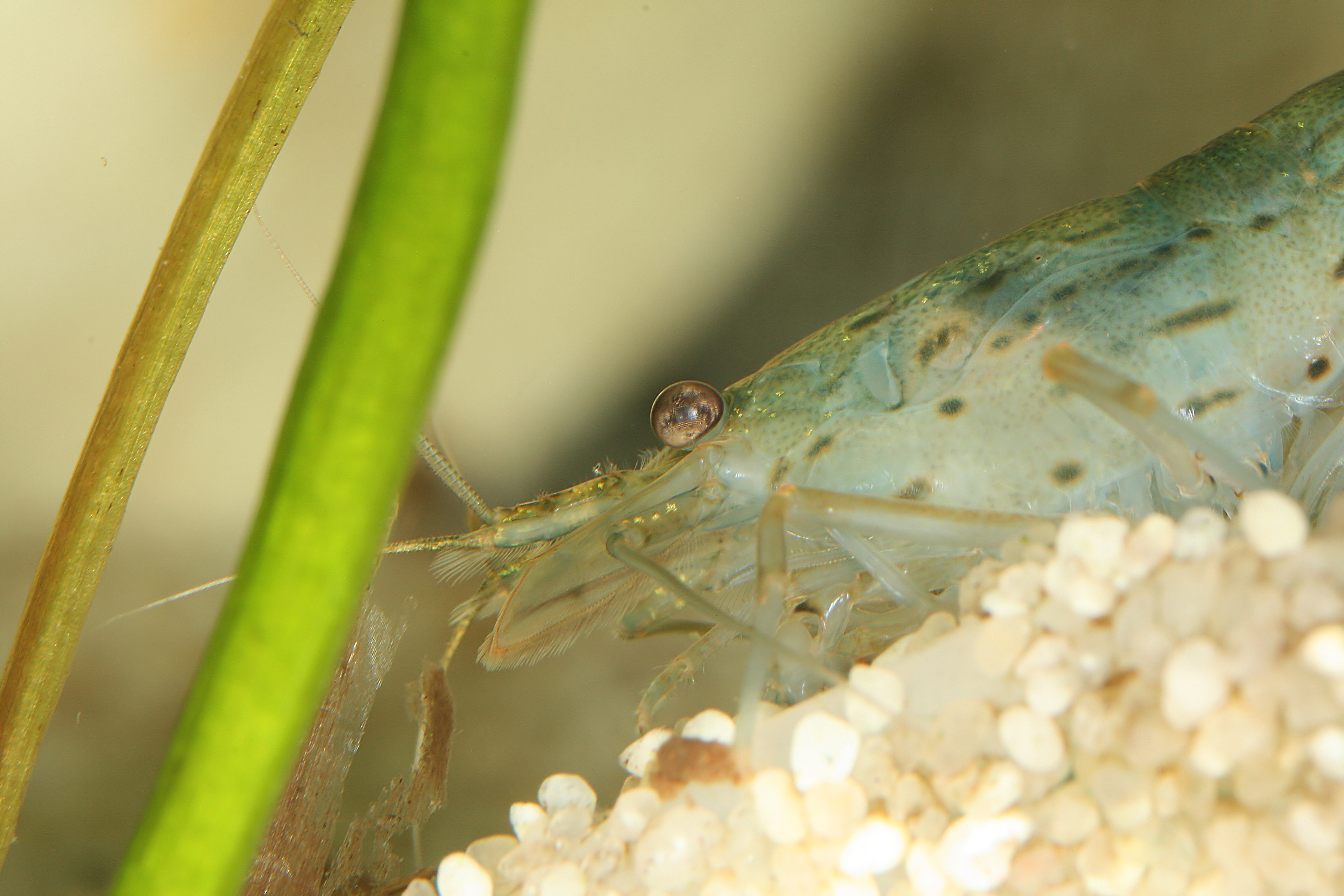
Yes, amano shrimp can live with a betta, and they're the best shrimp for the job. An adult amano is about 2 inches long, close to the length of a betta's body, so it doesn't fit in the betta's mouth. They're fast, they're translucent grey rather than red or blue, and they can't breed in freshwater, so there are never tiny shrimplets to tempt the fish.
The catch is that none of that matters if your particular betta decides to hunt. Most bettas ignore or briefly chase amanos and then lose interest. A minority harass them constantly until the shrimp hide, stop eating, or die. You won't know which betta you have until you try, so set up the tank so the shrimp can survive the trial.
Why Amano Shrimp Are the Shrimp Everyone Recommends for Bettas
Three things about amanos line up well against a betta's instincts.
Size. Care sheets from Aquarium Co-Op, Fishkeeping World, and Aquarium Source all put an adult amano at 1.5 to 2 inches. A few sites claim up to 3 inches, but 2 is what you'll see in a home tank. A standard betta's body, fins excluded, is around 2.25 to 2.5 inches. A betta can't swallow something nearly its own length. Cherry shrimp top out at 1.5 inches, and their babies are 2 mm at birth, so they're a very different proposition.
Speed. Amanos are active grazers that climb plants, swipe food from bigger fish, and flick backward fast when startled. A betta is a deliberate ambush fish with a lot of fin to drag around. Forum threads on Fishlore and the Aquarium Co-Op forum repeat the same story: the betta chases for a day or two, realizes it can't catch anything, and stops.
Color. An amano is clear with a tan or grey-blue tint and a line of dots (males) or dashes (females) down each side. It looks like a piece of the substrate that moves. A red cherry or blue dream shrimp looks like a snack with a flag on it. Bettas react to bright color; that's half of why they flare at each other.
There's a fourth point that gets overlooked. Amano larvae need brackish water to survive, so in a freshwater tank they never breed. With cherry shrimp, the real question is whether any of the dozens of 2 mm babies survive. With amanos it never comes up.
The Honest Odds
Nobody has counted, and anyone giving you a percentage is guessing. What we can say is how the sources split.
Aquariadise and most keepers posting on the Aquarium Co-Op and Fishlore forums report the pairing working, usually with the caveat that their betta was on the calm side. Fishkeeping World and Aquarium Source both list bettas under fish to avoid with amanos, on the grounds that any aggressive fish is a risk. Both camps are describing the same thing from different ends: it works with most bettas and it doesn't work with some, and the shrimp is the one that pays when it doesn't.
Your Betta's Temperament Is the Whole Ballgame
Every other variable in this article is a way of tilting the odds. This one is the odds.
Bettas are individuals in a way most community fish aren't. Some ignore everything. Some flare at their own reflection all day. Some are calm for months and then, after a rescape or a water change, decide the shrimp are an intrusion. Fishlore has a thread titled "Betta suddenly being a jerk to shrimp" for a reason.
You can read a few signs before you buy shrimp:
- •Does your betta flare at things that aren't bettas? A fish that flares at your finger, a snail, or the filter outflow is more likely to go after a shrimp.
- •How does it react to food hitting the water? A betta that charges every pellet and strikes at anything drifting past has a stronger prey drive than one that saunters over.
- •Has it lived with anything else? If it already ignores a nerite snail or a small school of tetras, that's a good sign. If it killed a snail, stop here.
- •Fin type. Aquarium Store Depot, Glass Grown Aquatics, and plenty of Fishlore keepers say plakats (short finned bettas) are faster and more aggressive than long finned halfmoons. Personality still overrides fin type, but a long finned betta is the better bet.
None of this is a guarantee. It's a way to set your expectations before you spend $3 to $4 per shrimp.
Tank Size and Cover for Amano Shrimp With a Betta
Five gallons is the floor, ten is comfortable. Betta care sheets disagree on the bare minimum for a betta alone (PetMD allows 2.5 gallons, Bettafish.org and Aquarium Co-Op say 5), but for a betta plus shrimp, 5 gallons is where every source lands and 10 gives the shrimp somewhere to be that isn't in the betta's face. The stocking guideline repeated across Aquariadise, Fishkeeping World, and Betta Care Fish Guide is one amano per 2 gallons, so three shrimp in a 5 gallon and five in a 10.
Cover matters more than gallons. Amanos need places a betta can't reach or can't be bothered to reach. The forum consensus is that soft stem plants aren't enough on their own; a determined betta pushes through them. What works is a mix:
- •Hardscape with real gaps: driftwood with tunnels, a stack of rocks with crevices, ceramic shrimp tubes.
- •Broad leaved plants like anubias and java fern that a shrimp can sit under.
- •A dense clump of java moss, which is where a molting shrimp goes to wait out the hours its shell is soft.
Our guide to the best plants for shrimp tanks covers the ones that hold up.
Water parameters overlap, with one caveat. Bettas want 76 to 81F and a pH around 6.5 to 7.5. Amanos are listed anywhere from 65 to 85F depending on the site (Aquarium Co-Op says 65 to 82, Fishkeeping World 70 to 80) and a pH of roughly 6.5 to 8. A tank held at 78F and pH 7 suits both. The caveat is copper: never dose a copper based medication in a shrimp tank, even briefly. It kills them at levels a betta shrugs off.
Use a sponge filter and fit a lid. Bettas can't handle strong flow and shrimp get pulled into intakes, so a betta-safe sponge filter solves both problems at once. Amanos are also escape artists; Aquarium Co-Op uses those exact words, and Fishlore has a whole run of "amano shrimp jumping" threads. A stressed amano being chased is more likely to leave the water, so cover the gaps around cords and airline too.
How to Introduce Amano Shrimp to a Betta Tank
Order matters. Shrimp first, betta second.
If you're starting fresh, cycle the tank, plant it, add the shrimp, and give them at least a week to find their spots and start grazing. Then add the betta. The betta arrives in a space that already has established residents and hiding places it doesn't know, which blunts the territorial response. Shrimpy Business and multiple forum threads recommend this sequence.
If the betta is already in the tank, do the next best thing, which comes from the same forum threads and from Aquanswers:
- •Net the betta into a cup or a container of tank water.
- •Rearrange the tank. Move the wood, add a plant, shift the rocks, so the layout reads as new territory rather than an invasion of old territory.
- •Drip acclimate the shrimp over an hour or two and release them near the cover, not in open water.
- •Leave the lights off for the rest of the day so the shrimp can settle.
- •Feed the betta a proper meal, then put it back.
Buy the largest amanos you can find. Stores often sell them at an inch long, and a 1 inch amano is a very different target from a 2 inch one.
Add at least three. A lone amano that gets chased tends to hide permanently; forum keepers find that the more amanos they have, the more the shrimp come out.
What a Failing Pairing Looks Like
Watch closely for the first two weeks, then keep half an eye open.
Normal, expected, fine: the betta investigates the shrimp, follows one across the tank, maybe lunges once or twice on day one. The shrimp flick away. By day three the betta ignores them and the shrimp graze in the open with the betta in view.
Warning signs:
- •The betta is still chasing after a week, and the chasing is sustained rather than a single lunge.
- •You never see the shrimp. Amanos in a tank without a predator are out most of the day. Amanos you have to hunt for in the moss are telling you something.
- •Missing antennae or legs. A betta that can't swallow an amano can still tear pieces off it. Antennae regrow over a few molts, but they're evidence.
- •A shrimp found dead with no obvious cause, especially in the day or two after a molt. Freshly molted shrimp are soft, and that's when a betta that couldn't hurt them before can.
Failure: a dead or dismembered shrimp, or a second one missing. Don't wait to see how the third fares.
What to Do If It Fails
Rehome the shrimp, keep the betta. A 2 gallon container with a sponge filter holds three amanos temporarily. Most fish stores will take amanos back for credit or nothing.
Add a divider. A clear tank divider in a 10 gallon gives the shrimp a third of the tank and the betta the rest.
Switch to snails. If what you wanted was a cleanup crew rather than shrimp specifically, a nerite does the algae job without the risk, and bettas almost never manage to hurt one. Our guide to nerite snails with bettas covers which ones and how many.
What doesn't work: adding more plants and hoping. Cover helps with a curious betta, not one that has decided the shrimp are food.
Amano vs Cherry Shrimp With a Betta
Both get suggested. They're different bets.
| Amano shrimp | Cherry shrimp | |
|---|---|---|
| Adult size | About 2 inches | 1 to 1.5 inches |
| Color | Clear, grey speckles | Bright red (or blue, yellow, etc.) |
| Breeds in freshwater | No | Yes, constantly |
| Betta risk to adults | Low | Moderate |
| Betta risk to babies | None, there aren't any | Near total |
| Best case | Betta ignores 3 to 5 shrimp for years | Colony survives in dense moss, betta eats some babies |
| Cost per shrimp | $3 to $4 | $2 to $4 |
Cherry shrimp with a betta is a numbers game: start with 10 or more, plant heavily, and accept that the betta will eat some babies. The colony survives if births outpace losses. Amanos with a betta is a smaller, cleaner bet: three to five shrimp, no babies to protect, and the outcome usually settled within two weeks. For a full comparison outside the betta context, see amano vs cherry shrimp.
Feeding Both Without Starting a Fight
A betta is a carnivore and does well on 2 or 3 betta pellets twice a day. Amanos will eat what the betta misses, but a properly fed betta doesn't miss much, so the shrimp need their own food.
Hikari algae wafers work well here for a practical reason: they sink and hold together, so you can drop one behind the wood where the shrimp are and the betta rarely bothers with it. Feed one small wafer two or three times a week and remove what's left after a few hours. In a mature tank with algae and biofilm, amanos need less than you think.
Frequently Asked Questions
◆Will a betta eat an amano shrimp?
An adult amano at 2 inches is too big for a betta to swallow, so full grown amanos are rarely eaten outright. A betta can still injure or kill one, especially a small juvenile or a shrimp that has just molted and is soft. Buy the largest amanos available and give them cover.
◆How many amano shrimp can I keep with a betta?
The guideline repeated across most care sheets is one amano per 2 gallons, so three in a 5 gallon tank and five in a 10 gallon. Keep at least three; a single amano that gets chased tends to hide permanently, while a small group comes out and grazes.
◆Should I add the betta or the shrimp first?
Shrimp first. Let them settle for a week, then add the betta so it arrives in territory the shrimp already occupy. If the betta is already in the tank, cup it, rearrange the decor, add the shrimp with the lights off, and return the betta a few hours later.
◆Why are my amano shrimp hiding all the time with my betta?
Constant hiding is the clearest sign the betta is pressuring them. Amanos in a tank without a predator are out grazing most of the day. If yours only appear at night or after lights out, the betta is chasing when you're not watching. More cover and more shrimp can help; a persistent hunter can't be fixed with plants.
The Bottom Line
Amano shrimp are the best shrimp to try with a betta because they're too big to swallow, too fast to catch, and too drab to tempt, and because they'll never produce babies for the betta to pick off. Whether it works still comes down to the individual fish, so add the shrimp first, build in cover, and be ready to separate them if the chasing doesn't stop within a week. For the full rundown on the shrimp side of the tank, start with our amano shrimp care guide.
Found this helpful?
Check out our other shrimp care guides