Nerite Snails With Bettas: Tank Size, Risks, and How to Set It Up
Nerite snails and bettas usually get along, but tank size and temperature matter more than people expect. Here's how to combine them without stressing either one.
📅 Published 2026-09-06
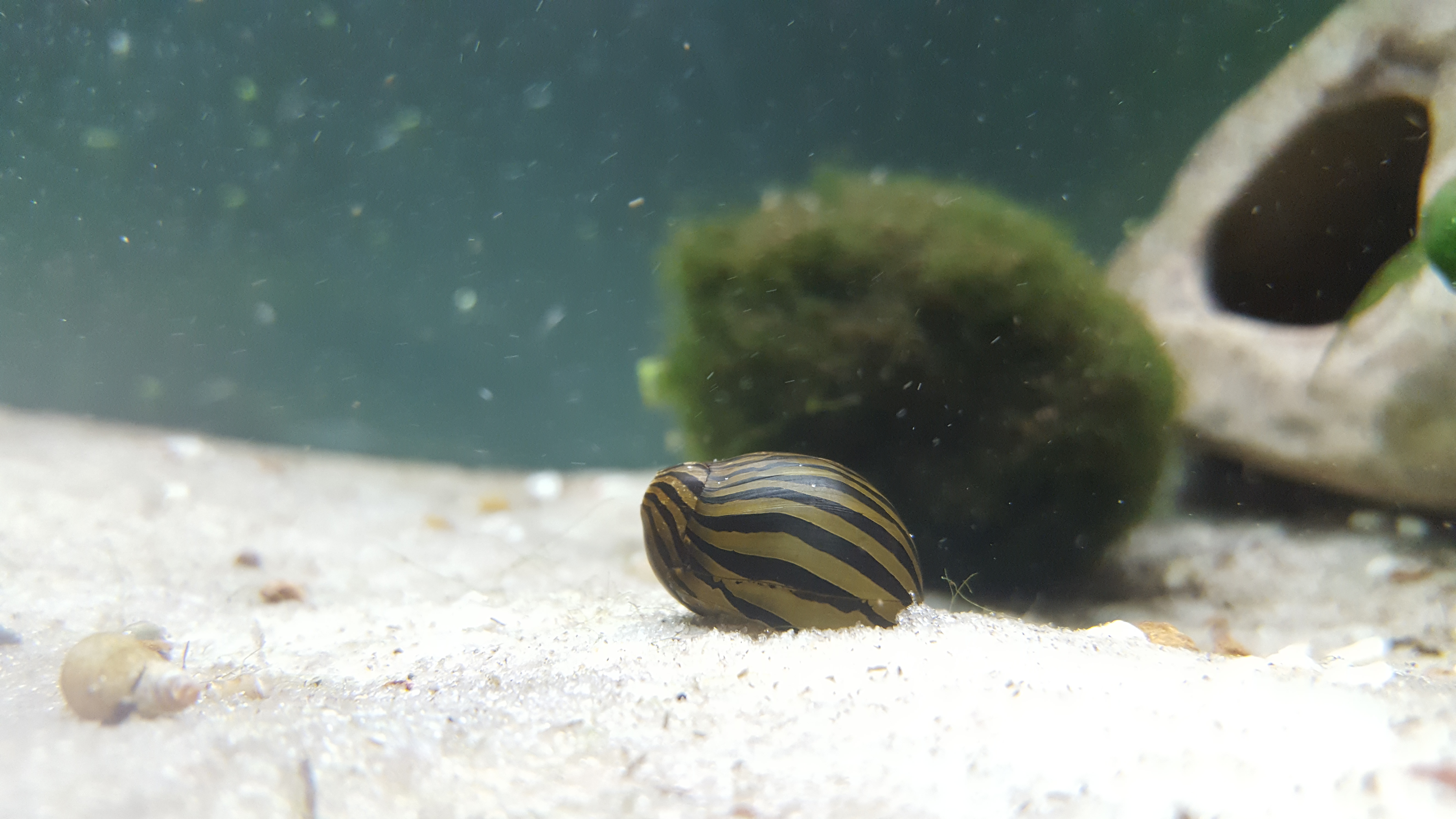
Nerite snails are the most common first tank mate for a betta, and for good reason. They clean algae, they don't reproduce in freshwater, and they're too armoured for a betta to seriously hurt. But "usually fine" isn't "always fine", and the details that decide it are mostly about tank size and temperature rather than temperament.
Quick Answer
Yes, nerite snails and bettas generally live together well. They share a temperature range, the betta usually ignores the snail, and the nerite's hard operculum protects it from casual nipping.
The two things that decide whether it works: tank size and temperature. Ten gallons or more is the sensible target once you add tank mates, and you'll be running the tank at the betta's preferred 78 to 80°F, which sits at the warm end of what nerites like. Both animals do fine there, but it shortens a nerite's life compared to cooler water.
The real risk isn't the betta eating the snail. It's a nerite starving in a clean tank.
Why the Pairing Works
Temperature overlaps. Bettas want roughly 78 to 82°F. Nerites are commonly kept from about 72 to 80°F. The overlap is real but narrow, and you'll be running toward the top of the nerite's range.
Neither competes with the other. Bettas are carnivores taking prepared foods at the surface and mid water. Nerites graze algae and biofilm off hard surfaces. They're not after the same thing.
Nerites don't overpopulate. This is the big one. Nerites lay small white eggs on hardscape, but those eggs need brackish water to hatch, so they never do in a freshwater tank. You'll never open the lid to a population explosion, unlike with bladder or ramshorn snails. Our guide on nerite snail eggs covers what those white specks are and why they persist.
Nerites are well defended. A nerite can clamp down and seal itself behind its operculum. A betta pecking at one accomplishes nothing.
Bettas are usually indifferent. Most bettas investigate a new snail once and then lose interest permanently.
Tank Size: The Part People Get Wrong
A betta alone can live well in five gallons. The moment you add tank mates, that changes.
The reasonable target is ten gallons or more for a betta plus nerites. The reasoning isn't that a snail takes up much space. It's:
Bioload. Nerites eat a lot and produce a noticeable amount of waste. In a small tank that pushes your parameters faster than you'd expect.
Territory. Bettas are territorial. A larger tank gives a pushy betta somewhere else to be, which reduces the chance of persistent harassment.
Stability. Small volumes swing faster in temperature and chemistry. Adding livestock to a five gallon reduces your margin for error.
Food supply. A nerite needs algae. A small, well maintained tank often doesn't grow enough, and this is the most common way nerites die in betta tanks.
Stocking guidance commonly given is roughly one nerite per five gallons. In a ten gallon that's two snails at most, and one is often the better call. More snails in a small tank means competing for a limited algae supply.
The Real Risk: Starvation
Most nerite deaths in betta tanks aren't from the betta. They're from not enough food.
A nerite is an efficient algae eater. Drop one into a clean, well lit, well maintained ten gallon and it can strip the available algae within a couple of weeks. After that it's slowly starving, and the decline is gradual enough that people don't connect it to feeding.
Signs a nerite isn't getting enough:
- •Sitting motionless for long stretches, especially high on the glass
- •Visible retreat of the body into the shell over weeks
- •New shell growth at the opening looking thin or translucent
- •Death after two or three months with no other explanation
The fix is straightforward: feed it directly. Algae wafers are the standard, dropped in after lights out so the snail gets to them. Blanched zucchini, spinach, or green beans work well too. Feed a couple of times a week and remove uneaten portions after a day.
A tank that grows some algae is a better home for a nerite than a spotless one.
Temperature: An Honest Trade
You'll be running the tank for the betta, which means 78 to 80°F. That's within what nerites tolerate but at the warm end.
Warmer water raises a snail's metabolism, which means it eats more and typically lives less long. Nerites can live several years in cooler water; in a betta tank, expect toward the shorter end.
That's an acceptable trade rather than a reason to avoid the pairing. Just don't run the tank warmer than the betta actually needs, and make sure feeding keeps up with the raised metabolism.
Water Parameters
Nerites need harder water than many keepers realize, because they're building a calcium carbonate shell.
- •pH: neutral to slightly alkaline, roughly 7.0 to 8.0. Bettas tolerate this range comfortably.
- •GH: moderate to hard. Very soft water causes shell erosion over time, showing as pitting or a thin, white, worn appearance near the tip.
- •KH: some carbonate hardness helps hold pH steady and supports shell health.
- •Ammonia and nitrite: zero. Snails are sensitive to both.
If you're running soft water, a nerite will slowly deteriorate. Adding a source of calcium such as a cuttlebone or crushed coral in the filter addresses it. A GH and KH test kit tells you where you stand, and a master test kit covers ammonia, nitrite, nitrate, and pH.
Never use copper. This is the standard invertebrate warning and it applies fully to snails. Many fish medications, especially treatments for ich and external parasites, are copper based and will kill a nerite. If your betta needs medicating, move the snail out first and read every label.
When the Pairing Goes Wrong
Most bettas ignore snails. Some don't. Signs of a problem:
Persistent flaring at the snail. Occasional flaring at anything new is normal. Repeated flaring days later is not.
Nipping at the antennae. The nerite's tentacles are the one vulnerable part. A betta that has learned to nip them will keep the snail permanently retracted, and a retracted snail isn't eating.
The snail staying closed for days. Healthy nerites move around, often more at night. A snail that's sealed up constantly is stressed.
The snail climbing above the waterline and staying there. Nerites do wander above the water occasionally, which is normal. Consistently sitting above the line can indicate it's avoiding something, or that water quality is poor.
If the betta is genuinely harassing the snail, you have three options: add more cover so the snail can graze out of sight, move to a larger tank, or separate them. Adding plants and hardscape solves most cases, since it breaks sightlines and gives the betta less to fixate on.
Setting It Up Properly
Cycle the tank first. Snails are sensitive to ammonia and nitrite. Our guide on cycling a tank covers the process.
Ten gallons or more. Five works for a betta alone; add tank mates and you want more volume.
Let some algae grow. Resist scrubbing every surface. Leave the back glass and some hardscape for the snail.
Add plants and hardscape. Cover reduces betta fixation and adds grazing surface. Moss works well and holds biofilm.
Acclimate slowly. Drip acclimate the snail like any invertebrate. Our guide on acclimating applies to snails too.
Place the snail upright. A nerite dropped on its back can struggle to right itself, especially on smooth substrate. Set it on the glass or a flat surface.
Watch for a week. Most incompatibility shows up early.
What About Adding Shrimp Too?
A common follow up question. Bettas and shrimp are a much less reliable combination than bettas and snails, because shrimp are soft, small, and exactly the right size to look like food. Some bettas ignore shrimp entirely and some hunt them relentlessly, and you can't tell in advance.
Our guide on whether shrimp can live with bettas covers how to improve the odds, including heavy planting and choosing larger shrimp species. If you want a guaranteed peaceful cleanup crew for a betta tank, nerites are the safer choice.
Frequently Asked Questions
◆Will my betta eat a nerite snail?
Almost certainly not. A nerite's shell and operculum make it effectively invulnerable to a betta. The realistic risk is a betta nipping at the snail's tentacles, which stresses it and keeps it retracted. Adding cover usually resolves that.
◆How many nerite snails can I keep with a betta?
Roughly one per five gallons. In a ten gallon betta tank that means one or two. More snails than your algae supply supports means supplementing food heavily, and it adds bioload to a small volume.
◆Can I keep a nerite snail with a betta in a 5 gallon tank?
It's possible but tight. Five gallons is already the sensible minimum for a betta alone, and adding a snail increases bioload and reduces your margin for error. Ten gallons is the better answer if you can manage it.
◆Why is my nerite snail not moving?
Nerites are often inactive during the day and more active at night, so short periods of stillness are normal. Sustained immobility over days suggests starvation, poor water quality, or stress from the betta. Check parameters, feed directly, and watch for nipping.
◆Do nerite snail eggs hatch in a betta tank?
No. Nerite eggs need brackish water to develop, so in freshwater they never hatch. The small white specks stick to hardscape and glass and can be scraped off, but they're purely cosmetic and pose no risk of overpopulation.
The Bottom Line
Nerites and bettas are one of the more reliable pairings in the hobby. Give them ten gallons or more, keep water at the betta's temperature while accepting that shortens a nerite's life a little, make sure the tank has enough hardness for shell growth, and feed the snail directly rather than assuming it'll find enough algae.
The failure mode to plan around isn't aggression. It's a clean tank slowly starving a snail nobody noticed was hungry. For more on nerites generally, our nerite snail care guide covers varieties, lifespan, and shell health in detail.
Found this helpful?
Check out our other shrimp care guides