Ghost Shrimp and Betta: Will They Last in the Same Tank?
Ghost shrimp and betta can share a tank, but it hinges on your betta's temperament, real plant cover, and buying true ghost shrimp over an aggressive look-alike.
📅 Published 2026-10-23
Ghost shrimp are the cheapest tankmate most betta keepers reach for. They cost pocket change, they clean up scraps, and they're big enough that an adult looks like more trouble than a snack. So the question comes up on every betta forum: can you drop a few ghost shrimp in with a betta and expect them to live?
The short version is that it often works, and it sometimes ends in a week with one shrimp left. Two things decide which way it goes, and neither is luck. One is your betta's personality. The other is whether the shrimp in the bag is actually a peaceful ghost shrimp or an aggressive look-alike that stores sell under the same name. Get both right and you've got a calm little cleanup crew. Get them wrong and you've either fed your betta an expensive live meal or dropped a fin-nipper into a five gallon tank.
Quick Answer
Adult ghost shrimp and a betta can live together in a planted tank of 10 gallons or more, as long as the betta is calm, well fed, and the shrimp are true ghost shrimp rather than a larger aggressive species. The water needs are close enough to share: both want zero ammonia and nitrite, and their temperature and pH ranges overlap around 78F and pH 7.2.
The risks are real and worth naming up front. An aggressive betta will hunt shrimp no matter how big they are. Any shrimp fry that hatch will get eaten. And some shrimp sold as "ghost shrimp" are whisker shrimp or other species that grow large and can turn on the betta. Buy adults, plant heavily, keep the betta fed, and watch the first two weeks closely.
Why Ghost Shrimp Get Paired With Bettas So Often
Ghost shrimp earn their spot in betta tanks on price and availability. Most fish stores keep a tank of them for a few cents to half a dollar each, often in the same cooler as the feeder guppies. That low cost is also the warning label. As the care guide at Aquariadise explains, these shrimp are usually raised and sold as feeder shrimp, which means they're bred for volume, held in crowded tanks, and carry a higher chance of parasites or disease than shrimp bought as pets. A keeper on the Aquarium Co-Op forum made the same point, noting that ghost shrimp are much cheaper than amano shrimp but more likely to arrive carrying something.
They do pull their weight once they settle. Ghost shrimp graze algae, pick at leftover food, and scavenge detritus, which is the same cleanup job cherry and amano shrimp do. The difference is size. Hepper's care guide and Build Your Aquarium both put adult ghost shrimp at roughly 1 to 1.5 inches, with females reaching the top of that range and males staying smaller. A betta can swallow a juvenile cherry shrimp whole, but a full grown ghost shrimp is a harder mouthful, and that extra size is most of the reason they survive a betta at all.
If you want a shrimp that cleans better and lasts longer, amano shrimp are the usual upgrade. Our amano shrimp vs ghost shrimp comparison lays out the trade: amanos cost more and are harder to find in chain stores, but they're hardier, bigger, and stronger algae eaters.
The Honest Odds
Here's where the sources stop agreeing, because the outcome depends on the individual betta. Tankarium's guide and Hepper both say adult ghost shrimp usually survive with a betta that has a relaxed temperament and a full belly. Then you read the forum threads and find keepers reporting the opposite: shrimp disappearing one by one over a few days, a betta that hunts them down, even a betta that picks the eyes off shrimp overnight.
Both accounts are honest. A calm, well-fed betta frequently ignores adult ghost shrimp for months. An aggressive or hungry one treats them as the feeder food they were sold as. There's no way to know which betta you own until you try, so go in expecting that it might not work and keep the option to separate them.
Your Betta's Temperament Is the Deciding Factor
Bettas are carnivores with a lot of individual personality, and that personality is the single biggest variable here. Some bettas share a tank with shrimp, snails, and small fish without a fuss. Others see any movement as prey and will not tolerate a tankmate of any kind. You cannot tell from the color at the store, and you cannot train it out of them.
A few things tip the odds. Several guides note that female bettas tend to run calmer than males, though plenty of individual males are peaceful and some females are terrors, so sex is a hint rather than a rule. A betta that eats a proper diet is less likely to go hunting, because a hungry betta will chase a shrimp a full betta would ignore. And a young betta added to an established shrimp tank often does better than an older betta that has ruled a tank alone for a year and sees a newcomer as an intruder.
The practical move is to watch. Add the shrimp, then sit across the room for twenty minutes. A betta that flares, charges, and chases is telling you the answer. A betta that drifts over, looks, and loses interest is one you can probably trust, though you should still check on them over the next couple of weeks.
Do Ghost Shrimp and Betta Want the Same Water?
On paper, yes, with a small amount of give and take. Bettas like it warm and close to neutral. Ghost shrimp tolerate a wider band and lean slightly harder and more alkaline. The ranges below come from Hepper and Build Your Aquarium for the shrimp and from ornamentalfish.org and fishkeeping guides for the betta, and where they disagreed I took the tighter overlap.
| Parameter | Betta | Ghost shrimp | Where to set it |
|---|---|---|---|
| Temperature | 76 to 82F | 65 to 82F | 78F |
| pH | 6.5 to 7.5 | 7.0 to 8.0 | 7.2 |
| Ammonia / nitrite | 0 | 0 | 0 |
| Minimum tank | 5 gal, 10+ better | 5 gal, 10+ for a group | 10 gal |
Temperature is the easy part: hold the tank at about 78F and both animals are comfortable. The betta needs a heater, and the shrimp don't mind one. pH takes a little judgement, since the betta wants it a touch lower and the shrimp a touch higher, but 7.0 to 7.4 keeps both inside their range. The non-negotiable is ammonia and nitrite at zero. Shrimp are more sensitive to both than bettas, and a cycling or overstocked tank will kill the shrimp long before the betta shows stress. Cycle the tank first and check it with a reliable kit like the API Freshwater Master Test Kit before anything goes in.
The Look-Alike Problem Nobody Mentions at the Register
This is the part that catches people, and it matters more than the betta's mood. "Ghost shrimp" is not one species. It's a catch-all name stores slap on just about any transparent freshwater shrimp. Tankarium and The Shrimp Farm both warn that the peaceful animal you want is a true ghost shrimp from the genus Palaemonetes, and that other shrimp get mixed in or mislabeled all the time.
The dangerous substitute is the whisker shrimp and its larger relatives in the genus Macrobrachium. These grow far bigger than a true ghost shrimp, and they're predatory. A large whisker shrimp will catch small fish, and it can harass or injure a betta rather than the other way around. They look so similar to ghost shrimp in the store tank that even careful buyers take them home by accident. The tell is the second pair of legs: whisker shrimp have a noticeably longer, heavier set of front claws. Our whisker shrimp vs ghost shrimp guide walks through how to tell them apart at the tank before you buy.
If you bring home a true, thumbnail-sized Palaemonetes, you have a peaceful scavenger. If you bring home a three inch Macrobrachium that was in the same tank, you have a predator in with your betta. Same sign on the tank, completely different animal.
Can a Ghost Shrimp Hurt a Betta?
Sources split on this, so here's both sides. Most reputable care pages say a true, small ghost shrimp is no threat to a healthy betta. They're scavengers, not hunters, and they eat what's already dead or too slow to matter. Petfishonline makes this case plainly: attacking a living fish isn't in their nature.
The counter-claim is that ghost shrimp will nibble a fish that's asleep or sick, and that a slow, long-finned betta caught unaware is a candidate. You'll find this repeated on lower-quality pages and in scattered forum reports, including a betta owner who found a bite missing from the fish's lip and wondered if a shrimp did it. The problem with those reports is that they rarely confirm the shrimp started it, and several almost certainly involve a mislabeled large shrimp rather than a true ghost shrimp. A fish found with a shrimp clinging to its tail was often dying already, and the shrimp was scavenging, not hunting.
The fair read is this. A true ghost shrimp of normal size is very unlikely to hurt a healthy, active betta. If you see fin damage, your first suspect should be either the betta nipping itself on decor or a misidentified large shrimp, not a peaceful Palaemonetes. Still, if a betta is old, ill, or recovering, a tank full of hungry scavengers is not where you want it resting.
How to Set the Tank Up for the Best Odds
Stacking the deck in the shrimp's favor is mostly about cover and timing.
Go 10 gallons or bigger. A betta and a shrimp can technically share a five gallon tank, but a bigger tank gives the shrimp room to stay out of the betta's patrol route and keeps the water more stable for the sensitive shrimp.
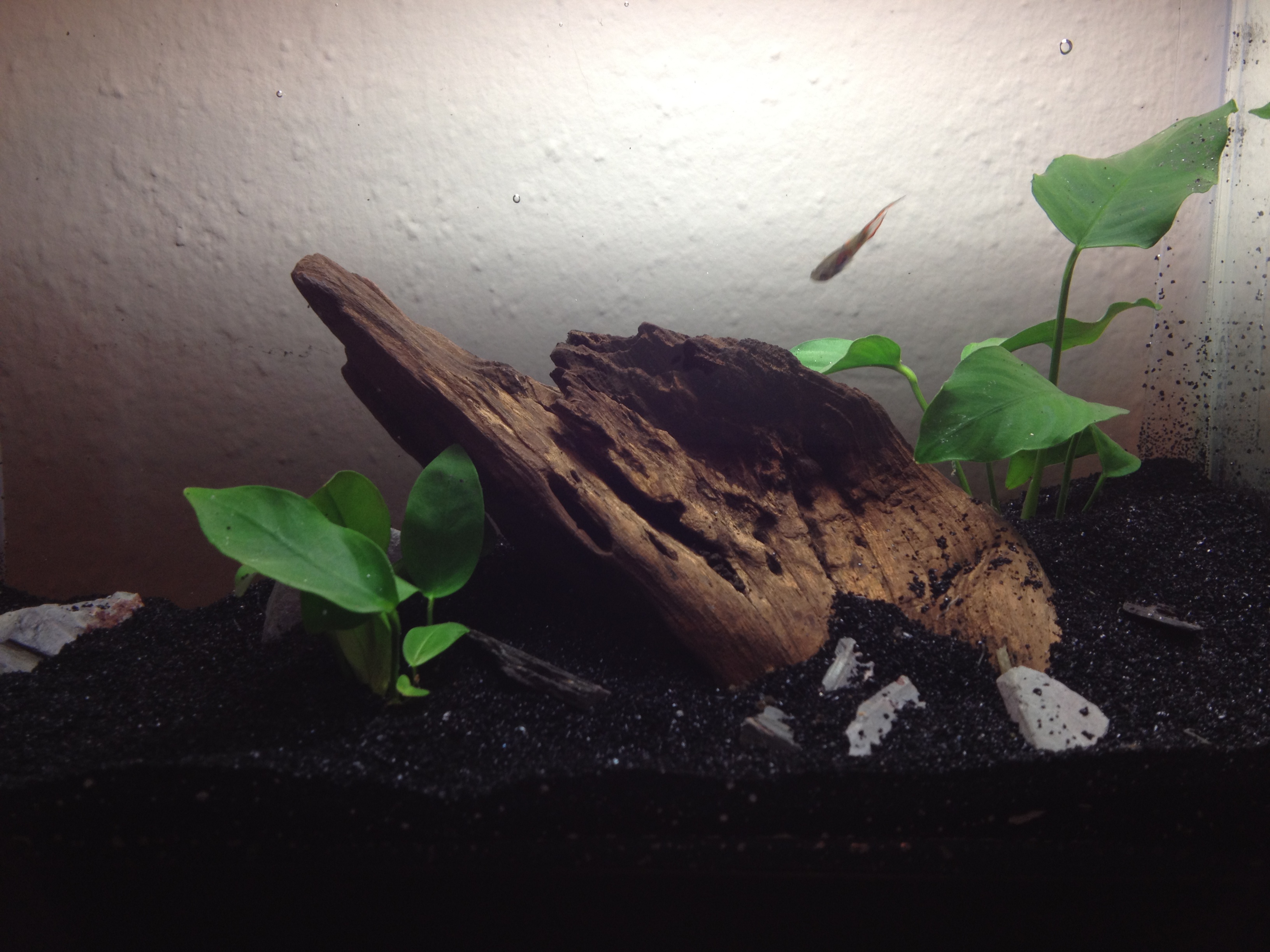
Plant it heavily and add hardscape. This is the biggest single thing you can do. Dense java moss, a tangle of driftwood, cholla wood, and plants like anubias give a shrimp somewhere to vanish the instant the betta takes an interest. A bare tank with one plastic plant is a betta's hunting ground. Our can shrimp live with bettas guide covers the planted-tank approach in more detail.
Keep the betta well fed. A betta on a regular, proper diet has far less reason to chase a tankmate. Feed the betta before you add the shrimp so it isn't on the prowl.
Add adults, and add them first. Buy the largest ghost shrimp in the store tank, because size is survival here. If you can, establish the shrimp in the tank before the betta arrives so they've already claimed their hiding spots. Acclimate them slowly, since shrimp handle sudden water changes worse than bettas do. Our how to acclimate shrimp walkthrough covers the drip method.
Use a gentle filter. Ghost shrimp get sucked into strong intakes, and bettas dislike heavy flow, so a sponge filter suits both. It gives the shrimp a surface to graze and won't blow the betta around.
One thing you cannot engineer: surviving fry. If your ghost shrimp breed, the larvae and tiny shrimplets are betta food, full stop. A planted tank might let the occasional one slip through, but do not plan on a growing colony in a betta tank the way you might in a species-only tank.
What Failure Looks Like, and When to Separate
Watch for the signs that the pairing isn't working. A shrimp count that drops every few days, a betta that stakes out the shrimp's hiding spot and waits, shrimp that never come out even to feed, or torn betta fins with no other explanation. Any of those means the current setup isn't holding.
Have a backup ready before you start. A cheap plastic breeder box, a spare cycled tank, or even a bucket with a sponge filter gives you somewhere to move the shrimp if the betta turns on them. Going in with an exit plan is the difference between a cheap experiment and a dead shrimp you feel bad about. If you'd rather not gamble, the safest shrimp for a betta is the amano, which is big enough and quick enough that most bettas give up. Our amano shrimp and betta guide covers that pairing.
Frequently Asked Questions
◆Will a betta eat ghost shrimp?
It can, and some do. An adult ghost shrimp at 1 to 1.5 inches is too big for most bettas to swallow, so a calm, well-fed betta usually leaves them alone. A hungry or aggressive betta will still hunt and kill them, and any baby shrimp are easy prey. Watch the first two weeks closely.
◆How many ghost shrimp can I keep with a betta?
In a 10 gallon tank, start with three to five adult ghost shrimp. A small group lets them spread out and means a single loss isn't the whole crew. Add more only after you've seen the betta ignore the first batch for a few weeks. Avoid overstocking, since more shrimp means more waste for the sensitive animals to handle.
◆Are ghost shrimp or cherry shrimp better with a betta?
Ghost shrimp are larger as adults, which makes them harder for a betta to eat than a cherry shrimp. Cherry shrimp are smaller and breed readily, so their offspring tend to get eaten and the colony struggles in a betta tank. For a single-shrimp cleanup crew, adult ghost shrimp survive better, but amano shrimp beat both for durability.
◆Do I need a separate heater for ghost shrimp?
No. Ghost shrimp tolerate the same 76 to 82F range a betta needs, so the one heater that keeps the betta warm keeps the shrimp comfortable too. Aim for about 78F. The shrimp handle cooler water than a betta would, so the betta's needs set the thermostat.
◆Can ghost shrimp breed in a betta tank?
They can breed, but the young rarely survive. Ghost shrimp release free-swimming larvae that drift in the water column, exactly where a betta hunts. In a heavily planted tank an occasional shrimplet might reach adulthood, but you should not expect a self-sustaining colony with a betta present.
The Bottom Line
Ghost shrimp and a betta can share a tank, and the setup that works is simple to describe even if the outcome isn't guaranteed: a planted 10 gallon, a calm and well-fed betta, adult true ghost shrimp, and a close eye on the first two weeks. The two things that sink most attempts are an aggressive betta you can't change and a mislabeled large shrimp you can avoid by learning what a real ghost shrimp looks like. Buy adults, plant the tank thick, keep a backup container handy, and read our ghost shrimp care guide so the shrimp are healthy going in.
Found this helpful?
Check out our other shrimp care guides