Can Shrimp Live With Dwarf Gouramis? What Really Happens
Can shrimp live with dwarf gouramis? Adult amano and ghost shrimp usually can, but shrimp babies get eaten. What survives, what doesn't, and how to improve the odds.
📅 Published 2026-10-03
You want the calm slice of color a dwarf gourami adds to a planted tank, and you already have a shrimp colony you'd rather not feed to it. So can shrimp live with dwarf gouramis? The honest answer is that it depends almost entirely on the size of the shrimp and the size of the gourami's mouth, and that a mixed tank usually ends up as a colony of adult survivors rather than the breeding population you started with.
Dwarf gouramis are not predators that hunt shrimp down the way a pea puffer or a larger cichlid will. They're slow, mostly peaceful fish that pick at anything small enough to fit in their mouth when they happen to pass it. That one habit is the whole story. An adult amano shrimp is safe because it's too big to swallow. A newborn cherry shrimp drifting past a gourami's face is a snack. Everything below is about where your shrimp fall on that line and how to push the odds their way.
Quick Answer
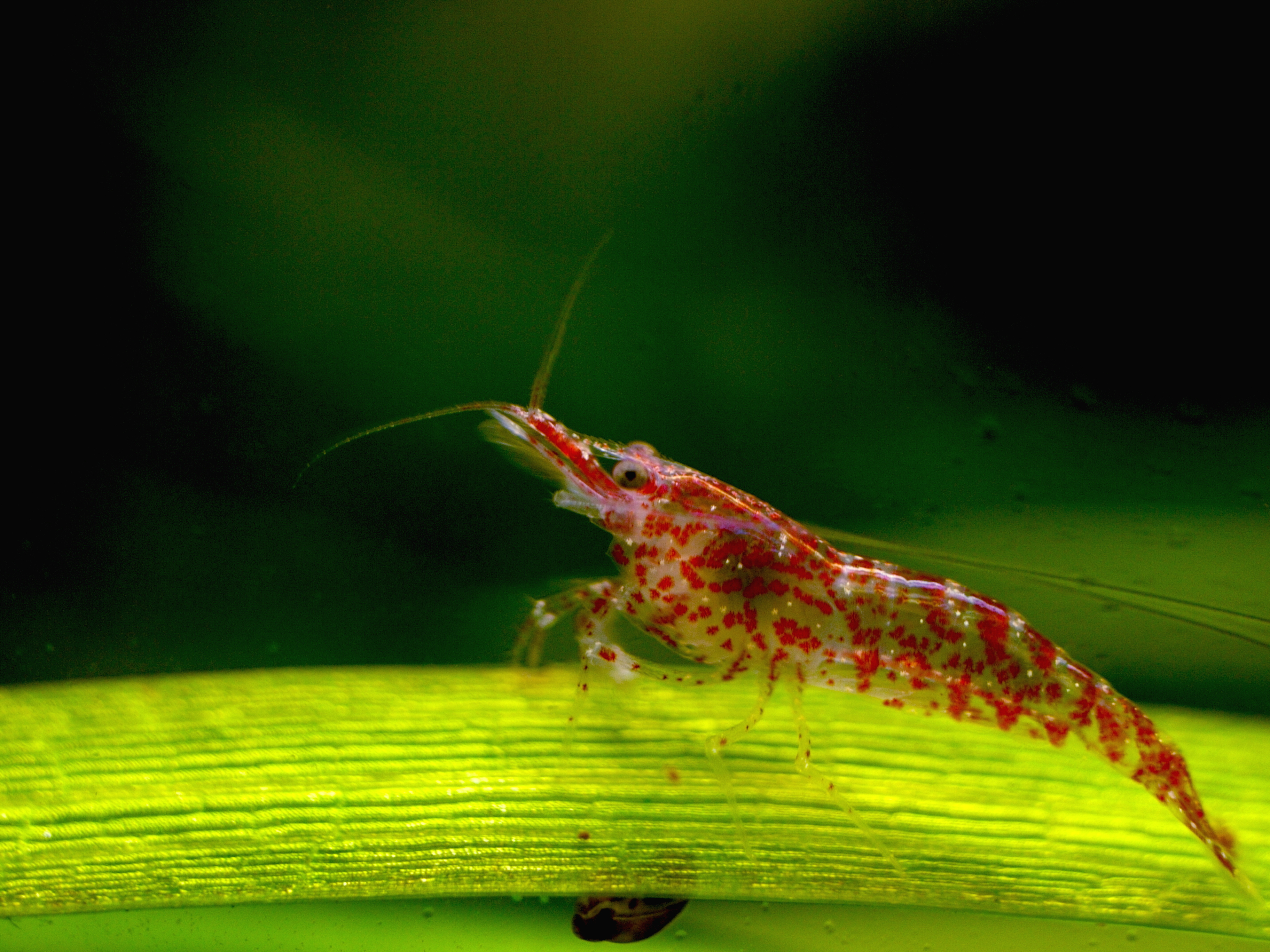
Adult amano and ghost shrimp usually live fine with dwarf gouramis because they're too big to be eaten. Adult cherry and other neocaridina shrimp are often fine too, but their shrimplets will be picked off, so the colony stops growing even if the adults survive. Caridina like crystals and Taiwan bees are a poorer match, mostly because of a temperature clash rather than predation.
Dwarf gouramis aren't aggressive hunters. The risk is opportunistic snacking on anything small. If you want shrimp to breed and multiply, a dwarf gourami tank isn't the place. If you just want a few large shrimp as a cleanup crew, amanos alongside a gourami work well. Heavy planting, moss, an established colony, and a well-fed gourami all tilt things toward the shrimp.
The Short Version: It Comes Down to Size
Every reputable gourami care guide lands on the same point from a different angle. AquariumStoreDepot recommends amano and ghost shrimp as tank mates specifically because, in their words, "Amanos are too big to fit in a dwarf gouramis mouth. Thus, eating shrimp becomes too challenging for your Dwarf Gouramis." The microaquaticshop guide makes the matching case for cherry shrimp: they're compatible but smaller, so the advice is to introduce "adult shrimp first (not babies)" and accept that babies are fair game.
So this isn't a yes or no question. It's a question of which life stage of which shrimp you're asking about. A tank can hold a dozen happy adult cherries and still never show you a single surviving baby, because the adults are too big to eat and the babies aren't. That outcome surprises people who expected either total success or a massacre, and it's the most common real result.
What a Dwarf Gourami Actually Is
Before you plan tank mates, it helps to know what you're working with. The dwarf gourami (Trichogaster lalius) is a labyrinth fish, which means it gulps air at the surface and needs access to it. It's slow, a little shy, and spends most of its time in the mid and upper water rather than hunting the substrate where shrimp graze. That vertical separation is part of why the pairing works at all.
Here are the numbers the care sheets agree on, with the one range where they don't.
| Trait | Dwarf gourami |
|---|---|
| Adult size | 2 to 3.5 in (5 to 8.8 cm), males larger |
| Temperament | Mostly peaceful, males occasionally semi-aggressive |
| Temperature | 72 to 82F, comfort zone 77 to 82F |
| pH | Sources vary: 5.5 to 7.5 depending on the guide |
| Minimum tank | 10 gallons for one, 20+ for a group |
| Lifespan | 4 to 6 years |
| Diet | Omnivore, eats small inverts opportunistically |
The size figure is the one that matters for shrimp. At a maximum of about 3.5 inches with a correspondingly small mouth, a dwarf gourami can only swallow something quite small. Aquariumbreeder and Fishlore both put the adult size in the 2 to 3.5 inch band. That upper limit is why amano shrimp, which reach around 2 inches, sit safely out of reach while a 1/4 inch shrimplet does not.
Which Shrimp Survive and Which Get Eaten
Think of it as a sliding scale from "safe" to "snack." The bigger the shrimp, the safer it is.
| Shrimp | Adult size | Verdict with a dwarf gourami |
|---|---|---|
| Amano shrimp | up to ~2 in (5 cm) | Safe. Too big to eat, fast to flee |
| Ghost shrimp | ~1.5 in | Usually safe as adults |
| Cherry / neocaridina | ~1 to 1.5 in | Adults often fine, shrimplets eaten |
| Bamboo / vampire shrimp | 2 to 4 in | Safe by size, but filter feeders with their own needs |
| Any shrimplet | under 1/4 in | Not safe, treated as live food |
Amano shrimp are the standout choice. Beyond their size, the microaquaticshop guide notes they're "really good at getting out of the way quickly," and amanos famously don't breed in freshwater anyway, so there are no vulnerable babies to lose. You get the cleanup-crew benefit with none of the predation heartbreak. Our amano shrimp care guide covers keeping them well.
Cherry shrimp and other neocaridina are the gamble most people are actually asking about. Adults are near the edge of what a dwarf gourami can manage, so a healthy adult usually survives, especially in a planted tank. Their offspring do not. If your goal was a growing colony, a gourami quietly caps it. For a fuller picture of which fish are and aren't safe, our best tank mates for cherry shrimp guide and the companion piece on what fish eat shrimp are worth reading before you buy.
The Water Parameter Problem Nobody Mentions
Predation gets all the attention, but there's a quieter mismatch that can make the pairing a bad idea even when nobody gets eaten: temperature.
Dwarf gouramis want it warm. Their comfort zone runs 77 to 82F, and most guides are reluctant to keep them below the mid 70s. Neocaridina shrimp, by contrast, prefer it cooler. Our shrimp water parameters guide puts cherry shrimp at 65 to 78F, with the upper end already warmer than ideal for them. The two comfort zones barely touch, overlapping only in a narrow band around 75 to 78F. You can hold that window, but it leaves no margin, and you're keeping both animals at the edge of their range rather than in the middle of it.
pH is more forgiving. Neocaridina sit comfortably from 6.5 to 8.0, and dwarf gouramis tolerate roughly 6.0 to 7.5, though here the sources genuinely disagree, with care sheets quoting anywhere from 5.5 to 7.2 as the sweet spot. The overlap from about 6.5 to 7.5 suits both, so pH rarely forces the decision. Temperature does.
Caridina shrimp make the clash worse. Crystals and Taiwan bees want cool, soft, acidic water, often 68 to 76F, which pulls in the opposite direction from a gourami's heat preference. Between the temperature gap and the price of the shrimp, mixing high-grade caridina with dwarf gouramis isn't a pairing anyone recommends.
Before You Buy: The Dwarf Gourami Health Problem
This one has nothing to do with shrimp and everything to do with heartbreak, so it belongs in any honest guide. Dwarf gouramis carry an unusually high rate of a viral disease, Dwarf Gourami Iridovirus (DGIV), also called Dwarf Gourami Disease. It comes from generations of inbreeding in the fish farms that supply the trade.
The numbers are grim and the sources vary, which tells you how hard it is to pin down. The hygger guide cites a figure of around 25 percent of dwarf gouramis shipped from Asian farms being infected, while AquariumStoreDepot says plainly that "Iridovirus has devastated the farmed dwarf gourami supply, meaning a significant percentage of dwarf gouramis sold in stores carry a fatal virus." What the sources agree on is the ending: there's no cure, and once symptoms appear the disease is usually fatal, with reported mortality running very high. A carrier can look healthy for months before it declines.
The practical takeaways are two. First, buy from a reputable source, ideally captive-bred or wild-type rather than mass-farmed stock, and quarantine before adding anything to an established tank. Second, and this is where it circles back to your shrimp: there's no treatment for the virus itself, and many of the medications people reach for when a gourami gets sick contain copper. Copper kills shrimp. Even trace amounts are lethal to them. Before you dose anything into a shared tank, read our shrimp-safe fish medications guide, because a well-meant treatment for the fish can wipe out the invertebrates overnight.
How to Stack the Odds in the Shrimp's Favor
If you've decided the pairing is worth it, these are the levers that actually move the outcome. None of them makes shrimplets bulletproof, but together they turn a colony that slowly disappears into one that holds steady or even inches up.
Plant it heavily, then plant it more. This is the big one. A thicket of java moss, anubias, and floating plants gives shrimp and their babies somewhere a gourami simply can't follow. The microaquaticshop guide recommends exactly this, along with rock caves and driftwood. Moss is the best shrimplet shelter there is because the tiny shrimp spend their first weeks deep inside it where no fish can reach.
Put the shrimp in first, as a mature colony. Add the shrimp weeks before the gourami and let them breed and settle. A colony of 20 or 30 established adults can outbreed the losses in a way that five nervous new arrivals can't. Introducing adults rather than juveniles, as both guides advise, also means every shrimp you add is already too big to eat.
Feed the gourami well. A gourami hunting for its next meal patrols more than a full one does. Keep it fed on a proper diet so a passing shrimp is a bonus, not dinner. It helps to feed shrimp-specific food too, so the invertebrates aren't outcompeted at mealtime.
Keep the tank bigger than the minimum. More water means more hiding room and more distance between a gourami and the shrimp's grazing spots. A 20 gallon long with dense planting gives a colony room to persist; a 5 gallon with one gourami rarely does.
Accept what you're signing up for. Even with everything above, expect few or no shrimplets to make it in a tank with a gourami. If a growing colony matters to you, give the shrimp their own tank and enjoy the gourami in a community setup with larger tank mates.
A Realistic Setup That Works
Picture a 20 gallon long, heavily planted, with a big cushion of java moss along the back and driftwood tangled with more moss. A single male dwarf gourami cruises the upper third. Along the bottom, a dozen amano shrimp work over the plants and glass, completely ignored by the fish because they're too big to bother with. The temperature sits at 77F, which keeps the gourami comfortable and is just inside the amanos' tolerance.
That tank is calm, it looks finished, and nothing is getting eaten. It works because the shrimp were chosen to be too large to fit the gourami's mouth, not because the gourami was persuaded to behave. Swap the amanos for cherries and you'll still have a handsome tank, but you'll be running a colony of adults that never quite grows, and you'll make your peace with that or you won't.
Frequently Asked Questions
◆Will a dwarf gourami eat cherry shrimp?
Adult cherry shrimp are near the upper limit of what a dwarf gourami can swallow, so healthy adults in a planted tank often survive. Their babies do not. A gourami treats shrimplets as live food, so the colony stops growing even when the adults are safe.
◆Are amano shrimp safe with dwarf gouramis?
Yes, amanos are the safest choice. At around 2 inches they're too big to fit a dwarf gourami's mouth, and they dart out of the way quickly. Because amanos don't breed in freshwater, there are no vulnerable shrimplets to lose either.
◆What is the best shrimp to keep with a dwarf gourami?
Amano shrimp, by a clear margin. They give you the algae-eating cleanup crew benefit, they're too large to be eaten, and they produce no babies that could become snacks. Ghost shrimp are a reasonable budget alternative as adults.
◆Do I need to worry about dwarf gourami disease?
Yes. A significant share of farmed dwarf gouramis carry an incurable iridovirus, so buy from a reputable breeder and quarantine new fish. It matters for shrimp too, because the copper-based medications often used on sick gouramis are lethal to shrimp.
The Bottom Line
Can shrimp live with dwarf gouramis? Big shrimp can, small shrimp mostly can't, and babies never will. Amano and ghost shrimp are safe as adults because they're too large to eat; adult cherries usually survive but their offspring won't, so a colony stops growing. Mind the narrow temperature overlap, buy your gourami carefully because of the iridovirus risk, and never reach for copper medications in a shared tank. If you want shrimp that breed and multiply, give them their own tank and read our best tank mates for cherry shrimp guide for safer company.
Found this helpful?
Check out our other shrimp care guides