Marimo Moss Balls in Shrimp Tanks: Care, Safety, and Why Shrimp Love Them
What marimo moss balls really are, why shrimp love grazing them, cool-water care, spotting fakes, and buying safely after the zebra mussel scare.
Last updated: July 2026 | 8 min read
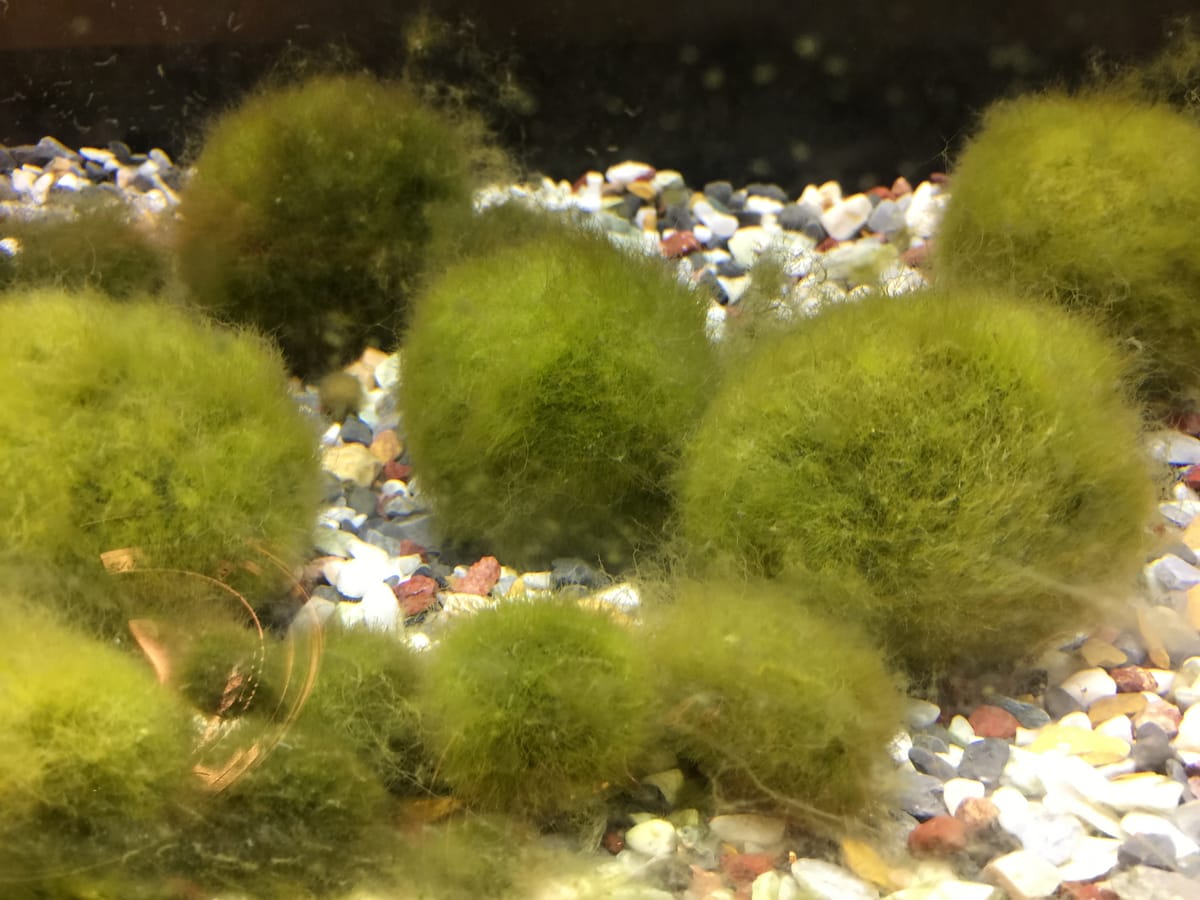
Marimo moss balls might be the most misnamed plant in the aquarium hobby. They are not moss, they are not a plant in the everyday sense, and the fuzzy green sphere at your local fish store is a rare form of algae that takes decades to reach that size in the wild. They are also one of the best additions you can make to a shrimp tank: a living grazing station that asks for almost nothing in return.
Quick Answer
| Question | Answer |
|---|---|
| What is it? | Aegagropila linnaei, a filamentous green algae, not a moss |
| Shrimp safe? | Completely, and shrimp actively graze it |
| Light | Low to moderate, indirect; no direct sun |
| Temperature | Cool water; happiest below about 75°F |
| Growth rate | Slow, roughly 5 mm per year |
| Care | Roll it occasionally, rinse at water changes |
| Watch out for | Fakes, and unverified imports (see the zebra mussel section) |
What Marimo Actually Is (Not a Moss)
Marimo is Aegagropila linnaei, a filamentous green algae formerly classified in the genus Cladophora. Each ball is thousands of fine filaments growing radially outward, forming solid algae all the way through, no core, no stem, no roots. The spherical shape comes from gentle wave action in a handful of cold lakes, which slowly rolls the colonies so every side gets light.
The most famous wild population lives in Lake Akan in Hokkaido, Japan, where giant marimo are protected as a national treasure. Wild populations in Iceland and northern Europe have declined sharply in recent decades, so the nursery-grown balls in the hobby are the only responsible source.
Two facts from the wild explain almost everything about marimo care:
- •They grow absurdly slowly, on the order of 5 mm per year. A tennis-ball marimo is likely older than the person selling it.
- •They live in cold, dim water. In Lake Akan, winter ice shields marimo from strong light while the water hovers just above freezing. Marimo are built for cool and shady, not tropical and bright.
For shrimp keepers this is convenient: a marimo never overgrows the tank, never needs trimming, CO2, or fertilizer, and cannot melt and foul the water like delicate stem plants.
Why Shrimp Love Marimo
Drop a marimo into an established shrimp tank and it usually has passengers within the hour:
- •Biofilm grazing surface. Those thousands of filaments add enormous surface area, and every strand collects the biofilm and microorganisms that make up most of a dwarf shrimp's natural diet. Shrimp are not eating the marimo; they are grazing the buffet growing on it. For shrimplets, which graze constantly and hide from everything, a marimo is prime real estate.
- •A food trap that works for you. The fuzzy surface catches drifting food dust and debris, and shrimp pick it clean.
- •Zero risk. No sharp edges, no melting foliage, safe with every dwarf shrimp species.
If you are building out grazing surfaces, marimo pair naturally with the options in best mosses for shrimp tanks and the picks in best plants for shrimp tanks.
One myth worth retiring: marimo grow far too slowly to absorb meaningful nutrients, so they will not fix an algae problem or "clean" your water. For actual algae issues, see shrimp tank algae control.
Marimo Care in a Shrimp Tank
Marimo care rounds to "leave it alone," with three habits:
Roll it now and then. In a tank, the same side always faces the light and the bottom can flatten or brown. Every week or two, gently roll the ball to a new position to keep it round and evenly green.
Give it modest, indirect light. Standard low-to-moderate aquarium lighting is plenty. Direct sunlight is actively harmful; browning and bleaching are classic symptoms of too much light. In a bright planted tank, tuck marimo into a shaded corner.
Keep it cool. This is the one real constraint. Marimo prefer cool water, roughly 50 to 77°F, and prolonged heat above the mid 70s causes browning and decay. Conveniently, that overlaps almost perfectly with dwarf shrimp preferences: a Neocaridina tank at 70 to 74°F or a cooler Caridina tank suits both (targets in the shrimp water parameters guide).
At water changes, gently squeeze and swish the marimo in the removed tank water to flush trapped debris. If it floats afterward, that is trapped air; it will sink within a day or two.
No CO2, no fertilizer, no substrate, no trimming. Marimo are arguably the easiest photosynthetic addition to any shrimp tank setup.
The 2021 Zebra Mussel Episode (and Buying Safely Now)
In March 2021, the aquarium trade had its biggest biosecurity scare in years, and marimo were the vector. A Seattle pet store employee found invasive zebra mussels inside imported moss balls; the U.S. Geological Survey confirmed the report, and within weeks contaminated moss balls had turned up in pet stores across at least 46 states. Zebra mussels are among the most destructive invasive species in North America, capable of overrunning waterways and clogging water infrastructure.
The U.S. Fish and Wildlife Service responded with a national "Destroy, Don't Dump" campaign: freeze, boil, or bleach suspect moss balls, dispose of them in the trash, and never dump aquarium water into drains or waterways. Retailers pulled moss balls nationwide, and contaminated shipments have occasionally resurfaced since, including a detection in Washington State in 2024. The USFWS guidance is archived here: Invasive Zebra Mussels Found in Moss Balls.
◆How to buy marimo safely in 2026
- •Buy from established aquarium retailers, ideally ones stating their marimo are nursery-grown and inspected. Reputable plant sellers and live marimo listings from established brands beat bargain-bin imports of unknown origin.
- •Inspect before it touches your tank. Zebra mussel juveniles look like tiny striped D-shaped clams, a few millimeters across. Check the surface and gently part the filaments.
- •Quarantine anyway. Keep new marimo in a jar of dechlorinated water for one to two weeks. This is good practice for every plant purchase; pest snails, planaria, and dragonfly larvae all ride in on plants.
- •Dispose responsibly. Anything suspect gets sealed in a bag, frozen for 24 hours, and trashed. Never into a drain, toilet, or pond.
One thing not to do: treat new marimo with copper-based dips "just in case." Copper solves the mussel problem and then kills your shrimp.
Fake vs Real Marimo
Marimo's popularity guarantees knockoffs. The common fakes are plastic or fabric spheres sold as decor, and wrapped fakes: a core of foam or plastic mesh with java moss or synthetic fiber netted around it, which can fool buyers for months. How to tell you have the real thing:
- •Squeeze test. A real marimo is soft and springy, holds together like dense wet felt, and wrings out like a sponge. Hard cores, crunchy centers, or mesh you can feel are fakes.
- •Look at the filaments. Real filaments radiate outward in a uniform fuzz. Wrapped fakes show strands running around the ball like yarn, often with visible netting.
- •Check the interior. Parting the fuzz of a real marimo reveals the same filament texture fading paler toward the center. Foam or thread inside settles it.
- •Price and size sanity check. Real marimo grow about 5 mm a year, so a very large, very cheap "marimo" is almost certainly wrapped moss or fabric.
A wrapped java moss ball is not worthless (shrimp will graze it happily), but you should know what you are paying for.
Splitting and Propagating Marimo
Marimo will not reproduce in your tank on any practical timeframe, but you can divide one ball into several, which is how nurseries produce them:
- •Take a healthy ball at least a few centimeters across and gently squeeze out excess water.
- •Cut or tear it into halves or quarters with clean scissors. This does not hurt it; it is a colony of filaments, not a single organism.
- •Roll each piece between your palms into a rough sphere.
- •Loosely tie each piece with cotton thread in a couple of directions to hold the shape while it knits together over the following months.
- •Return the pieces to the tank and roll them at water changes like any other marimo.
Divisions look scruffy for a few months and take years to visibly grow. The shrimp tank bonus: every new ball is another grazing station, and shrimplets colonize the divisions immediately.
Troubleshooting
- •Brown on one side: the shaded or bottom side. Roll it more often; trim any rotting patches.
- •Bleaching white or translucent: too much light. Move it somewhere dimmer.
- •Black or falling apart: interior decay from heat, dirt buildup, or neglect. Cut away black sections completely, rinse, and re-roll the healthy remainder into smaller balls.
- •Floating: trapped gas, normal after a squeeze or strong photosynthesis. It will sink on its own.
- •Hair algae on the surface: remove strands with tweezers and fix the underlying light or nutrient imbalance.
FAQ
◆Are marimo moss balls safe for shrimp?
Completely. Shrimp graze the biofilm on the marimo without damaging the algae itself, and no dwarf shrimp species is harmed by them.
◆Will shrimp eat my marimo?
No. Even a colony of cherry shrimp grazing around the clock eats only the biofilm and trapped particles, leaving the ball intact.
◆Do marimo need a heater or special water?
No heater (they prefer cooler water than most heaters target), no CO2, no fertilizer. Avoid sustained temperatures above the mid 70s and avoid copper, a rule your shrimp already enforce.
◆Are marimo moss balls illegal to buy?
No. After the 2021 contamination, some retailers paused sales and some states issued restrictions, but marimo are legal to buy in the U.S. from clean sources. Buy reputable, inspect, and quarantine.
◆How big do marimo get in an aquarium?
At roughly 5 mm of growth per year, a golf-ball marimo becomes a tennis-ball marimo on a timescale of decades. Buy the size you want to look at.
Marimo will not cycle your tank, fix your algae, or feed your colony by themselves. What they will do is sit quietly in the corner being one of the lowest-effort, highest-charm additions in the hobby, slowly collecting a permanent crowd of grazing shrimp. Few things in a shrimp tank offer that much for that little.
Found this helpful?
Check out our other shrimp care guides