Blue Jelly Shrimp Care Guide: The Translucent Blue Neocaridina
Blue jelly shrimp are a see-through blue Neocaridina that is easy to keep and breed. Learn their water parameters, tank setup, feeding, and how they differ from blue dream and blue velvet.
Blue Jelly Shrimp Care Guide
Last updated: July 2026 | 8 min read
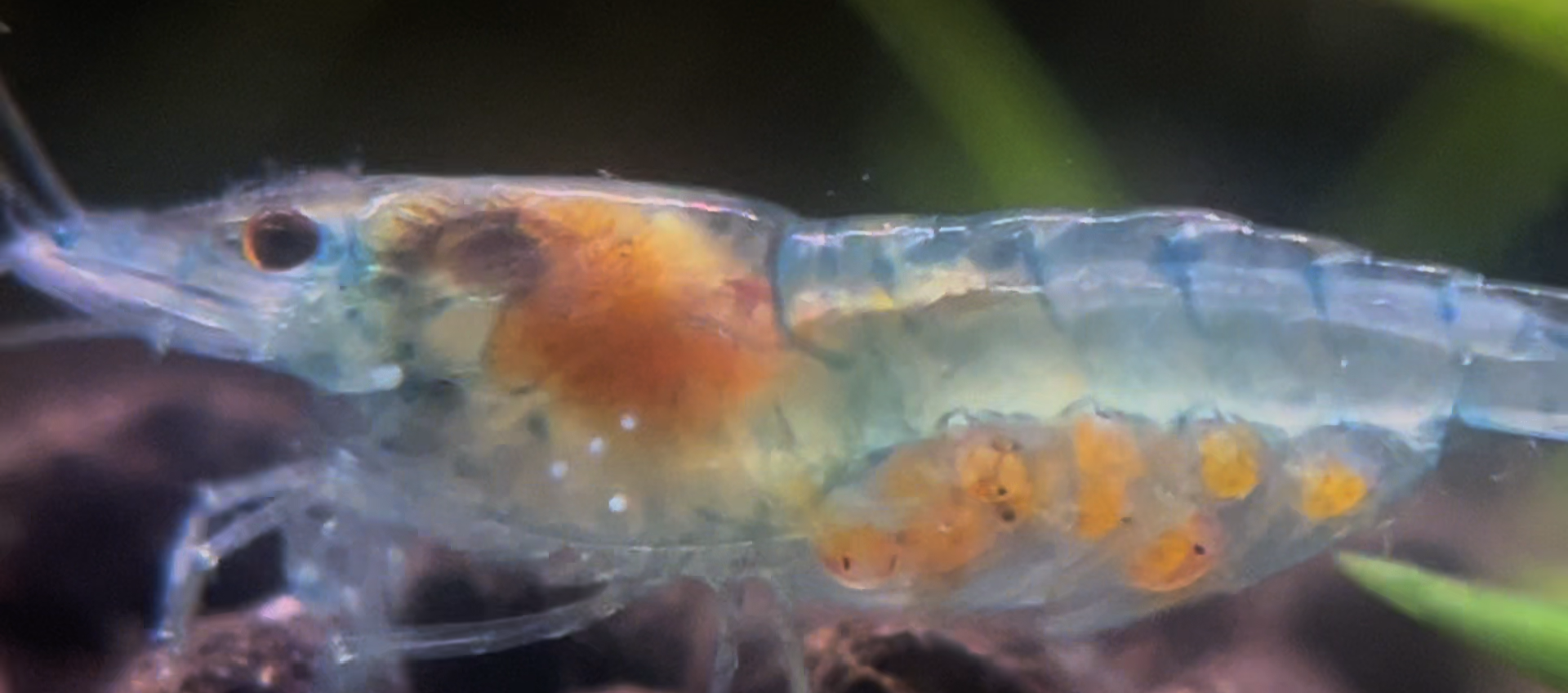
Blue jelly shrimp are a pale, translucent blue color morph of Neocaridina davidi, the same hardy species as cherry shrimp. Their see-through, jelly-like blue bodies give them a soft, glassy look that is different from the solid blues of blue dream and blue velvet. Best of all, they are just as easy to keep and breed.
Quick Answer
Blue jelly shrimp are hardy translucent blue Neocaridina that thrive at pH 6.5 to 7.5, GH 6 to 10, KH 2 to 6, TDS 150 to 300 ppm, and 68 to 78°F. They tolerate a wide range of stable conditions, breed readily, and make an excellent beginner shrimp. Keep them in a cycled 5 to 10 gallon planted tank with a sponge filter.
Blue Jelly Shrimp at a Glance
| Parameter | Range |
|---|---|
| Scientific name | Neocaridina davidi var. "Blue Jelly" |
| Adult size | 1 to 1.5 inches (2.5 to 4 cm) |
| Temperature | 68 to 78°F (20 to 26°C) |
| pH | 6.5 to 7.5 |
| GH | 6 to 10 dGH |
| KH | 2 to 6 dKH |
| TDS | 150 to 300 ppm |
| Minimum tank | 5 gallons (10 preferred) |
| Temperament | Peaceful |
| Lifespan | 1 to 2 years |
| Difficulty | Easy |
Blue Jelly vs Blue Dream vs Blue Velvet
The blue Neocaridina names get confusing fast, but the difference is mostly in the look, not the care:
- •Blue jelly shrimp are highly translucent with a subtle, glassy blue tint. You can almost see through them.
- •Blue dream shrimp are opaque and solidly colored, a deep bright blue.
- •Blue velvet shrimp are a softer blue, more solid than blue jelly but often lighter than blue dream.
All three are the same species with identical care needs. The blue jelly line is less heavily bred than blue dream, so you may see more color variation in a batch. If you can keep cherry shrimp, you can keep any of them. See our blue dream and blue velvet guides for those morphs.
Water Parameters
As a Neocaridina, blue jelly shrimp are hardy and forgiving across a wide band, as long as parameters stay stable.
- •pH 6.5 to 7.5 is ideal, with tolerance up to about 8.0.
- •GH 6 to 10 supplies the minerals needed for healthy molting.
- •TDS 150 to 300 ppm works well.
- •Temperature 68 to 78°F. They breed best and show richest color in the low to mid 70s.
Most keepers use dechlorinated tap water with a conditioner like Seachem Prime when the tap water is not extreme in either direction. Test with an API GH and KH kit and see our water parameters guide. Stability beats chasing perfect numbers every time.
Tank Setup
A cycled 5 gallon tank suits a small colony, but a 10 gallon is more stable and gives them room to multiply.
- •Filtration: a gentle sponge filter protects shrimplets and grows biofilm.
- •Substrate: a dark substrate makes the blue tint show up better against the translucent body.
- •Plants: moss, Java fern, and Anubias give cover and grazing surfaces.
- •Cycle first. Zero ammonia and zero nitrite are essential. Our cycling guide covers it.
Feeding
Blue jelly shrimp graze constantly on biofilm, algae, and detritus. In an established planted tank they need little added food. Offer a small amount of shrimp food or an algae wafer two or three times a week, plus an occasional blanched vegetable. Feed sparingly and remove leftovers after a few hours. See our feeding guide.
Breeding
Blue jelly shrimp breed easily like all Neocaridina. Females first become berried at two to three months of age, carry 20 to 30 eggs under the tail for about 30 days, then release fully formed miniature shrimp. There is no larval stage, so babies stay in the tank.
Because the blue jelly line is less selectively bred, you can improve color over generations by culling paler offspring and breeding your bluest specimens together. Dense moss improves shrimplet survival. Keep them away from other Neocaridina colors to avoid reverting to wild brown, as explained in our mixing shrimp colors guide.
The Bottom Line
Blue jelly shrimp are a hardy, beginner-friendly Neocaridina with a soft, translucent blue that sets them apart from the solid-colored blues. Give them a stable, cycled, planted tank with dark substrate and gentle filtration, feed lightly, and keep colors separate, and they will build a thriving colony.
Related Guides
- •Blue Dream Shrimp Care - The solid deep blue morph
- •Blue Velvet Shrimp Care - Another blue Neocaridina
- •Cherry Shrimp Care - The classic Neocaridina
- •Mixing Shrimp Colors - Keeping colors pure
Frequently Asked Questions
◆What is the difference between blue jelly and blue dream shrimp?
Blue jelly shrimp are highly translucent with a subtle, glassy blue tint, so you can almost see through them. Blue dream shrimp are opaque and solidly colored. Both are Neocaridina davidi with identical care requirements.
◆Are blue jelly shrimp easy to keep?
Yes. Blue jelly shrimp are Neocaridina, so they are hardy and beginner friendly. They tolerate a wide range of stable water parameters and breed readily.
◆Can blue jelly shrimp live with blue dream shrimp?
They can, but since both are Neocaridina davidi they will interbreed. The mixed offspring lose the distinct look of each line and eventually revert toward wild brown. Keep separate lines in separate tanks to preserve color.
◆What substrate is best for blue jelly shrimp?
A dark substrate is best because it makes the subtle blue tint show up against their translucent bodies. Any inert dark sand or gravel works, and active soils are fine too.
Found this helpful?
Check out our other shrimp care guides