Blue Bolt Shrimp Care Guide: The Blue Crown Jewel of Caridina
Blue bolt shrimp are a prized Taiwan Bee Caridina with a gradient of white to deep blue. Learn their exact water parameters, RO water setup, tank needs, and breeding tips.
Blue Bolt Shrimp Care Guide
Last updated: July 2026 | 9 min read
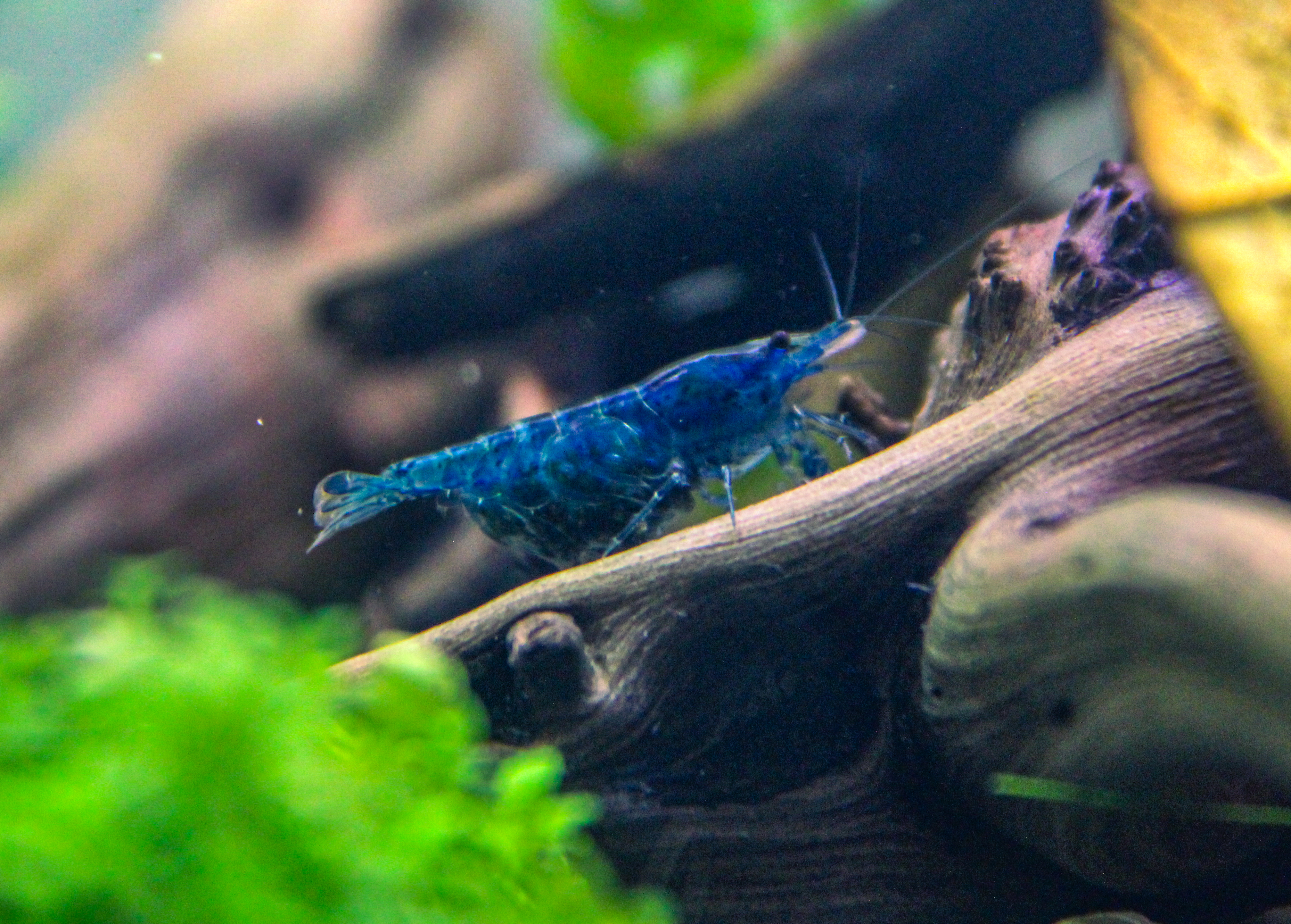
Blue bolt shrimp are one of the most beautiful shrimp in the freshwater hobby. Each one shows a gradient that fades from a crisp white head into a deep, saturated blue tail. They belong to the Taiwan Bee line of Caridina, which puts them a big step up in difficulty from beginner cherry shrimp.
If you have kept Neocaridina like cherry shrimp for a while and you are ready for a challenge, blue bolts are a rewarding next project. Just go in knowing they need soft, acidic, mineral-poor water held very stable. This is not a species to add to a brand new tank.
Quick Answer
Blue bolt shrimp are Caridina (Taiwan Bee) shrimp that need soft, acidic water: pH 5.8 to 6.8, GH 4 to 6, KH 0 to 1, and TDS around 100 to 130 ppm, at a temperature of 68 to 74°F. That means RO or RO/DI water remineralized with a Caridina-specific GH+ mineral over an active buffering substrate. Keep them in a mature, fully cycled tank and never use plain tap water.
Blue Bolt Shrimp at a Glance
| Parameter | Range |
|---|---|
| Scientific name | Caridina cantonensis (Taiwan Bee line) |
| Adult size | 0.8 to 1.2 inches (2 to 3 cm) |
| Temperature | 68 to 74°F (20 to 23°C) |
| pH | 5.8 to 6.8 |
| GH | 4 to 6 dGH |
| KH | 0 to 1 dKH |
| TDS | 100 to 130 ppm |
| Minimum tank | 10 gallons |
| Temperament | Peaceful |
| Lifespan | 1.5 to 2 years |
| Difficulty | Advanced |
What Blue Bolts Actually Are
Blue bolt shrimp come from the Taiwan Bee family, a selectively bred line of Caridina cantonensis. The same line produces black and blue bolts, panda shrimp, wine reds, and blue steel shrimp. They share the same demanding care requirements, so if you can keep one Taiwan Bee, you can keep them all.
Color grade matters with blue bolts. The most prized specimens have a bright white front and a rich, dark blue back with a clean line between the two. Lower grade shrimp show more of a washed out, pale blue. Color intensity is partly genetic and partly a response to stable water and dark substrate.
Water Parameters: This Is Everything
With Caridina like blue bolts, water is not just important, it is the whole game. These shrimp evolved in soft, acidic Asian streams, so that is what you have to recreate. See our Caridina vs Neocaridina guide for why this split matters.
Use RO or RO/DI water. Blue bolts cannot handle the minerals and buffering in most tap water. Start with near-zero TDS water and build it back up with a Caridina remineralizer. Our tap water vs RO water guide walks through this.
Remineralize with a GH+ only product. A Caridina mineral such as SaltyShrimp Bee Shrimp GH+ raises general hardness without raising carbonate hardness, which is what keeps KH near zero and pH acidic. Do not use a GH/KH+ product made for Neocaridina. Our remineralizer guide compares the options.
Aim for low, stable TDS. Most keepers run blue bolts around 100 to 130 ppm. Check it with a TDS meter every time you mix water.
Keep KH near zero. High KH raises pH and stops the tank from staying acidic. An active soil substrate like Fluval Stratum or a dedicated bee shrimp soil buffers the water down into the acidic range that Caridina need.
Tank Setup
A 10 gallon tank is a good minimum. More water volume means more stable parameters, and stability is the single biggest factor in Caridina survival.
- •Substrate: an active buffering soil is close to mandatory. It pulls pH into the 5.8 to 6.5 range and holds it there.
- •Filtration: a gentle sponge filter is ideal because it will not trap shrimplets and grows biofilm they graze on. See our best filters guide.
- •Plants and hardscape: moss, botanicals, and driftwood grow biofilm and give shrimplets cover.
- •Maturity: blue bolts belong in an established tank that has been running stable for at least a couple of months. Never add them during or right after cycling.
Feeding
Blue bolts graze constantly on biofilm and are light eaters. In a mature planted tank they barely need feeding. Offer a small amount of a quality shrimp food two or three times a week and remove anything uneaten after a few hours. Indian almond leaves and other botanicals give them steady grazing and gently support acidic water. See our best food for shrimp guide for options.
Breeding Blue Bolts
Once conditions are dialed in, blue bolts breed like other dwarf shrimp. Females carry 15 to 25 eggs under the tail for three to four weeks, then release fully formed miniature shrimp. There is no larval stage, so the babies stay in the tank.
To improve color over generations, cull paler offspring into a separate tank and let your best white-and-blue specimens breed together. Because they are all the same Taiwan Bee line, blue bolts will interbreed with other Caridina bees. Keeping a single line per tank keeps colors clean.
Common Mistakes
- •Using tap water. The number one killer of Caridina. Start with RO.
- •Adding them too early. A tank under two or three months old is not stable enough.
- •Chasing perfect numbers. Stable beats perfect. Big swings kill Caridina fast.
- •Copper exposure. Like all dwarf shrimp, blue bolts are highly sensitive to copper. Avoid copper-based medications and check that plant fertilizers are shrimp safe.
The Bottom Line
Blue bolt shrimp are a stunning, advanced Caridina worth working toward once you have solid dwarf shrimp experience. Give them RO water remineralized with a Caridina GH+ mineral, an active buffering substrate, a mature and stable tank, and gentle filtration, and they will reward you with some of the most striking color in the hobby.
Related Guides
- •Caridina vs Neocaridina - Why Caridina need different water
- •Crystal Red Shrimp Care - Another Caridina bee shrimp
- •Best Remineralizer for Shrimp - GH+ minerals explained
- •Tap Water vs RO Water for Shrimp - Choosing your water source
Frequently Asked Questions
◆Are blue bolt shrimp hard to keep?
Blue bolt shrimp are considered advanced. They are Taiwan Bee Caridina that need soft, acidic RO water with near-zero KH held very stable in a mature tank. They are much less forgiving than cherry shrimp, so they are best for keepers who already have dwarf shrimp experience.
◆What water parameters do blue bolt shrimp need?
Blue bolts do best at pH 5.8 to 6.8, GH 4 to 6, KH 0 to 1, TDS around 100 to 130 ppm, and 68 to 74°F. That almost always means RO or RO/DI water remineralized with a Caridina GH+ mineral over an active buffering soil substrate.
◆Can blue bolt shrimp live with cherry shrimp?
They can physically coexist, but their water needs are opposite. Cherry shrimp like harder, more neutral to alkaline water, while blue bolts need soft, acidic water. It is difficult to satisfy both in one tank, so most keepers house them separately.
◆Do blue bolt shrimp need RO water?
In almost all cases, yes. Blue bolts are very sensitive to the minerals and buffering in tap water. Starting with RO or RO/DI water and remineralizing to a low, controlled TDS is the standard way to keep them successfully.
Found this helpful?
Check out our other shrimp care guides