Do Shrimp Sleep? What Rest Actually Looks Like in a Shrimp Tank
Shrimp don't sleep the way you do, but they do rest. Here's what the science says, what the still shrimp on your moss is doing, and when stillness means trouble.
📅 Published 2026-09-03
You've been watching the tank at night and noticed something: a few shrimp are just sitting there. Antennae drooping, not grazing, not moving. Meanwhile others are still picking at moss like nothing happened. So do shrimp sleep, and is the motionless one resting or dying?
Quick Answer
Shrimp don't sleep the way mammals do. They have no eyelids, no brain structure comparable to ours, and nothing resembling REM sleep. What they do have is a rest state: periods of much reduced activity where they sit still, slow their movements, and stop actively foraging. Like nearly all animals, they run on a circadian rhythm influenced by light.
So the practical answer is yes, shrimp rest, and a still shrimp is usually a normal shrimp. The important skill is telling resting apart from dying, which comes down to antenna movement, swimmeret motion, posture, and position in the tank.
What "Sleep" Means for an Invertebrate
Sleep in the strict sense is defined by things you can measure in a vertebrate brain: characteristic electrical patterns, reduced responsiveness, a homeostatic drive to make up for lost sleep. Shrimp don't have the neural architecture to produce most of that, so researchers studying invertebrates generally talk about rest states or quiescence rather than sleep.
That's not a technicality that makes the question meaningless. Rest states in invertebrates are real and well documented across many groups. They share several features with sleep: reduced activity, reduced responsiveness to mild stimulation, a preferred posture or location, and a rhythm tied to the day and night cycle.
What's honestly uncertain is the detail for dwarf aquarium shrimp specifically. Much of what circulates in the hobby about shrimp sleep is extrapolated from other crustaceans or simply asserted. The framework below is what's reasonably supported. Where something is uncertain, this article says so rather than inventing a confident answer.
Do Shrimp Have a Day and Night Cycle?
Circadian rhythms are close to universal in animals, and crustaceans are well studied in this area. Your shrimp almost certainly have an internal clock entrained by your tank lighting.
What that means in practice is less obvious than the hobby sometimes claims. You'll read that cherry shrimp are nocturnal. That doesn't match what most keepers actually observe, which is that Neocaridina graze more or less continuously through the day and remain active in the evening. A more accurate description is that they're opportunistic feeders active across much of the cycle, with activity peaks that shift depending on lighting, feeding schedule, and how secure they feel.
Two things do seem consistent across keeper experience:
Activity often spikes right after lights out. Many keepers notice a burst of movement in the first hour of darkness. Shrimp are prey animals, and dim conditions offer cover.
Feeding time overrides everything. Drop food in and your shrimp will be active regardless of the hour. Their schedule is heavily shaped by when they expect food.
If you want to see natural behavior, a consistent light schedule of six to eight hours helps. Long photoperiods drive algae more than they help shrimp. Our guide on lighting for shrimp tanks covers what shrimp actually need, which is much less than plants do.
What a Resting Shrimp Looks Like
This is the part worth learning properly, because it's the difference between a calm evening and an unnecessary panic.
A resting shrimp typically:
- •Sits still on a leaf, moss, sponge filter, or hardscape
- •Keeps a normal upright posture with legs underneath
- •Moves its antennae slowly and occasionally, not constantly
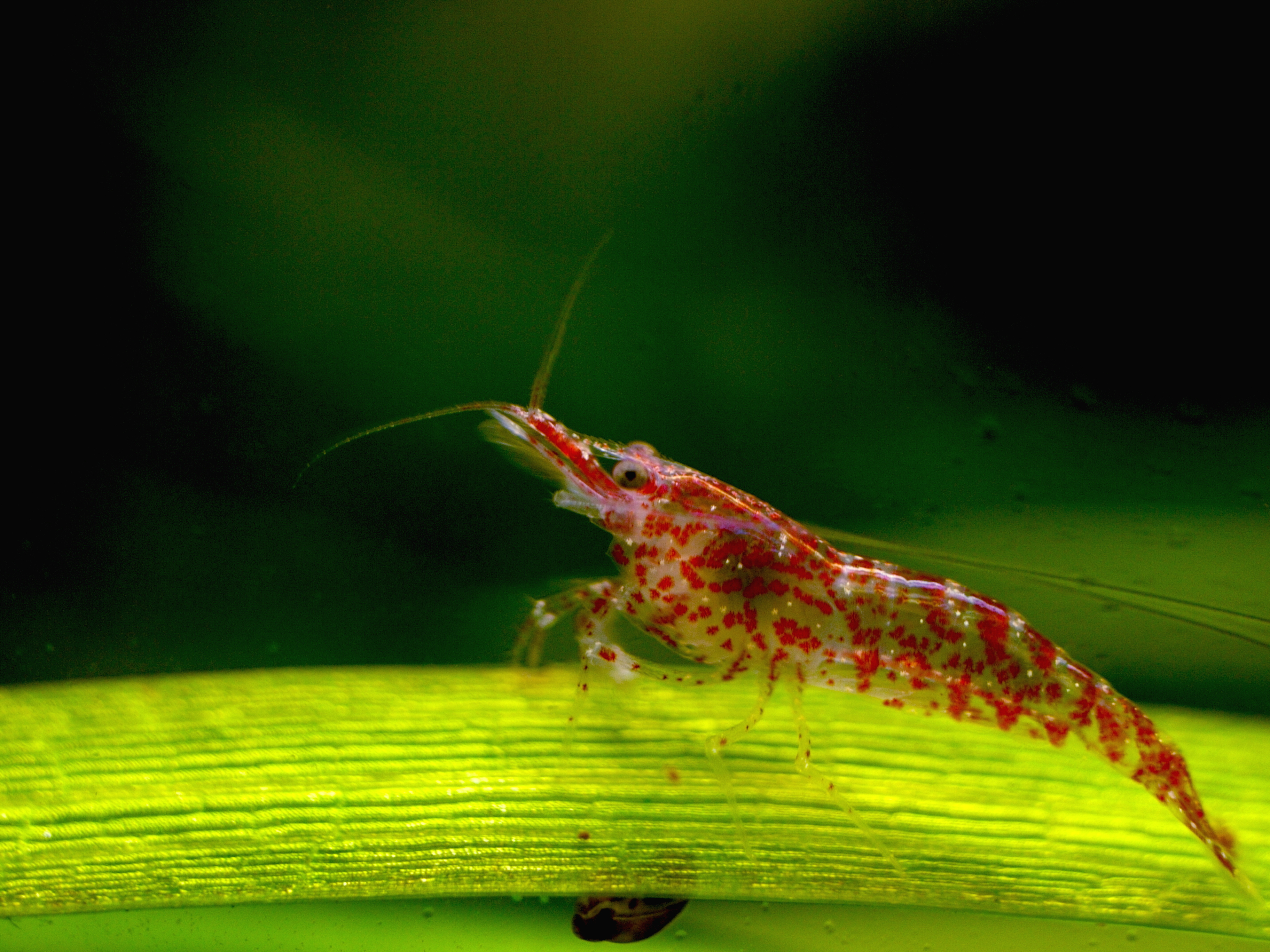
- •Keeps its swimmerets (the small paddles under the abdomen) fanning gently
- •Responds if you disturb the tank, moving off within a second or two
- •Has normal color and a clear, unclouded body
The swimmerets are the single most useful indicator. A living, resting shrimp almost always keeps them moving to circulate water. A shrimp with completely motionless swimmerets over a long period is a concern.
Resting vs Dying vs Molting
Three different situations produce a still shrimp. Here's how they differ.
| Sign | Resting | About to molt | In trouble |
|---|---|---|---|
| Posture | Upright, legs under body | Upright, often tucked away | On its side, or curled |
| Swimmerets | Gently fanning | Fanning | Still or erratic |
| Antennae | Occasional slow movement | Occasional movement | Motionless or twitching |
| Response to disturbance | Moves off promptly | Sluggish but responds | Little or no response |
| Location | Anywhere, often on plants | Hidden in moss or hardscape | Often in the open, or in flow |
| Color | Normal | Normal, sometimes slightly dull | White patches, cloudy, or milky |
| Duration | Minutes to an hour or two | Hours to a day | Worsens over hours |
The one that catches people out is pre molt behavior. Shrimp often hide and go still for hours before molting, then vanish for a day or two afterward while their new shell hardens. That's normal and healthy. Our shrimp molting guide covers the full cycle and the warning signs of a failed molt.
The genuinely worrying picture is a shrimp lying on its side in open water flow, pale or cloudy, unresponsive when the tank is disturbed. A shrimp that's white and opaque through the body is usually already dead. If you're seeing that, our guide on why shrimp die covers the common causes, and water parameters are the first thing to check.
Do Shrimp Need Darkness?
Almost certainly yes, and it's easy to provide. Constant light is unnatural for any animal with a circadian rhythm, and there's no benefit to running tank lights around the clock. Plants don't want it, algae love it, and your shrimp have no use for it.
A few practical points:
Give them a real dark period. Six to eight hours of light per day is plenty for most shrimp tanks. If you're running a heavily planted tank, follow the plants' needs, but there's no shrimp related reason to exceed that.
Don't leave a room light blasting the tank all night. Ambient household light is fine, but a lamp directly on the glass defeats the purpose.
Avoid sudden light changes. Snapping a bright light on in a dark room startles shrimp visibly. If you can, let room light come up first, or use a light with a ramp function. This is a small kindness that costs nothing.
Provide cover. This matters more than the light schedule. Shrimp are prey animals, and they rest more readily when they have somewhere to feel hidden. Dense moss is the single best addition here. Our guide on the best moss for shrimp tanks covers the options, and java moss is hard to beat for the price.
If your tank is sparse, adding Indian almond leaves gives shrimp both cover and a grazing surface, and the tannins take the edge off harsh lighting.
Do Shrimp Rest in Groups?
Keepers often notice clusters of still shrimp in the same spot. That's usually not social sleeping. Shrimp aggregate around food, biofilm, and cover, and a good resting spot tends to be a good spot for several shrimp at once. Sponge filters, moss clumps, and almond leaves collect shrimp for exactly this reason.
A dense cluster is normally a sign of a comfortable tank. Worth distinguishing from the other kind of clustering, though: shrimp gathered at the surface or piled at the waterline are often signaling low oxygen or a parameter problem, and that needs attention rather than admiration.
Does Any of This Change How You Keep Them?
Mostly it changes your interpretation rather than your husbandry. A few things follow from it:
Don't diagnose from stillness alone. Check swimmerets, posture, and responsiveness before concluding anything.
Run a sane light schedule. Six to eight hours, consistent, with genuine darkness after.
Provide cover generously. Moss, leaves, and hardscape reduce stress and let shrimp rest properly.
Feed on a consistent schedule. Shrimp anticipate feeding, and a predictable rhythm seems to produce calmer behavior than random feeding.
Keep parameters stable. Almost every genuine problem that looks like lethargy is a water issue. An API Freshwater Master Test Kit answers the important questions quickly, and shrimp water parameters covers what the numbers should be.
Frequently Asked Questions
◆Do shrimp close their eyes to sleep?
No. Shrimp have compound eyes on stalks with no eyelids, so they can't close them. Rest in shrimp is about reduced activity and responsiveness, not shutting out light. A shrimp with its eyes open may well be resting.
◆Are cherry shrimp nocturnal?
Not really, despite the claim appearing frequently online. Cherry shrimp graze throughout the day and stay active in the evening. Many keepers see an activity burst just after lights out, which is probably about feeling safer in dim conditions rather than true nocturnality.
◆My shrimp has been motionless for hours. Is it dead?
Check three things: are the swimmerets under the abdomen fanning, is the shrimp upright rather than on its side, and does it move when you gently disturb the water nearby. If the answer to all three is yes, it's most likely resting or preparing to molt. A cloudy or opaque white body with no swimmeret movement is the sign of a dead shrimp.
◆Should I turn my aquarium light off at night?
Yes. Six to eight hours of light per day is plenty, and a genuine dark period is better for shrimp, plants, and algae control alike. There's no benefit to leaving tank lights on overnight.
◆Do shrimp rest more as they get older?
Keepers commonly report that older shrimp graze less energetically, which fits what you'd expect. This is anecdotal rather than well documented for dwarf shrimp specifically, so treat it as a general impression rather than an established fact. A sudden drop in activity in a previously active shrimp is worth investigating as a health issue rather than assuming age.
The Bottom Line
Shrimp don't sleep in the way you do, but they do rest, and a still shrimp is usually a fine shrimp. Learn to read swimmerets, posture, and responsiveness and you'll stop worrying about the ones sitting quietly on the moss.
Give them a consistent light schedule, real darkness, and plenty of cover, and you'll see more natural behavior. For the broader picture of keeping shrimp comfortable, our complete shrimp tank setup guide covers the fundamentals.
Found this helpful?
Check out our other shrimp care guides