Nerite Snail Eggs: Why They Never Hatch and How to Remove Them
Those white sesame seed dots on your glass and driftwood are nerite snail eggs. Learn why they never hatch in freshwater and how to remove or live with them.
Nerite Snail Eggs: Why Those White Dots Never Hatch (and How to Remove Them)
Last updated: July 2026 | 7 min read
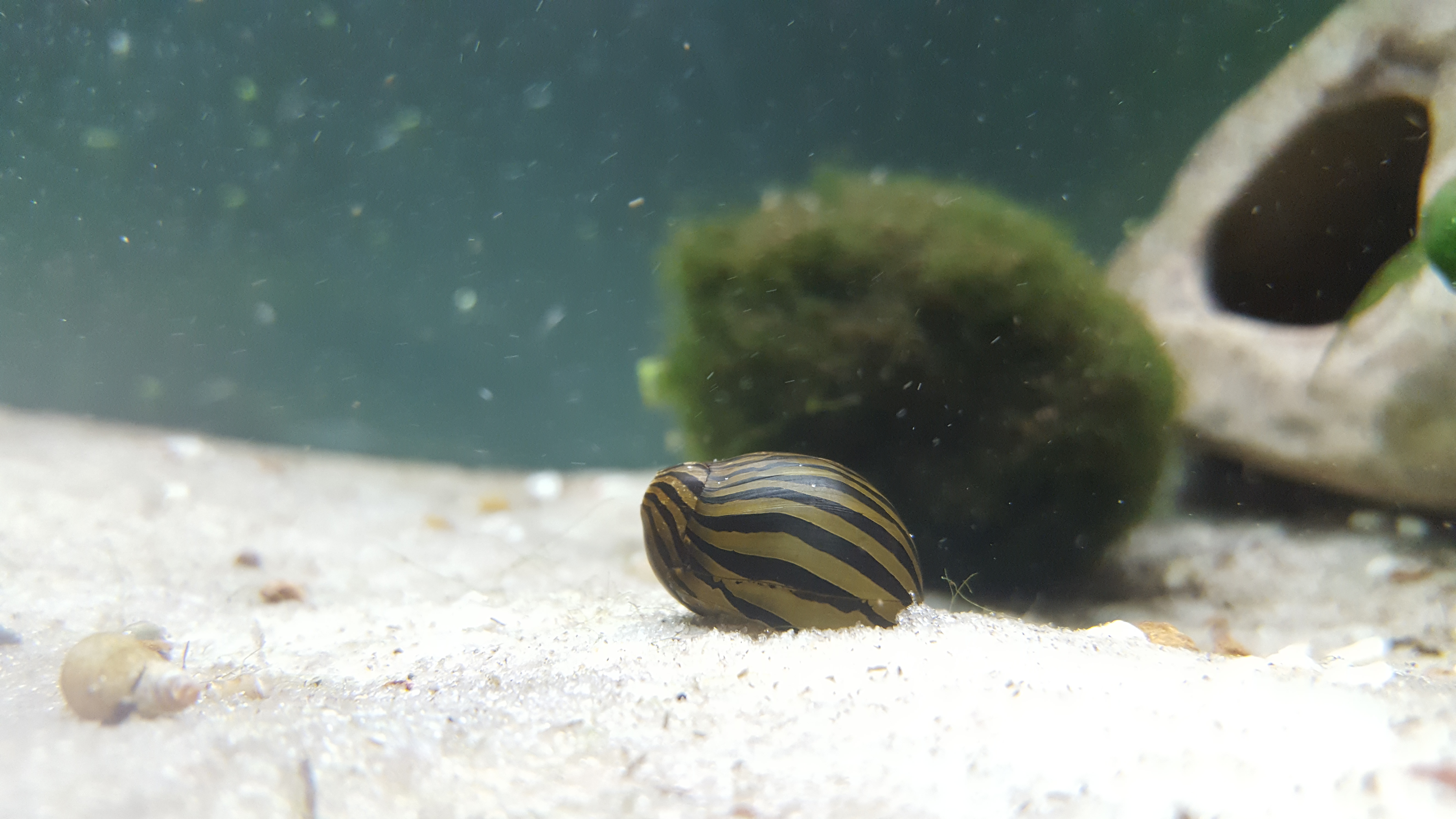
Nerite snails are famous for two things: eating algae better than almost anything else in the freshwater hobby, and scattering little white dots all over your tank that never, ever turn into baby snails.
If your glass, rocks, or driftwood look like someone sprinkled sesame seeds across them, you have a female nerite in the tank. This guide explains what those eggs are, the biological reason they cannot hatch in freshwater, how to remove them (and where removal is a losing battle), and why the eggs are actually a compliment to your tank keeping.
Quick Answer
Nerite snail eggs are hard white capsules, about the size and shape of sesame seeds, that females glue to glass, rocks, and especially driftwood. They will not hatch in a freshwater aquarium because nerite larvae are free-swimming veligers that require brackish or marine water to develop. The eggs are harmless and purely cosmetic. On glass they scrape off with a razor blade; on driftwood they are nearly impossible to remove cleanly, so most keepers learn to live with them.
What Nerite Snail Eggs Look Like
Nerite eggs are small, hard, oval, and white to slightly yellowish, usually 1 to 2 millimeters long. Each white dot is not a single egg but a capsule containing dozens of tiny eggs inside. Females glue them down firmly, one at a time, often in loose trails or clusters.
Where you find them matters:
- •Driftwood is the favorite target. The rough, porous surface seems ideal for gluing capsules, and a single female can polka-dot a nice piece of wood in a few weeks.
- •Glass, rocks, and hardscape get their share, especially in tanks without wood.
- •Slow-growing plants like anubias occasionally collect a few capsules on their tough leaves.
If the eggs you are seeing are underwater jelly blobs instead of hard white dots, you are looking at bladder or ramshorn snail eggs, which will hatch. And a pink clutch above the waterline belongs to a mystery snail. Here is the quick comparison:
| Egg Type | Appearance | Location | Hatches in Freshwater? |
|---|---|---|---|
| Nerite | Hard white sesame seed capsules | Glass, driftwood, hardscape | No |
| Mystery snail | Large pink berry-like clutch | Above the waterline | Yes (in humid air) |
| Bladder/ramshorn | Clear jelly blob with tiny dots | Plants, glass, underwater | Yes, readily |
Why Nerite Eggs Never Hatch in Freshwater
This is the part that surprises new keepers: the eggs are often perfectly fertile. Females lay viable, fertilized eggs in your tank all the time. The problem is what comes next.
Most aquarium nerite species are amphidromous. In the wild, adults live in freshwater rivers and streams, but their larvae need salt. When eggs hatch, they release nearly microscopic free-swimming larvae called veligers, which drift downstream into estuaries and coastal water. The veligers feed on plankton, develop in brackish or marine conditions, metamorphose into tiny snails, and then migrate back upstream into freshwater as juveniles.
In a freshwater aquarium, that life cycle hits a wall immediately. The larvae cannot regulate their water balance in pure freshwater, so even if a capsule opens, nothing survives. This is why sources like Aquarium Co-Op note that the larvae "require brackish or salt water to reliably hatch," and why deliberate nerite breeding is considered one of the hardest projects in the hobby, requiring a separate brackish-to-marine system and a steady supply of phytoplankton for the veligers.
For the average keeper, the takeaway is simple and reassuring: nerite snails cannot overrun a freshwater tank. Unlike bladder snails or ramshorns, their population in your aquarium is exactly the number you put in. That reliability is a big part of why they are such popular algae eaters, as covered in our algae control guide.
Are the Eggs Harmful?
No. The capsules are inert. They do not rot, foul the water, or bother shrimp or other tank mates. Left alone, they slowly lose viability and sit there as white specks. Some eventually flake off on their own or get rasped away by other snails, but many hang on for months. The entire problem is aesthetic, and in a display aquascape, that can admittedly be a real problem.
How to Remove Nerite Snail Eggs
◆On Glass: The Razor Blade Method
Glass is the easy case. Use a clean, new single-edge razor blade or an aquarium scraper with a blade attachment:
- •Hold the blade at a shallow angle against the glass.
- •Slide it under each capsule and pop it free.
- •Net out the floating capsules, or let the filter catch them and remove them at the next filter clean.
On acrylic tanks, do not use a razor. Use a plastic scraper or an old credit card, which needs more force but will not scratch the panel.
◆On Driftwood and Hardscape: Mostly a Losing Battle
Here is the honest answer: getting nerite eggs off driftwood without damage is nearly impossible. The capsules bond into the wood grain, and scraping them off tends to chip away the outer layer of wood and leave pale outlines where each capsule sat. Options, from least to most drastic:
- •Stiff toothbrush or scrub pad. Removes some capsules from harder woods, less effective on soft or heavily textured pieces. Do this in a bucket of tank water, not in the tank.
- •Targeted razor work. Possible on smooth, dense wood like manzanita, still likely to leave marks.
- •Wait them out. Old capsules weaken over time and brushing gets easier after a few months.
- •Replace the wood. Sometimes the practical answer for a showpiece aquascape.
Boiling or bleaching a removed piece will kill and loosen eggs, but the scars from scraping remain. Most long-term nerite keepers simply accept some texture on their wood.
Can You Prevent the Eggs?
Only one thing prevents nerite eggs: having zero female nerites. That is much harder than it sounds.
- •Sexing nerites is unreliable. Males and females look essentially identical from the outside. There is no shell shape, size, or color difference a buyer can use with confidence. The only reliable test is isolating a snail and waiting to see if it lays eggs, which can take weeks.
- •Females lay without males. A female stores sperm for weeks after mating, and even a never-mated female will often deposit infertile capsules anyway. A single nerite in a tank can still dot your driftwood.
- •You cannot special-order males. Since stores cannot sex them either, a "male-only" group is a coin flip on every snail.
Some keepers report fewer eggs in cooler tanks or with leaner feeding, but there is no dependable way to switch egg laying off. If white dots are a dealbreaker for your scape, the real solution is choosing a different algae eater, such as Amano shrimp or a snail species you would not mind breeding.
The Reframe: Eggs Mean You're Doing It Right
Egg laying is not random. A female nerite produces eggs when she is mature, well fed, and living in good water. Heavy egg laying generally means your tank has stable parameters, enough algae and biofilm to keep her full, and enough calcium for her to build both her shell and her egg capsules. Starving, stressed snails in bad water do not spend energy on reproduction.
So while nobody loves white specks on their driftwood, they are a genuine signal of a healthy tank, the same way berried shrimp are. If your nerites are laying, whatever you are doing, keep doing it.
For everything else about these snails, including lifespan, feeding when algae runs out, and shell health, see the full nerite snail care guide. Thinking about adding one to an established shrimp tank? They are among the safest tank mates possible, as covered in can shrimp live with snails.
Found this helpful?
Check out our other shrimp care guides