Nerite Snail Care Guide: The Best Algae Eater for Shrimp Tanks
Nerite snails are the top algae eaters for freshwater tanks. Learn their water parameters, why they can't breed in freshwater, the white egg problem, and shrimp compatibility.
Nerite Snail Care Guide
Last updated: July 2026 | 9 min read
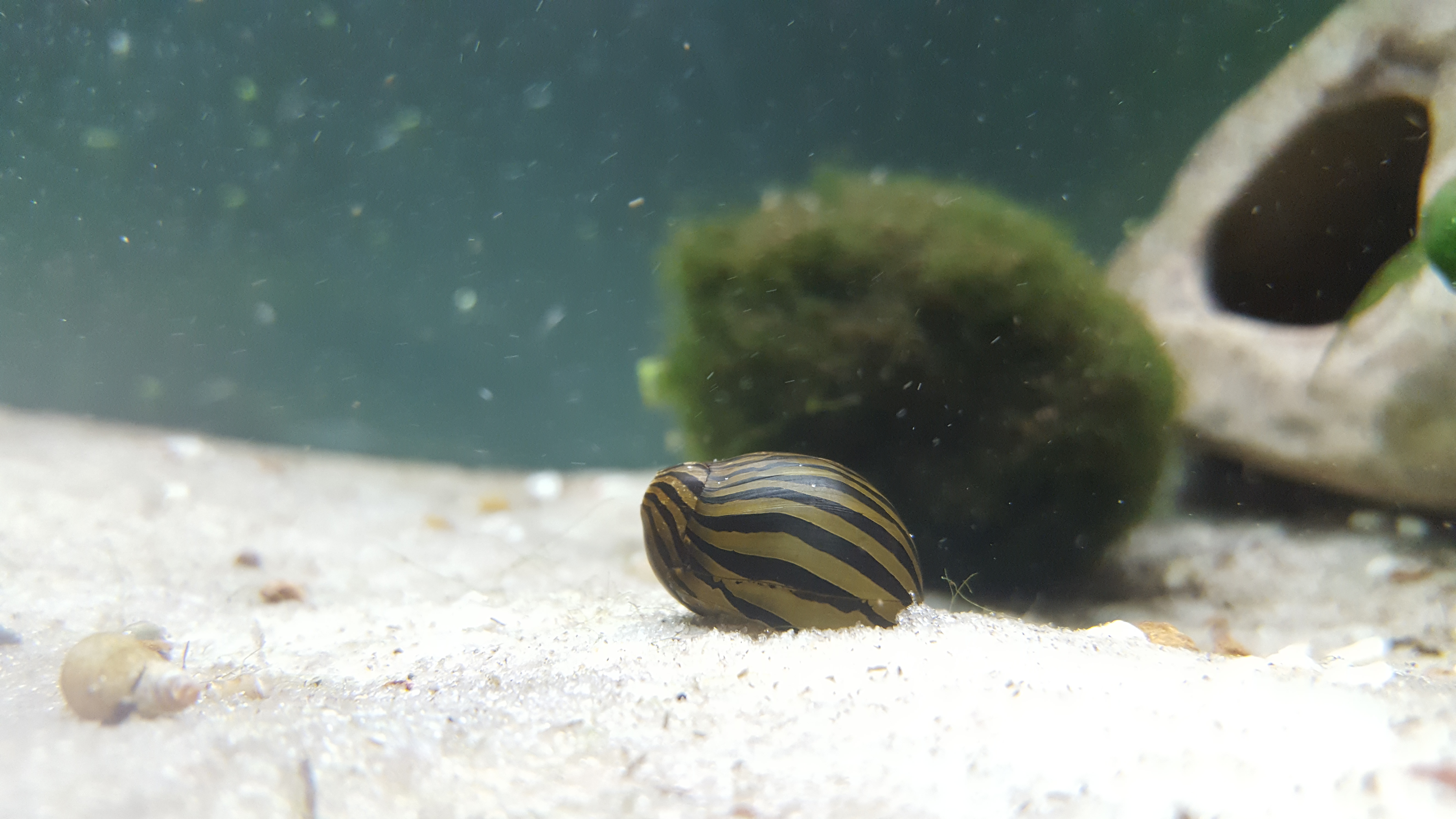
If there is one animal almost every shrimp keeper eventually adds to the tank, it is the nerite snail. These small, hard-shelled grazers are widely considered the best algae eaters in the hobby, they stay small, they never overpopulate a freshwater tank, and they are completely peaceful toward dwarf shrimp. For a nano planted tank that keeps getting a green film on the glass, nerites are close to a perfect fix.
This guide covers everything you need to keep them healthy: water parameters, the popular varieties, the famous white egg "problem," and how they fit into a cherry shrimp colony.
Quick Answer
Nerite snails are peaceful, hardy freshwater snails prized as algae eaters. They thrive at 72 to 78°F, pH 7.0 to 8.0, GH 6 to 12, and KH 5 to 15, and live about 1 to 2 years. They cannot breed in a freshwater tank because their larvae need brackish water to survive, so they will never overrun your aquarium. Females may still lay hard white eggs on surfaces, but those eggs almost never hatch in freshwater. Nerites are completely safe with shrimp.
Nerite Snails at a Glance
| Parameter | Range |
|---|---|
| Scientific name | Neritina and Vittina spp. (family Neritidae) |
| Common types | Zebra, tiger, horned, olive, black racer |
| Adult size | 0.5 to 1 inch (1.3 to 2.5 cm) |
| Temperature | 72 to 78°F (22 to 26°C) |
| pH | 7.0 to 8.0 (tolerate up to 8.5) |
| GH | 6 to 12 dGH |
| KH | 5 to 15 dKH |
| Minimum tank | 5 gallons |
| Temperament | Peaceful |
| Lifespan | 1 to 2 years |
| Difficulty | Easy |
Species Overview
"Nerite snail" is a catch-all name for several species in the family Neritidae. Most of the snails sold in aquarium stores come from the Neritina and Vittina genera, and they originate from rivers, estuaries, and coastal streams across Africa, Southeast Asia, and the Pacific. In the wild these habitats sit where fresh water meets the sea, which is a detail that explains a lot about their breeding, more on that below.
All of the common types share the same body plan: a hard, rounded shell, a single pair of tentacles, and a rasping mouthpart called a radula that they use to scrape algae off any hard surface. They move slowly and deliberately, and they are surprisingly good climbers. A tight-fitting lid matters, because a determined nerite will crawl right up the glass and out of an open-top tank.
Nerite Snails for Algae Control
Nerites earned their reputation honestly. They are among the few tank inhabitants that will actually clear green spot algae, soft green film, and early diatom "brown dust" off glass, rocks, driftwood, and even broad plant leaves. A single nerite in a 5 to 10 gallon tank can keep the glass noticeably cleaner, and a small group can strip a lightly algae-covered nano tank in a week or two.
They are a natural teammate for shrimp. Cherry shrimp and amano shrimp graze biofilm and soft algae, but they leave the tougher, crustier films alone. Nerites go after exactly that stubborn layer. If algae is your main headache, pairing a few nerites with a shrimp colony covers most of the spectrum. Our guides on shrimp tank algae control and whether shrimp eat algae explain how to split the workload between your cleanup crew members.
One caution: nerites are so efficient that in a spotless tank they can run out of food. In a brand new or very clean setup, supplement with an algae wafer or a piece of blanched vegetable once or twice a week so they do not slowly starve.
Water Parameters
Nerites are hardy, but they are a bit fussier about minerals than a Neocaridina shrimp because their thick shells demand steady calcium.
- •Temperature 72 to 78°F. They tolerate a wider band, roughly 65 to 85°F, but the mid-70s is the sweet spot. Most shrimp tanks sit right in this range without a heater. See do shrimp need a heater if you are unsure.
- •pH 7.0 to 8.0. This is the single most important number. Nerite shells are calcium carbonate, and acidic water below 7.0 slowly dissolves them, causing pitting and thin, cracked edges. They actually prefer slightly alkaline water and tolerate up to about 8.5.
- •GH 6 to 12 dGH. Dissolved calcium and magnesium are the building blocks for shell growth. Very soft water is the most common reason a nerite shell erodes.
- •KH 5 to 15 dKH. Carbonate hardness buffers the pH and keeps it from swinging below 7.0.
This creates a small tension with soft-water "crystal" shrimp like Caridina, which prefer acidic water. Nerites do best in the harder, more neutral-to-alkaline water that suits cherry shrimp and other Neocaridina. If you keep soft-water Caridina at a low pH, watch the snail shells closely and consider adding a calcium source. For a full breakdown of hardness and how to test it, see the shrimp water parameters guide.
If your tap water is naturally soft, a small piece of cuttlebone or a calcium supplement helps keep shells intact. Our tap water vs RO water guide covers when remineralizing makes sense.
Why Nerites Cannot Breed in Freshwater
Here is the trait that makes nerites so popular: they will not overrun your tank. Unlike bladder snails or ramshorns, which can go from two snails to two hundred in a month, nerites cannot complete their life cycle in fresh water.
The reason goes back to those brackish-water origins. A female nerite lays fertilized eggs, but the larvae that would hatch are a free-swimming stage called veligers, and veligers require brackish or salt water to develop. In a normal freshwater aquarium the eggs simply never hatch. Breeding nerites at home is possible but genuinely difficult, requiring a dedicated brackish rearing tank with carefully controlled salinity, which is why almost all nerites sold in stores are still collected or farmed in their native regions.
For the average keeper this is a feature, not a bug. You get a hard-working algae eater with zero risk of a population explosion.
The White Egg "Problem"
There is one catch to that no-breeding rule. Females will still lay eggs, even though the eggs will not hatch. These show up as tiny, hard, off-white or cream-colored capsules, each about the size of a sesame seed, cemented onto glass, rocks, driftwood, plant leaves, and especially hardscape.
Keepers find them cosmetically annoying because they are stubborn. Each capsule is glued down firmly and does not wipe away with a normal algae scrub. Options for dealing with them:
- •Leave them. They are harmless and often go unnoticed on textured driftwood or rock.
- •Scrape them off glass with a razor blade or a plastic card during a water change.
- •Reduce the count by keeping fewer females, though sexing nerites reliably is difficult.
Egg-laying tends to increase in harder, more alkaline water. It is a purely cosmetic issue, and it has zero effect on your shrimp.
Nerite Varieties
Several types show up under the "nerite" label. They are all cared for the same way, so choose on looks.
| Variety | Look | Notes |
|---|---|---|
| Zebra nerite | Golden-brown shell with dark curved stripes | The classic, most widely sold |
| Tiger nerite | Orange base with fine black striping | Warmer color than the zebra |
| Horned nerite | Small yellow-and-black shell with protruding "horns" | Stays the smallest, great for nano tanks |
| Olive nerite | Plain dark olive-green, no pattern | One of the hardiest and cheapest |
| Black racer | Dark, wood-grain shell | Fast-moving grazer |
◆Horned Nerite Snail
The horned nerite deserves a special mention for shrimp keepers. It stays the smallest of the group, often under half an inch, and its shell carries little spiny projections that give it the "horned" name. Those small horns can occasionally snag in very fine mesh or dense moss, but in an open planted tank it is a tidy, effective grazer that fits perfectly in nano setups. Because it is so small, it also lays fewer of the white eggs than the larger zebra or tiger types.
Nerites and Shrimp: Compatibility
Nerite snails are one of the safest tank mates you can add to a shrimp colony. They do not have the mouthparts or the interest to bother adult shrimp, shrimplets, or eggs. They compete only for algae and leftover food, and in a healthy tank there is plenty to go around. Many keepers run nerites right alongside a breeding cherry shrimp colony with no issues at all.
A few practical notes:
- •Copper is the real danger, not the snail. Both shrimp and snails are highly sensitive to copper. Never dose copper-based algae treatments, snail-killing products, or fish medications with copper in a tank that holds shrimp or nerites, because it will kill them. Always quarantine new plants and check that any treatment is invertebrate-safe.
- •Acclimate slowly. Nerites, like shrimp, hate sudden parameter swings. Drip acclimate new snails over an hour or two.
- •They will not control a shrimp population. Nerites ignore shrimp entirely, so do not add them expecting any effect on shrimp numbers.
For a deeper look at mixing the two, see can shrimp live with snails. If you want a shrimp that doubles as an algae powerhouse alongside your nerites, the amano shrimp is the classic pairing.
Lifespan and Health
Nerites typically live 1 to 2 years, though some keepers report specimens lasting longer. A frustrating quirk of the species is that a snail may occasionally die within a week or two of being added to a new tank, usually from the stress of shipping or a rough acclimation, while its tankmates from the same batch thrive for years. Slow drip acclimation reduces this early loss.
Signs of a healthy nerite are simple: an intact, smooth shell and a snail that moves and grazes actively. A snail that stays sealed in its shell and motionless for several days, especially if it has fallen off the glass and landed upside down, may be in trouble. Nerites do sometimes flip over and struggle to right themselves, so gently turning a stranded snail back over can save it.
Shell erosion at the tip is the most common long-term problem and always points back to water that is too soft or too acidic. Firm up your GH and KH and keep the pH at 7.0 or above, and the shell will stop degrading.
The Bottom Line
Nerite snails are the go-to algae eater for freshwater and shrimp tanks for good reason: they clear tough algae that shrimp leave behind, they stay small, and they physically cannot overpopulate a freshwater aquarium. Give them neutral-to-alkaline water with enough calcium to keep their shells hard, a tight lid so they do not wander out, and the occasional algae wafer if the tank is too clean. The only real downside is the cosmetic white eggs, which never hatch and never harm your shrimp. For a low-effort cleanup crew that plays perfectly with a cherry shrimp colony, nerites are hard to beat.
Related Guides
- •Can Shrimp Live With Snails? - Which snails are safe
- •Shrimp Tank Algae Control - Build a full cleanup crew
- •Cherry Shrimp Care - The classic beginner shrimp
- •Amano Shrimp Care - The other great algae eater
- •Shrimp Water Parameters - Get your GH, KH, and pH right
Found this helpful?
Check out our other shrimp care guides