Tiger Shrimp Care: A Beginner's Guide to Caridina Tigers
Tiger shrimp care made simple. Learn the right water parameters, tank setup, feeding, and breeding tips for Black, Blue, and Orange Eye Tiger shrimp.
📅 Published 2026-06-02
Tiger shrimp are one of the most striking Caridina shrimp you can keep, and they're a great first step for anyone moving up from cherry shrimp. Named for the dark vertical stripes running down their bodies, tigers come in black, blue, red, and the famous orange-eye varieties. They need soft, slightly acidic water and stable parameters, but they're a touch more forgiving than Crystal Red Shrimp, which makes them a smart "gateway" Caridina.
If you've kept Neocaridina (cherry, blue velvet, yellow) and you're ready for a slightly tougher challenge with a big payoff in color, tiger shrimp are worth it. Here's everything a beginner needs to keep them alive, colorful, and breeding.
Quick Answer: Are Tiger Shrimp Hard to Keep?
Tiger shrimp are an intermediate-level shrimp. They're harder than cherry shrimp because they need soft, acidic water (usually made from RO water plus a remineralizer), but they're easier than Crystal Reds because they tolerate a slightly wider parameter range. If you can hold steady water and resist the urge to fiddle, you can keep tigers. Get your water dialed in first, then add shrimp.
Quick Facts: Tiger Shrimp at a Glance
| Attribute | Details |
|---|---|
| Scientific Name | Caridina mariae (formerly Caridina cf. cantonensis "Tiger") |
| Common Names | Tiger shrimp, Black Tiger, Blue Tiger, Orange Eye Blue Tiger (OEBT) |
| Origin | Southern China |
| Size | 1 to 1.2 inches (2.5 to 3 cm) |
| Lifespan | 1.5 to 2 years |
| Temperature | 68 to 76°F (20 to 24°C) |
| pH | 6.5 to 7.5 |
| GH | 4 to 6 dGH |
| KH | 1 to 4 dKH |
| TDS | 120 to 200 ppm |
| Diet | Omnivore (biofilm, algae, commercial foods) |
| Difficulty | Intermediate |
| Breeding | Moderate (stable soft water needed) |
Meet the Tiger Shrimp Varieties
All tiger shrimp share the same striped body shape, but selective breeding has produced several color forms. Knowing which one you have matters, because the fancier morphs are usually a little more sensitive.
◆Standard Tiger Shrimp
The original. A translucent body with dark vertical stripes and an amber or orange tail. These are the hardiest of the bunch and a good place for beginners to start. They're also the cheapest.
◆Black Tiger Shrimp
Bred for heavy black pigment, sometimes with orange eyes (the prized "Black Tiger Orange Eye" or BTOE). The deeper the black, the higher the grade and price. They need cleaner, more stable water than standard tigers to hold that dark color.
◆Blue Tiger and Orange Eye Blue Tiger (OEBT)
A stunning blue body with black stripes. The Orange Eye Blue Tiger adds glowing orange eyes and is one of the most popular Caridina in the hobby. OEBT are beautiful but the most demanding tiger variety, and their color can fade in poor water or with stress.
◆Red Tiger and Super Tiger
Red Tigers swap the black stripes for red-brown ones over a clearer body. "Super Tigers" show heavier, bolder striping. Both are kept the same way as standard tigers.
Tiger Shrimp Water Parameters
Water is the whole ballgame with tigers. Like other Caridina, they come from soft, mineral-light streams, so most keepers don't use straight tap water. Instead they start with RO (reverse osmosis) water and add a remineralizer to hit exact numbers.
Aim for these targets:
- •pH: 6.5 to 7.5 (tigers handle near-neutral better than Crystal Reds)
- •GH: 4 to 6 dGH
- •KH: 1 to 4 dKH (a little KH helps tigers more than it helps crystals)
- •TDS: 120 to 200 ppm
- •Temperature: 68 to 76°F
One key difference from Crystal Reds: tigers actually prefer a touch of carbonate hardness (KH 1 to 4) and can sit closer to neutral pH, while CRS want KH near zero and pH in the 5s and 6s. That's why some keepers struggle when they try to keep tigers on a pure crystal-style setup. If you're keeping both, lean toward the tiger-friendly middle ground.
You'll need a way to test this. A liquid API Freshwater Master Test Kit covers pH, ammonia, nitrite, and nitrate, and an API GH & KH Test Kit measures the hardness numbers that decide whether your shrimp can molt properly. A cheap TDS pen rounds out the toolkit. For a full breakdown of every number, read our guide to shrimp water parameters.
◆Tap Water vs RO Water for Tigers
Most tap water is too hard and too high in TDS for Caridina, and it can carry copper or chloramine that kills shrimp. Tigers do best on RO water that you remineralize back to known values. We cover the full comparison in tap water vs RO water for shrimp, but the short version is: for tigers, RO plus a quality remineralizer is the reliable path. A Caridina-specific product like SaltyShrimp GH+ raises GH without adding KH, so you control each number. See our picks in the best remineralizer for shrimp guide.
Setting Up a Tiger Shrimp Tank
You don't need a big tank. A well-cycled 10-gallon is plenty for a starter colony, and even a 5-gallon nano works if you stay on top of maintenance. Stability matters more than size, and bigger volumes of water swing slower, so a 10 to 20 gallon is the sweet spot for beginners.
◆Substrate
This is where tigers split from cherries. Because tigers want soft, slightly acidic water, an active (buffering) substrate helps a lot. Active soils like Fluval Stratum pull the pH down into the right range and buffer it there. Standard Tigers can do fine on inert sand or gravel if your source water is already soft, but Black Tigers and OEBT really benefit from a buffering soil. Our best substrate for shrimp tanks guide compares active vs inert in detail.
◆Filtration
A gentle sponge filter is the classic shrimp choice. It can't suck up babies, it grows biofilm that shrimplets graze on, and it adds oxygen. If you run a hang-on-back filter instead, cover the intake with a sponge so no shrimp get pulled in.
◆Plants and Hardscape
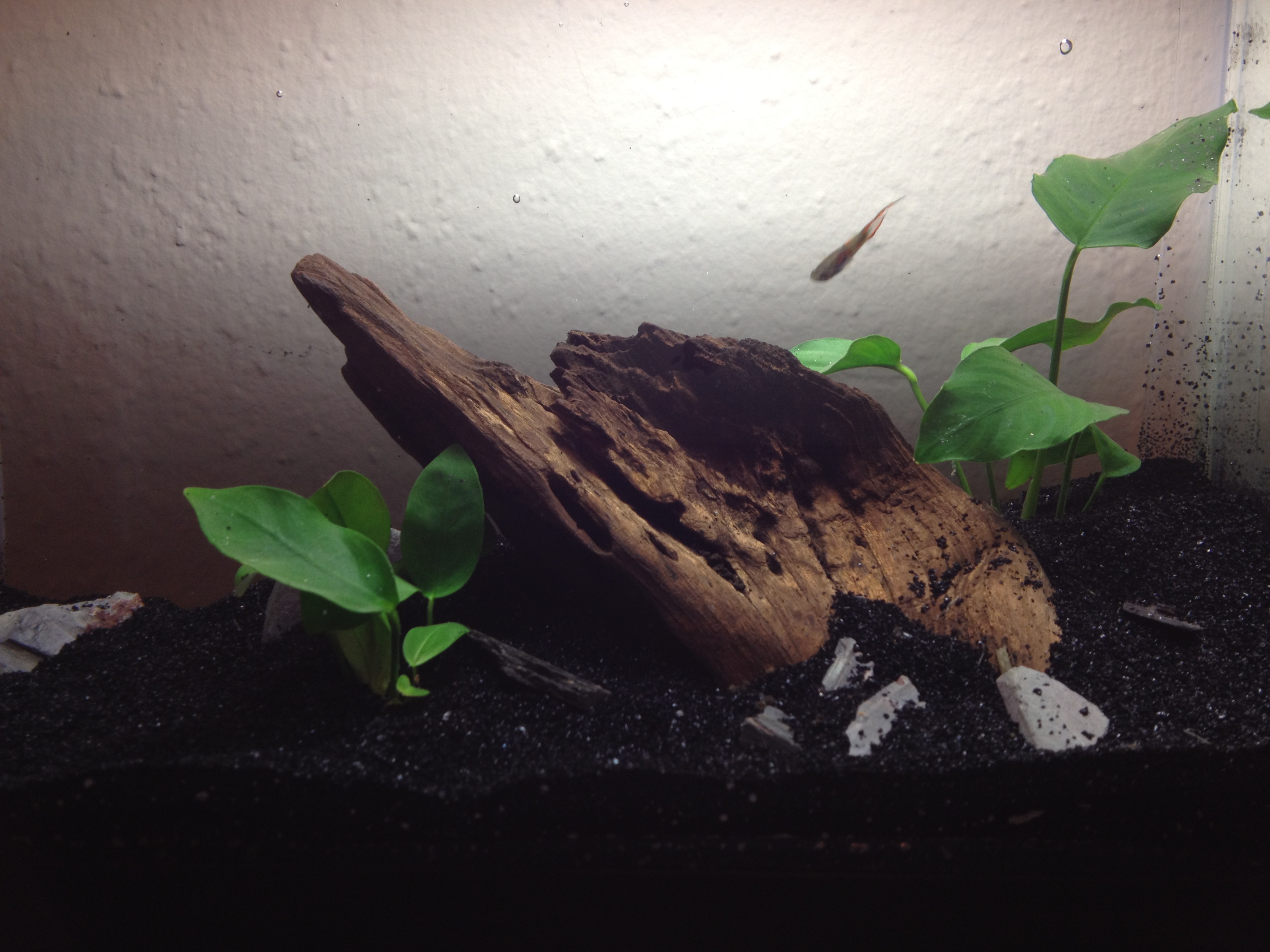
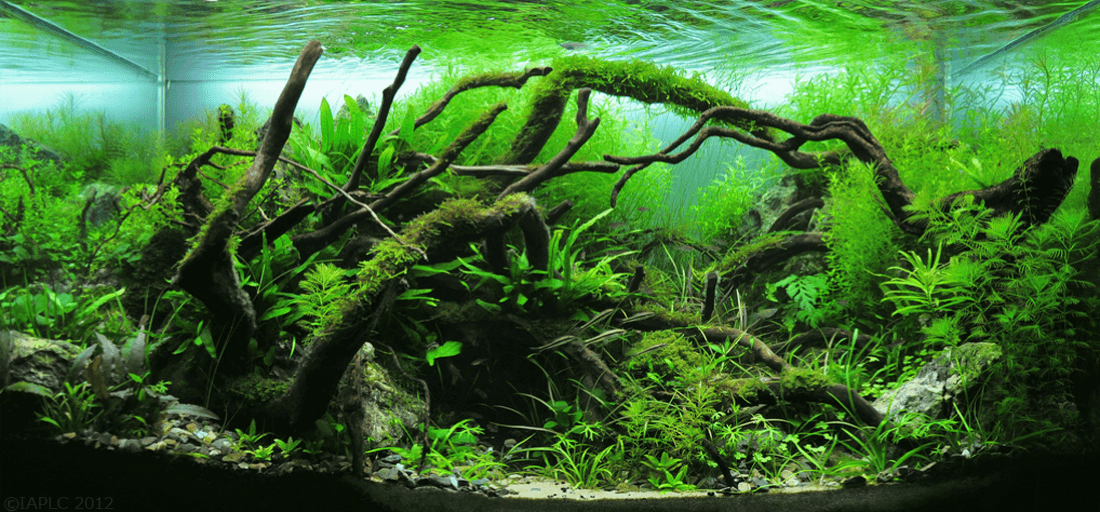
Tigers are grazers, and they spend all day picking microscopic biofilm off surfaces. Load the tank with plants and wood:
- •Mosses like java moss and Christmas moss are biofilm magnets
- •Driftwood and cholla wood release tannins and grow grazing film
- •Botanicals like Indian almond leaves give shrimp something to pick at while gently lowering pH
A planted, mature tank also gives baby shrimp cover, which raises survival rates.
Cycling and Adding Your Tigers
Never add tiger shrimp to a new tank. They're far more sensitive to ammonia and nitrite than fish, and an uncycled tank will wipe them out. Cycle the tank fully first so it can convert ammonia to nitrate, and ideally let it run several extra weeks so a healthy biofilm builds up. New to cycling? Follow our how to cycle a shrimp tank walkthrough.
When your shrimp arrive, acclimate them slowly. Caridina are sensitive to sudden swings in TDS and pH, so a slow drip acclimation over 1.5 to 2 hours is worth the patience. Rushing this step is one of the most common ways beginners lose new tigers. We have a step-by-step in how to acclimate shrimp.
Feeding Tiger Shrimp
Tigers eat mostly biofilm and algae in a mature tank, so you'll feed less than you think. Overfeeding is the number one cause of crashed water and dead shrimp.
A good routine for a small colony:
- •Feed a small amount 3 to 4 times a week, not daily
- •Offer only what they finish in 2 to 3 hours, then remove leftovers
- •Rotate foods for variety
Hikari Algae Wafers are an easy staple that sinks and holds together while shrimp swarm it. Add the occasional blanched vegetable (zucchini, spinach, or a slice of cucumber), and use a biofilm booster powder when you have baby shrimp in the tank. For the full feeding schedule and best products, see our best food for shrimp guide.
Breeding Tiger Shrimp
Once your tigers are settled in stable water, breeding usually follows on its own. There's no special trick beyond keeping conditions good and leaving them alone.
A female carrying eggs is called "berried," and you'll see a clutch of eggs tucked under her tail. She fans them with her swimmerets for about 25 to 30 days before tiny, fully formed shrimplets hatch. Tigers don't have a larval stage, so the babies are miniature versions of the adults that can fend for themselves right away.
To get the most surviving babies:
- •Keep parameters rock-steady (no big swings)
- •Run a sponge filter so shrimplets aren't sucked up
- •Grow plenty of moss and biofilm for the babies to graze
- •Don't do large water changes during a hatch
If your shrimp are healthy but not breeding, the usual culprits are unstable water, too-warm temperatures, or copper in the system. Our why shrimp aren't breeding guide walks through the fixes.
◆A Note on Crossbreeding
Tiger shrimp can interbreed with other Caridina cantonensis-line shrimp, including Crystal Reds and bee shrimp, producing hybrids like the popular "Tibee" and "Taitibee." That can be fun if it's intentional, but if you want pure tiger offspring, don't house them with other Caridina. They won't crossbreed with Neocaridina like cherry shrimp, so tigers and cherries can technically share a tank, though their ideal water differs.
Tank Mates for Tiger Shrimp
Tigers are peaceful and tiny, so almost anything bigger sees them as food. The safest "tank mate" is no fish at all, or a species-only tank. If you want company, stick to small, peaceful, shrimp-safe options like:
- •Snails (nerite, ramshorn, Malaysian trumpet)
- •Otocinclus catfish
- •Small, peaceful nano fish such as Chili rasboras (accepting you'll lose some shrimplets)
Avoid anything with a mouth big enough to fit a shrimp, and never add bettas, larger cichlids, or most community fish. Many of the principles in our best tank mates for cherry shrimp guide apply to tigers too.
The single biggest killer of shrimp isn't a fish, though. It's copper. Never use medications, plant fertilizers, or "snail-killing" products that contain copper, because even trace amounts are lethal to shrimp.
Common Tiger Shrimp Problems
Faded color. Stress, poor water, or a too-bright tank can wash out a Black Tiger's black or an OEBT's blue. Stable, slightly tannin-stained water and dark substrate help colors pop.
Failed molts (the "white ring of death"). A white band across the body that doesn't split means a molt failed, usually from wrong GH or a sudden parameter swing. Keep GH at 4 to 6 and avoid sudden water changes.
Sudden die-offs after a water change. Almost always a TDS or temperature swing. Match new water to tank water and change smaller amounts more often.
Final Thoughts
Tiger shrimp reward a little extra effort with some of the best color in the freshwater hobby. Nail your water first (RO plus a remineralizer, a buffering substrate for the fancier morphs, and stable parameters), cycle the tank fully, and acclimate slowly. Do that and tigers are far less fussy than their reputation suggests.
Ready for the next level? If you can keep tigers, you're nearly ready for the Crystal Red Shrimp, the iconic Caridina that put this whole hobby on the map.
Frequently Asked Questions
◆Are tiger shrimp easy to keep?
Tiger shrimp are intermediate, not beginner level. They need soft, slightly acidic water (usually RO water plus a remineralizer) and stable parameters. They're easier than Crystal Red Shrimp but harder than cherry shrimp, which makes them a good first Caridina.
◆Can tiger shrimp live with cherry shrimp?
Yes. Tigers (Caridina) and cherries (Neocaridina) won't crossbreed, so they can share a tank without making hybrids. The catch is their ideal water differs, so you'll have to pick a middle ground that suits both, usually softer water with a low TDS.
◆What water parameters do tiger shrimp need?
Aim for pH 6.5 to 7.5, GH 4 to 6, KH 1 to 4, TDS 120 to 200 ppm, and a temperature of 68 to 76°F. Tigers like a little more KH and a higher pH than Crystal Reds, so they sit comfortably nearer neutral.
◆Why are my tiger shrimp losing color?
Faded color usually comes from stress, unstable or hard water, or an overly bright tank. Keep parameters steady, use a darker substrate, and add tannins from driftwood or Indian almond leaves to help Black Tigers and Orange Eye Blue Tigers hold their color.
◆How long do tiger shrimp live?
Tiger shrimp typically live 1.5 to 2 years in a well-maintained tank. Stable water, gentle filtration, and a varied diet help them reach the upper end. Because they breed readily, a healthy colony will replace itself over time.
Found this helpful?
Check out our other shrimp care guides