Where to Buy Aquarium Snails: Nerites, Mystery Snails, and More
The best places to buy healthy nerite and mystery snails: local stores vs online invert sellers, what healthy snails look like, shipping tips, and quarantine.
Where to Buy Aquarium Snails (and How to Pick Healthy Ones)
Last updated: July 2026 | 8 min read
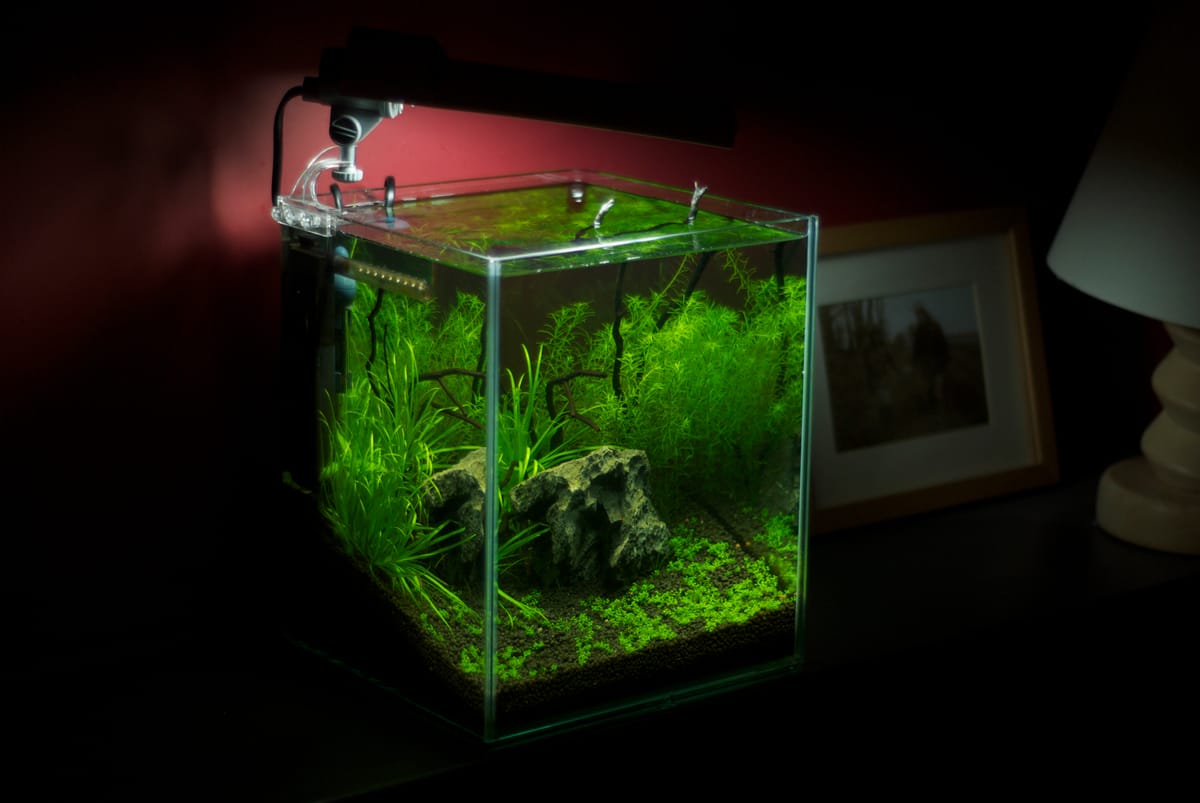
Buying an aquarium snail sounds simple until you are standing in front of a store tank full of motionless shells, wondering which ones are alive. Snails hide in their shells for hours at a time, so telling a healthy specimen from a dead or dying one takes a little more know-how than picking out a fish.
This guide covers where to buy nerite snails, mystery snails, and other freshwater snails, what to check before you pay, how shipping and DOA guarantees work, and the one quarantine issue (copper) that matters enormously if the snails are headed for a shrimp tank.
Quick Answer
You can buy aquarium snails from local fish stores, big-box pet chains, dedicated online invertebrate sellers, and hobbyist communities. Online invert specialists generally offer the best selection and health track record, with live arrival guarantees, while a good local store lets you inspect snails in person. Wherever you buy, look for snails that are attached to a surface or actively moving, with intact, undamaged shells, and quarantine new snails before adding them to a shrimp tank in case they came from a system treated with copper-based medication.
Your Four Buying Options
◆Local Fish Stores
Independent local fish stores (LFS) are often the best in-person option. Stock varies, but nerites and mystery snails are staples almost everywhere, and you can inspect the exact animal you are buying.
What to check at the store:
- •Look at the whole tank, not just your snail. Dead snails, dead fish, or lots of empty shells in the display tank are a red flag for the whole system.
- •Pick snails that are stuck to something. A snail attached firmly to the glass or moving across a surface is alive and reasonably healthy. Snails lying on their backs or rolling loose on the bottom may be dead or dying.
- •Ask what is in the water. Some stores run snails in systems shared with fish that get medicated. Ask specifically whether the invert tanks are copper-free (more on this below).
◆Dedicated Online Invertebrate Sellers
Specialist invert sellers are where most experienced keepers buy. These are businesses built around shrimp and snails, such as dedicated shrimp retailers and invertebrate-focused shops, and they typically hold livestock in copper-free systems, ship carefully with heat or cold packs, and back orders with live arrival guarantees. Established examples in this category, like Flip Aquatics and Aquatic Arts, both currently sell nerite and mystery snails with live arrival guarantees.
The tradeoffs are shipping cost, which can exceed the price of the snails on a small order, and the fact that you cannot pick the individual animal. Reputable sellers offset that with healthy stock and clear DOA policies. Many of the same considerations from our guide on where to buy freshwater shrimp apply directly to snails, since the good shrimp sellers are usually the good snail sellers.
◆Aquascaping Shops and Plant Sellers
Many online aquascaping and plant retailers carry nerites and other algae eaters as a sideline. Quality is usually decent because these businesses cater to planted-tank keepers who will notice problems. Selection is narrower than a dedicated invert seller, and snails are sometimes an afterthought, so check reviews that specifically mention livestock, not just plants.
◆Big-Box Pet Chains
Chain stores stock mystery snails almost universally and nerites frequently, at convenient prices. The caveats are bigger here:
- •Chain systems are often centrally filtered, meaning the snail tank shares water with every fish tank on the rack, including ones being medicated.
- •Staff often cannot tell you whether copper-based products are used in the system.
- •Turnover and shipping stress mean more marginal animals on the shelf.
Plenty of healthy snails come from chain stores. Just inspect extra carefully, and treat quarantine as mandatory rather than optional.
◆Hobbyist Forums, Clubs, and Local Breeders
Aquarium club auctions, local hobbyist groups, and forum classifieds are excellent sources for mystery snails and ramshorns, which breed readily in home tanks. Hobbyist stock is usually raised in copper-free tanks alongside shrimp, often at giveaway prices. Nerites are the exception: because they cannot breed in freshwater, every nerite in the hobby is wild-caught or farm-raised and imported, so hobbyists rarely have them to sell.
Comparing Your Options
| Source | Selection | Health Track Record | Can Inspect First? | Typical Guarantee |
|---|---|---|---|---|
| Local fish store | Good staples | Varies by store | Yes | Store dependent, often 7 days |
| Online invert seller | Best | Generally strong | No | Live arrival guarantee |
| Aquascaping shop | Narrow | Usually good | No | Live arrival guarantee |
| Big-box chain | Staples only | Inconsistent | Yes | Usually 14 to 30 days |
| Hobbyist/club | Mystery snails, ramshorns | Often excellent | Sometimes | Informal |
What a Healthy Snail Looks Like
Whether in person or in an unboxing video from an online seller, healthy snails share the same signs:
- •Attached or moving. The single most reliable sign of life and health.
- •Intact shell. Minor surface wear is normal, especially on wild-caught nerites. Avoid deep cracks, large chips near the opening, or holes worn through the spire.
- •Closed trapdoor on mystery snails. Mystery snails have an operculum, a trapdoor that seals the shell. A snail holding its trapdoor firmly shut is alive. A trapdoor hanging loose, or a shell that is light and hollow feeling, usually means a dead snail.
- •The smell test. A dead snail smells unmistakably terrible within a day. If in doubt after unboxing, smell it. This is the standard test online sellers ask for in DOA claims.
- •Body appearance. The visible foot and body should look full and plump, not shriveled or unresponsive to a gentle touch.
Note that nerites often play dead for a day or two after shipping or being moved. Give a motionless but odor-free, sealed-up nerite at least 24 to 48 hours in the tank before assuming the worst.
Shipping and DOA Considerations
Live snails ship surprisingly well, usually damp rather than in a full bag of water, but a few things determine success:
- •Weather windows. Reputable sellers hold orders during temperature extremes and include heat or cold packs. Be wary of any seller who ships live animals into a heat wave without comment.
- •Live arrival guarantees. The standard among good sellers. Read the terms first: most require photos of unopened bags within a short window (often 1 to 2 hours of delivery), and some require you to be home for first delivery attempt.
- •Order size economics. Shipping is often a flat cost, so ordering several snails, or combining snails with a shrimp order, gets much better value than shipping one $4 snail.
On price: expect single nerites and mystery snails to run a few dollars each from most sources. As a verified reference point, Aquatic Arts currently lists tiger nerites from $3.99 and mystery snails from $4.99, and local store pricing tends to land in a similar range, with fancy mystery snail colors and larger or rarer snails costing more.
Quarantine Before Adding Snails to a Shrimp Tank
This is the section to take seriously if your snails are joining shrimp. The concern is not disease transmission so much as chemistry: copper.
Many fish medications, especially anti-parasitic treatments, are copper-based, and copper is lethal to invertebrates at concentrations fish tolerate easily. Store systems, particularly centrally filtered ones, may have been treated at some point, and snails can carry medicated water in their shells and bodies. Introducing a snail straight from a treated system into an established shrimp colony is a small but real risk that is easy to eliminate:
- •Quarantine new snails for 1 to 2 weeks in a simple container or spare tank with dechlorinated, copper-free water and a piece of filter sponge. Snails are far easier to quarantine than fish.
- •Do a few water changes during quarantine to dilute anything the snail brought along.
- •Watch behavior. A healthy snail should be active, eating, and attached most of the time by the end of the first week.
- •Drip acclimate before the main tank. Snails handle parameter swings better than shrimp, but slow acclimation still reduces stress. The process in our shrimp acclimation guide works for snails too.
If you want to test your own water, an aquarium copper test kit can confirm your tank reads zero. Quarantine also gives you time to spot problems like a snail that never rights itself or never eats, before it can die unnoticed in a planted tank and foul the water. For what elevated risk looks like on the shrimp side, see our guide to common shrimp diseases.
Which Snail Should You Buy?
Match the snail to the job before you shop:
- •Algae eating machine, zero breeding: a nerite. See the nerite snail care guide, and know going in that females lay unhatchable white eggs on hardscape.
- •Big, interactive, colorful centerpiece: a mystery snail. See the mystery snail care guide, and be ready for above-water egg clutches if you get a female.
- •Cleanup crew that breeds to match the food supply: ramshorns. See the ramshorn snail care guide.
All three are fully shrimp-safe, as covered in can shrimp live with snails. Buy from a seller who treats invertebrates as livestock rather than an afterthought, quarantine for copper, and a snail is one of the cheapest, longest-payoff additions you can make to a tank.
Found this helpful?
Check out our other shrimp care guides