How Long Do Nerite Snails Live? The Realistic Nerite Snail Lifespan
How long do nerite snails live? Expect 1 to 2 years in a tank, not the 5 some sheets claim. Why so many die in month one and what actually stretches their life.
📅 Published 2026-09-12
Ask how long do nerite snails live and you'll get answers from one year to five, depending on who's selling them. The honest number for a tank-kept nerite is one to two years, and a fair share never reach the one-year mark because they die in the first month. That isn't bad luck. It's the predictable result of how nerites get to your tank and what happens when they arrive.
This guide covers the realistic nerite snails lifespan, why the first four weeks are the danger zone, what quietly shortens a nerite's life after that, what stretches it, and how to read a shell for age. It doesn't rehash tank setup, feeding, and parameters; our nerite snail care guide already does that.
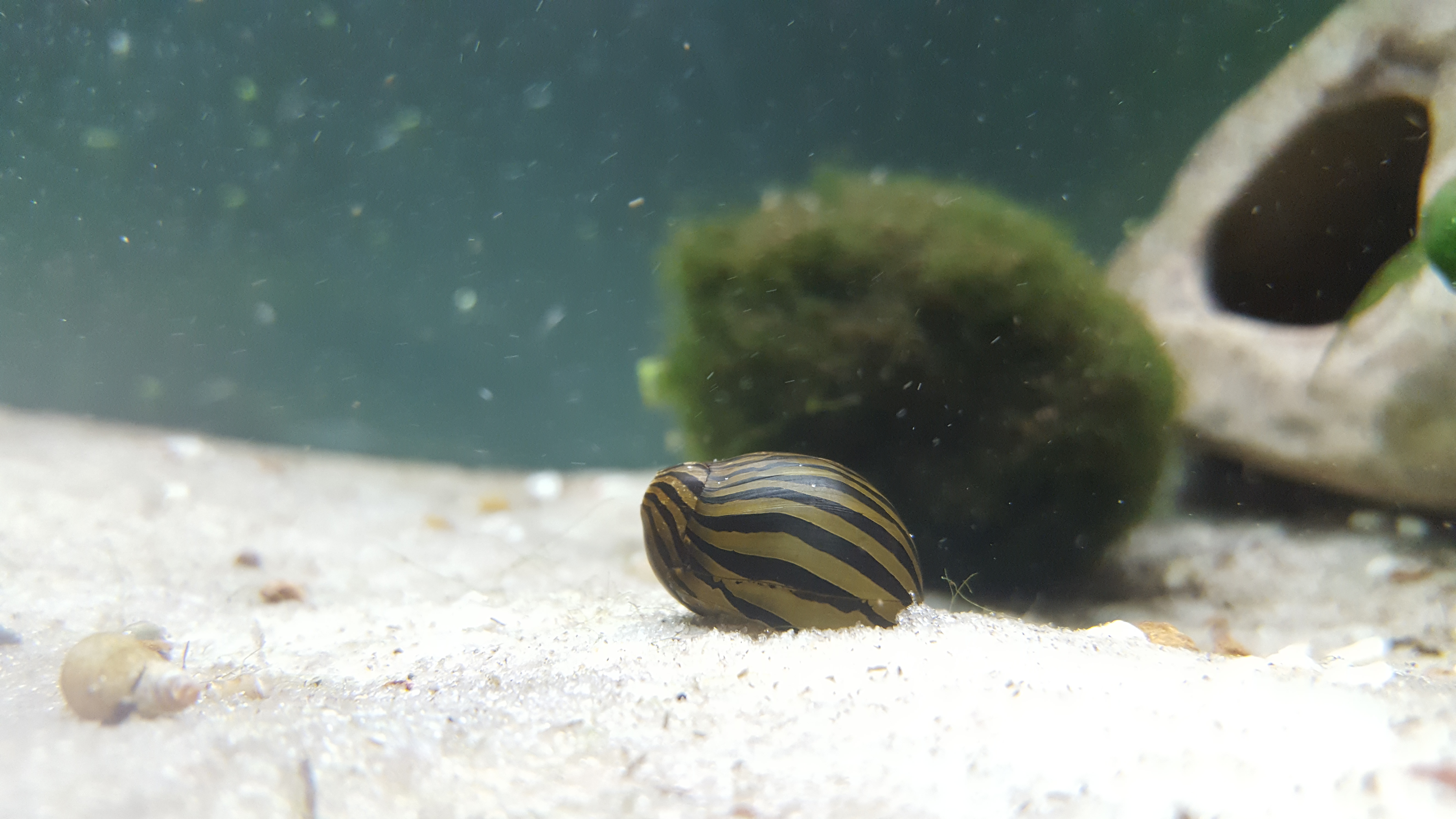
Quick Answer
Nerite snails live about 1 to 2 years in a freshwater aquarium. Aquarium Co-Op's care guide says "about 1-2 years," and Aquarium Source says it's uncommon for them to go beyond two regardless of care. Some guides quote 1 to 3 years, and a few claim up to 5, which the sources that mention it describe as rare.
The catch is that nearly every nerite in the trade is wild-caught as an adult, so you're buying a snail of unknown age. Add shipping stress and a rough acclimation and many die in the first month. A nerite that survives its first six weeks in hard, copper-free water with something to eat has a good shot at the full two years.
What the Numbers Actually Say
Lifespan figures for nerites are scattered, and it helps to know why.
Aquarium Co-Op says about 1 to 2 years. Aquarium Source says one to two years and calls anything longer very uncommon. FishLab says 1 to 3 years in one paragraph and 1 to 2 in another. Fish Tank Advisor says 1 to 3. Connect Fish Friends says 2 to 5 years under optimal conditions. Aquifarm's lifespan guide addresses the five-year figures directly and describes them as rare and mostly about snails in the wild.
The disagreement has a shape. The retailers and breeders who handle thousands of snails cluster at 1 to 2 years. The longer numbers come from care-sheet sites that don't say where the figure came from, and from individual keepers with one long-lived snail. Two years is the number to plan around. If you get three, you did something right, or you got a young one.
There's also a reason for the spread that has nothing to do with care: nobody knows how old a nerite is when it's sold.
Why Nobody Knows Your Nerite's Age
Nerites can't be bred in freshwater. Their larvae are free-swimming veligers that need brackish or marine water to develop, as Aquatic Arts explains, and raising them takes a separate brackish system and a supply of phytoplankton. Our nerite snail eggs guide covers why the white capsules on your driftwood never hatch.
The practical consequence is that the trade doesn't breed nerites, it collects them. Aquariuminfo's horned nerite profile says most nerites in the hobby are wild-caught, and a Planted Tank forum thread on the subject puts the odds of a store nerite being wild-caught at close to 100 percent. The snails are gathered as adults from rivers and estuaries, held, shipped internationally, held again at a wholesaler, and then shipped to your store or your door.
So the snail you buy could be six months old or well into its second year. A "one-year lifespan" in your tank might be a snail that lived two and a half years in total. Keep that in mind before you blame your water.
Why So Many Nerites Die in the First Month
Ask around and you'll hear the same story: three nerites bought together, one dead inside a week, the other two still grazing eighteen months later. Our own care guide notes this quirk. Here's what's behind it.
Shipping stress. By the time a nerite reaches you it may have been out of stable water for days. A snail that arrives sealed tight and doesn't move for 72 hours isn't necessarily dead, but it's burning reserves it may not have. Aquifarm's lifespan guide ties life expectancy to the quality of care from shipping onward, and that's the right framing.
Acclimation shock. Aquifarm calls a sudden change in temperature, pH, and hardness "acclimation shock" and names it a leading cause of death in the first week. Nerites are often held in one kind of water at the wholesaler and dropped into another at home. Drip acclimating over an hour or two, as our care guide suggests, is the cheapest thing you can do to improve the odds.
Already old. As above. Some of the "mystery deaths" in month one are old snails reaching the end, and nothing you did would have changed it.
A tank with nothing to eat. New nerites usually go into new, clean tanks. More on starvation below.
If a nerite makes it through the first six weeks eating and moving, the odds shift sharply in its favor.
What Shortens a Nerite's Life
Soft or acidic water eats the shell. Nerite shells are calcium carbonate, and water below pH 7.0 dissolves them. Aquifarm says even a pH of 6.8 causes slow, steady erosion, and Aquarium Co-Op's guide links cracked and eroded shells to soft tap water. The tip of the spiral goes white and pitted first, because it's the oldest shell. That damage never heals. Aquatic Arts' shell-health guide explains that snails add shell only at the lip, so old damage stays for life. Enough erosion and the snail is exposed and dies.
The fix is hardness. Sources cluster around GH 6 to 12 dGH. For KH, our care guide gives 5 to 15 dKH while Aquifarm suggests 4 to 8; either band keeps pH from sliding under 7.0. An API GH & KH Test Kit tells you where you stand in five minutes. Test before you buy nerites, not after the shell tip turns white. Crushed coral in the filter or a piece of cuttlebone raises both numbers slowly, and Aquarium Co-Op suggests Wonder Shells or Seachem Equilibrium for soft tap water.
Copper. Nerites are invertebrates, and copper kills invertebrates at concentrations that leave fish untouched. Aquaticcommunity puts the danger threshold at 0.10 mg/L for snails and 0.03 mg/L for shrimp. Copper hides in ich treatments, algaecides, "snail rid" products, and some plant fertilizers. Bettacarefishguide lists copper in fish medications as a leading cause of nerite death. If you've dosed anything containing copper, it isn't a nerite tank until the copper is gone, and it isn't a shrimp tank either.
Starvation in a clean tank. This one catches people out. Nerites are bought to eat algae, and a tank that's been scrubbed spotless has none. Aquarium Co-Op's guide says outright that nerites "can starve to death if there is not enough algae," and Aqulator's feeding guide calls a perfectly clean tank a food desert. A single nerite in a 10 gallon can strip the glass in a couple of weeks, and after that it's living on biofilm. Drop in an algae wafer two or three times a week when the glass is clean, and pull what's uneaten after four hours.
Getting stuck upside down. Nerites fall off the glass. Sources disagree about what happens next. Aquarium Co-Op says they're "perfectly capable of righting themselves unless other animals are constantly picking on them." Keepers on Planted Tank and FishLore say the opposite: a nerite that lands on its back with nothing to grab stays there and eventually dies. The likeliest reading is that it depends on what's within reach. A nerite that lands beside hardscape can grab it and roll; one stranded on open sand may not. Either way, turning a stranded nerite foot-down costs you nothing.
Escaping. Nerites climb, and an open-top tank loses them. How long an escapee survives is another point of disagreement. Some guides say 1 to 4 hours on a dry surface; forum reports on Aquarium Co-Op and BettaFish describe escapees found alive after weeks sealed in their shells, and nerites are intertidal in the wild. Put a dry one back in the water whichever way you find it and see whether it moves. A lid costs less than replacing snails.
What Extends a Nerite's Life
Mostly the absence of the things above, plus a few habits.
- •Buy snails that are moving and gripping the glass, not lying loose on the bottom of the store tank. Our guide to where to buy aquarium snails covers how to pick a source.
- •Drip acclimate for an hour or more.
- •Test GH and KH before buying and keep pH at 7.0 or above.
- •Leave some algae. A patch of green on the back glass is nerite insurance.
- •Never dose copper.
- •Put a lid on the tank.
- •Glance at the substrate for flipped snails when you feed.
- •Keep tank mates that leave snails alone. Shrimp are ideal, and our shrimp water parameters guide covers the Neocaridina ranges that suit nerites too.
None of this is complicated. Nerites aren't delicate. They arrive stressed and of unknown age, into tanks that nobody tested first, and that's what kills them.
How to Tell a Nerite's Age From Its Shell
You can't count years off a nerite shell the way you can rings off a tree, but the shell does tell you something.
New growth is at the lip. Shell grows only at the opening, forward. The tip of the spiral is the oldest shell the snail owns; the edge by the opening is the newest. Aquatic Arts' shell guide notes that new growth near the aperture reflects current conditions and the older shell reflects the past.
A worn tip isn't proof of age. Aquariumbreeder's nerite guide says old snails' shells show considerable deterioration while the snail is still alive. Aquifarm counters that tip erosion is almost always soft or acidic water rather than age. Both are right. A snail with a worn apex and clean new growth has lived in bad water in the past, possibly a collector's holding tank, and good water now. A snail eroding at the lip is in bad water now.
Size. Zebra nerites top out around 1 inch (2.5 cm). Aquatic Arts notes stores usually sell them at 0.3 to 0.5 inch and they grow from there. A store nerite already at full size is an adult of unknown age; a small one is more likely young, though nobody can promise that.
Edema. Aquarium Source and Aquariumbreeder both describe edema, a swelling of the soft body, as a condition of older snails. A nerite whose body looks puffy and won't fully retract, with a sound shell and clean water, is probably at the end of its run rather than sick from something you did.
Frequently Asked Questions
◆How long do nerite snails live in a freshwater aquarium?
About 1 to 2 years is the figure from Aquarium Co-Op and Aquarium Source. Some guides say up to 3, and claims of 5 exist but are described as rare. Since nerites are wild-caught adults of unknown age, the time you get is often less than the snail's total lifespan.
◆Why did my nerite snail die so fast?
First-month deaths are usually shipping stress, acclimation shock from a sudden change in temperature or hardness, or a snail that was already old when collected. Check for copper in anything you've dosed and confirm pH is above 7.0. Drip acclimating new nerites cuts early losses.
◆Do nerite snails die of old age?
Yes. A nerite that has been in your tank 18 months or more, in hard water with food, and then slows down, stops gripping the glass, or shows a swollen body is likely reaching the end. Aquarium Source and Aquariumbreeder both describe edema as a condition of older snails.
◆Can a nerite snail's shell heal?
No. Snails add shell only at the lip, so eroded or pitted areas at the tip stay that way. Fixing GH, KH, and pH stops further damage and lets healthy new shell grow at the opening. Aquatic Arts' shell guide describes clean new growth as the sign that conditions have improved.
◆What water hardness helps nerite snails live longer?
Aim for GH 6 to 12 dGH and pH at or above 7.0. Sources vary on KH, from 4 to 8 dKH up to 5 to 15, but anything in that band keeps pH stable. Test with a GH and KH kit before buying; erosion starts silently and can't be reversed once it shows.
The Bottom Line
A nerite that gets through its first six weeks in hard, copper-free water with algae to graze will usually give you a year or two, and that's the real lifespan, whatever the care sheet says. Most losses happen in month one and trace back to shipping, acclimation, or a snail that was already old when it was collected. Get the water right before you buy, using our nerite snail care guide as the checklist.
Found this helpful?
Check out our other shrimp care guides