Why Are My Cherry Shrimp Turning White? Causes and Fixes
Cherry shrimp turning white or cloudy? Learn the difference between a normal molt, the deadly white ring of death, muscle necrosis, and old age, plus how to fix each one.
Why Are My Cherry Shrimp Turning White?
Last updated: May 2026 | 9 min read
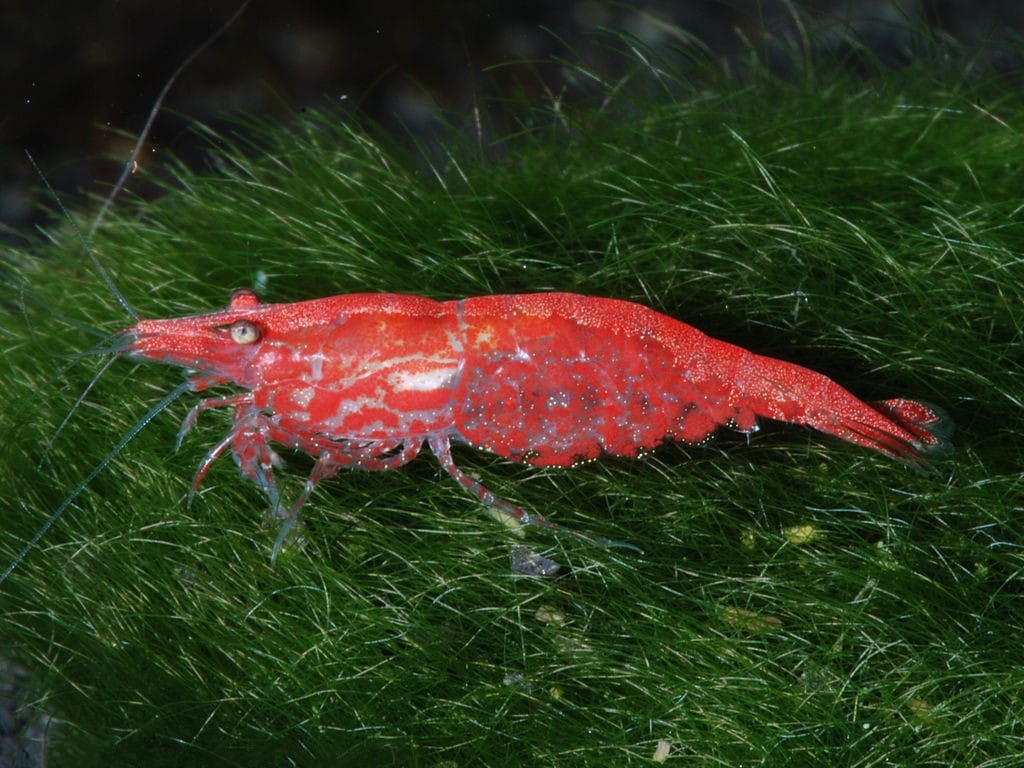
You glance at your tank and notice a cherry shrimp that's gone pale, cloudy, or milky white. It's an alarming sight, especially when the rest of the colony is bright red. The good news: a white shrimp isn't always a dying shrimp. The bad news: sometimes it is.
White or cloudy coloring in cherry shrimp comes down to a handful of causes, and they range from completely harmless to fatal. This guide walks through each one so you can tell which you're looking at and what to do about it.
Quick Answer
A cherry shrimp turning white is usually one of four things: it just molted (harmless), it's old (harmless), it has muscle necrosis from stress (serious), or it died and the body is turning opaque (already too late). The fastest way to tell them apart is to watch for movement and check your water parameters.
1. It Just Molted (Harmless)
The most common reason new keepers panic is a molt. When a shrimp outgrows its shell, it sheds the old exoskeleton, which is a clear-to-white, perfectly shaped empty shell that looks exactly like a dead shrimp.
How to tell it's a molt:
- •The "white shrimp" is hollow and translucent, like a ghost shell
- •You can usually spot the real, healthy shrimp nearby
- •The colony shows up to eat it within a day
Leave the molt in the tank. Other shrimp eat it to recover calcium for their own shells. If you want to confirm a shrimp is healthy after molting, see our guide on how to tell if your shrimp are healthy.
2. The White Ring of Death (Serious)
If a living shrimp has a bright white band or gap around the middle of its body, between the head section and the tail, that's the "white ring of death." It means the shrimp tried to molt but couldn't fully separate the old shell, usually because of a sudden swing in water parameters.
This is different from the normal white "molt line" that appears at the back of the head before a healthy molt. The white ring of death sits in the middle of the body and the shrimp often struggles or lies on its side.
Causes are almost always parameter related:
- •Too much GH/KH swing from a big water change
- •A sudden jump in TDS from new remineralizer
- •Overfeeding causing a water quality crash
There's no cure once the ring appears, but you can save the rest of the colony by stabilizing your water. Our shrimp molting guide covers prevention in detail.
3. Muscle Necrosis (Serious)
If the tail or body turns an opaque, cooked-looking white from the inside (not a shed shell, not a thin ring), that's muscle necrosis. The flesh itself is dying. It usually starts at the tail and creeps forward.
Common triggers:
- •High ammonia or nitrite from an uncycled or crashed tank
- •Sharp temperature swings
- •Severe stress during shipping or acclimation
Necrosis can't be reversed in the affected shrimp, but it's a warning siren for the whole tank. Test ammonia, nitrite, and nitrate immediately. If you see ammonia or nitrite above zero, do a gentle water change and check that your tank is fully cycled. Our why are my shrimp dying guide is the next stop if you're losing multiple shrimp.
4. Old Age (Harmless)
Cherry shrimp live about 1 to 2 years. As they age, their color often fades and they may take on a cloudy, washed-out look. An old shrimp that's still grazing and moving normally is just getting on in years. There's nothing to fix here, and the colony's offspring will keep the population bright.
5. Stress Color Loss (Usually Reversible)
Cherry shrimp also lose color, going pale or patchy rather than fully white, when they're stressed. New tank, rough acclimation, aggressive tankmates, or unstable water can all drain their red. This is reversible. Once conditions stabilize, color usually returns within a week or two. Stable, well-fed shrimp in a mature tank show the deepest color.
How to Prevent White Shrimp
Almost every serious cause traces back to water quality and stability. To keep your colony bright and healthy:
- •Keep parameters stable, not perfect. Sudden swings kill shrimp faster than slightly-off numbers
- •Test weekly with a reliable test kit
- •Do smaller, more frequent water changes instead of large ones. See shrimp tank water changes
- •Add remineralizer to your top-off and change water slowly to avoid GH/KH swings
- •Never add shrimp to an uncycled tank. Read how to cycle a shrimp tank first
- •Drip acclimate new shrimp slowly with our acclimation guide
The Bottom Line
A single white shrimp is usually a molt or old age, nothing to worry about. White shrimp showing up alongside deaths, a white ring mid-body, or cooked-looking tails point to water quality problems that need fixing now. When in doubt, test your water first. Stable parameters solve the vast majority of color problems in cherry shrimp.
Related Guides
- •How to Tell If Your Shrimp Are Healthy - Spot the signs of a thriving shrimp
- •Shrimp Molting Guide - Molting, the white ring of death, and failed molts
- •Why Are My Shrimp Dying? - Troubleshoot colony losses
- •Shrimp Water Parameters Guide - Get pH, GH, KH, and TDS right
Frequently Asked Questions
◆Is a white cherry shrimp dead?
Not always. A hollow, clear-white shape is usually just a shed molt, and the live shrimp is nearby. An old shrimp can also fade to a cloudy white but keep moving normally. A shrimp is only dead if it's opaque white, motionless, and the colony is picking at it.
◆What is the white ring of death in shrimp?
The white ring of death is a bright white gap that appears around the middle of a living shrimp's body when it fails to molt properly. It's caused by sudden water parameter swings and is almost always fatal for that shrimp. Stabilize your water to protect the rest of the colony.
◆Why did my cherry shrimp turn white and die?
The most likely cause is a water quality problem: ammonia or nitrite spikes, or a sudden parameter swing that caused a failed molt or muscle necrosis. Test your water immediately. If you're seeing multiple deaths, your tank may not be fully cycled or may have crashed.
◆Can a white shrimp turn red again?
If it's pale from stress, yes. Color returns within a week or two once conditions stabilize. If the shrimp is opaque white from necrosis or a failed molt, no, that damage is permanent.
◆Do cherry shrimp lose color as they age?
Yes. Cherry shrimp live 1 to 2 years and often fade to a cloudier, washed-out color as they get old. An aging shrimp that still grazes and moves normally is healthy, just old.
Found this helpful?
Check out our other shrimp care guides