Can Shrimp Live With Otocinclus? The Safest Fish for a Shrimp Tank
Can shrimp live with otocinclus? Yes, and it's the safest pairing in the hobby. The real risk is the otos starving. Setup, feeding both, and the medication trap.
📅 Published 2026-09-29
Ask ten shrimp keepers which fish they'd trust in a breeding colony and you'll get one answer ten times: otos. If you're wondering can shrimp live with otocinclus, the short version is yes, and it's the closest thing to a risk-free fish the hobby has. An oto's mouth is a sucker built for scraping biofilm off leaves and glass. It can't grab a shrimp, it doesn't want to, and in most tanks the shrimp will push the oto off a wafer rather than the other way around.
The catch isn't on the shrimp's side at all. Otocinclus are wild-caught, arrive at the store half starved, and die in the first month more often than almost any other freshwater fish. Keeping them alive is the real project, and it's most of this guide.
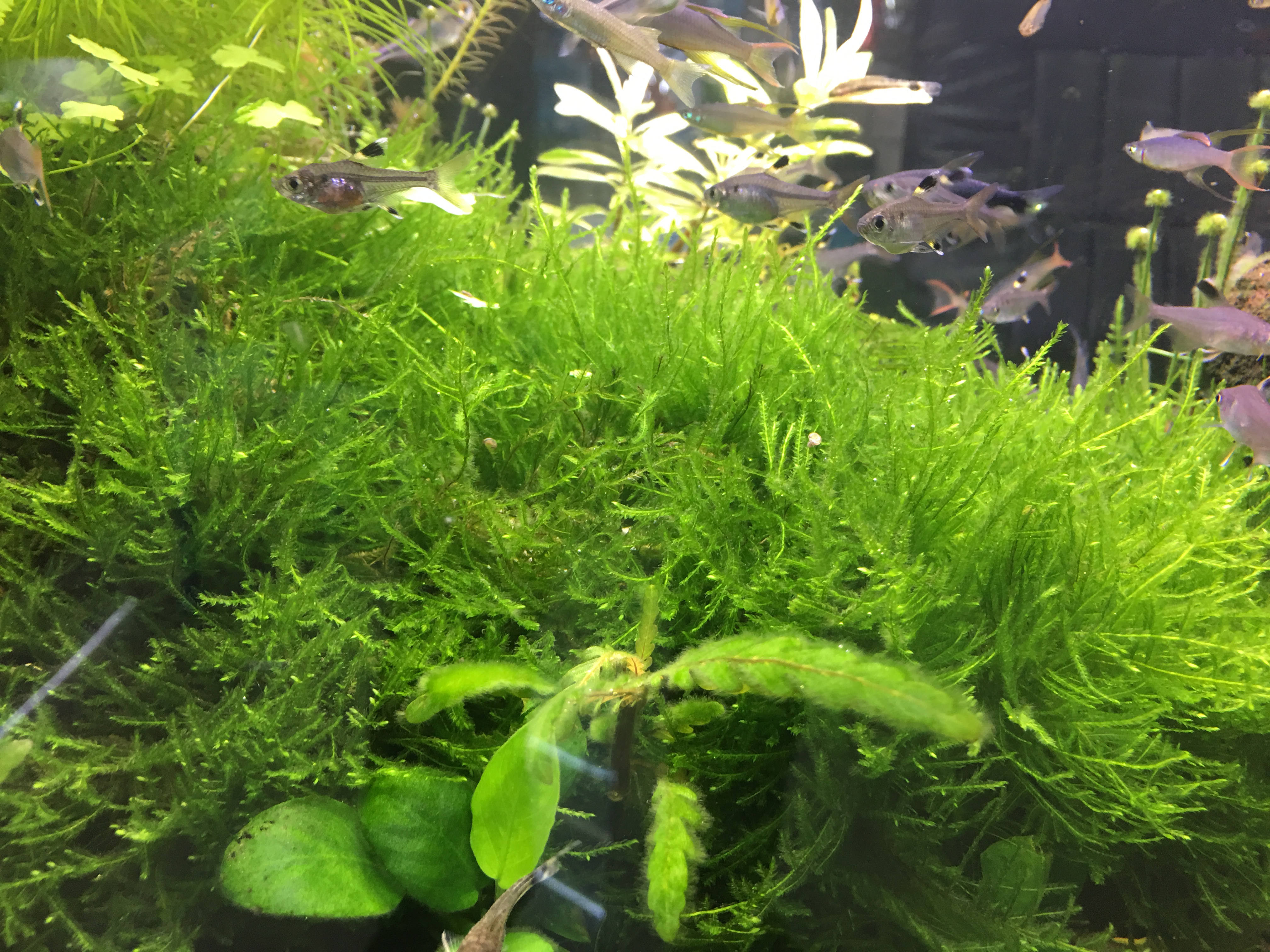
Quick Answer
Yes. Otocinclus are the one fish that shrimp specialists recommend for tanks with breeding shrimp. The Shrimp Farm calls them "99.5% shrimp safe," Fins for Grins says they "will not bother the shrimp, the eggs, or the fry," and Aquarium Co-Op has kept its own otos with baby shrimp and reports minimal losses. Adult shrimp are never at risk. Newly hatched shrimplets could in theory be taken, but no shrimp retailer we found has actually seen it happen.
The problems run the other way. Most otos are wild-caught and spend 3 to 6 weeks in the supply chain with little food, so they need a mature tank with visible algae, a proper drip acclimation, and feeding from day one. And because both animals are sensitive to copper, one dose of the wrong medication can wipe out shrimp and otos together.
Why Otos Are the Safest Fish for Shrimp
Every fish that eats shrimp does it the same way: sees something moving, opens its mouth, swallows. An otocinclus can't do the first part, let alone the last. It has a downturned sucker mouth ringed with rasping teeth, built for scraping aufwuchs (the film of algae, diatoms, and bacteria on submerged surfaces) off leaves, wood, and glass. Wikipedia, Seriously Fish, and Aquarium Co-Op all describe the genus with that same word, aufwuchs grazers. There's no chasing in that diet.
Size helps too. Aquarium Co-Op puts otos at 1.5 to 2 inches, Seriously Fish lists the zebra oto at 45mm, and Wikipedia's range for the whole genus runs from 2.4 to 5.5cm. That's smaller than a full grown amano and about the length of an adult cherry. The Shrimp Farm's line is that otos "lack the right mouth shape for a scampi dinner" and are "more likely to be bullied by their tankmates than the other way round."
Will Otocinclus Eat Baby Shrimp?
Here's where the sources split, so both sides get quoted. The Shrimp Farm says a baby shrimp "could technically still fall prey to an Otocinclus" but that it's "not something we've ever actually observed happening" and wouldn't affect colony size either way, since shrimplets hide for their first weeks. Aquarium Co-Op's cherry shrimp tank mates guide is a shade more cautious: otos "may opportunistically snack on a baby shrimp" but "generally leave the adult shrimp alone." Fins for Grins and Fishstores go the other direction and say otos don't have the mouthparts to harm even a shrimplet.
Our read: a newborn cherry is about 2mm, an oto's mouth is a suction cup, and every retailer that keeps both together in volume reports no meaningful losses. If every shrimplet counts, otos are still the fish you'd pick, and the moss and leaf litter in our how to raise shrimplets guide tip the odds further.
The Real Risk Is the Otos Starving
Wikipedia says otos are difficult to breed in captivity and that "mostly wild caught Otocinclus are available to hobbyists." Aquarium Co-Op and Fins for Grins describe what happens next: the fish are netted in South America, sorted, held, and shipped through exporters and wholesalers over 3 to 6 weeks with little or nothing to eat. Fins for Grins is blunt about it: "The single most common reason Otocinclus die in home aquariums is insufficient food. Not disease. Not bad water. Food."
The numbers are grim, and sources vary on how grim. Modest Fish calls high losses in the first few weeks common even in good tanks, and Fishstores says first-month mortality "commonly runs 50% or higher." Treat the exact figure loosely; the direction isn't in dispute.
Four things move the odds:
- •Buy plump otos. Modest Fish, Fins for Grins, and Aquarium Source all say it: look for a rounded belly behind the head and skip any fish that looks hollow there. A skinny oto has often already lost the ability to digest food.
- •Let the store hold them. AquariumStoreDepot's rule is don't buy otos the week the store gets them. The ones still alive and rounding out after seven days are the ones that made it through shipping.
- •Only add them to a mature tank. Seriously Fish says otos "should never be added to an immature aquarium." AquariumStoreDepot draws the line at three months old. If your glass has never grown a green film, it isn't ready.
- •Feed from day one. Don't wait to see if the algae is enough. It isn't, and by the time you can tell, it's too late.
Which Otos You'll Find in the Store
Wikipedia lists 20 valid Otocinclus species, but Aquarium Co-Op says three cover nearly everything sold:
| Oto | Sold as | Size | Notes |
|---|---|---|---|
| Otocinclus vittatus | Common oto | 1.5 to 2 in | The default. Most "otocinclus" bags are this or a lookalike |
| Otocinclus macrospilus | Dwarf oto | 1.5 to 2 in | Nearly identical to vittatus in the tank |
| Otocinclus cocama | Zebra oto | 1.8 in (45mm) | Black and white bars. Seriously Fish says it's been in the hobby only since 2001 and "can be a little delicate when first imported" |
One behaviour that scares new owners: otos dash to the surface, gulp air, and drop back down. Wikipedia notes the genus has adaptations for breathing air. It's normal unless every fish in the tank is doing it.
Water Parameters: Where Otos and Shrimp Overlap
Oto care sheets don't agree with each other, so here's the spread rather than one number:
| Parameter | Aquarium Co-Op | Seriously Fish (O. cocama) | Fishkeeping World | Fins for Grins |
|---|---|---|---|---|
| Temperature | 70 to 79F | 70 to 77F | 72 to 79F | 72 to 78F |
| pH | 6.0 to 7.5 | 6.0 to 7.5 | 6.8 to 7.5 | 6.0 to 7.5 |
| GH | soft to hard | 2 to 10 dGH | not given | 3 to 8 dGH |
The overlap everyone accepts is roughly 72 to 77F, pH 6.5 to 7.5, soft to moderate water. That's a comfortable fit for Neocaridina at 72 to 76F. The Shrimp Farm's recommendation for the pairing is 71.5 to 75F and pH 6.5 to 7.0, which is their cherry shrimp water with an oto added to it.
Caridina keepers have a tighter fit. Bee shrimp at 68 to 74F and pH 5.5 to 6.5 sit at the bottom of the oto's range on both counts. Seriously Fish lists the zebra oto as compatible with both Caridina and Neocaridina, and plenty of Caridina tanks run otos at 72 to 74F, pH 6.2 to 6.5 without trouble. Below 70F or below pH 6.0 you're outside every published oto range, so don't push it.
Acclimating Otos Into a Shrimp Tank
Shrimp keepers already drip acclimate everything, and otos want the same. Buce Plant's method for shrimp and fish is 1 to 2 drops per second until the container holds half tank water, which takes 1 to 2 hours; Fishstores recommends 60 to 90 minutes for otos specifically. Never pour bag water into the tank; net the fish across. Our how to acclimate shrimp walkthrough covers the setup, and the same airline and bucket work for otos.
Two things differ from shrimp. First, otos have been in a bag or a bare holding tank for weeks, so the tank you drip them into should have food already growing in it. Second, if you have a spare cycled tank, quarantine them there for two to three weeks. You can feed heavily without fouling the display, watch bellies fill out, and confirm there's no ich before the fish meets your shrimp. Ich treatment in a shrimp tank is a problem, as we'll get to.
Feeding Otos and Shrimp Together
The good news is they eat the same things. The bad news is they eat the same things. AquariumStoreDepot warns that shrimp "love to graze on algae, which could lessen food availability" for otos, and Aquarium Source's caution is to "make sure you have enough algae for everyone." In a crowded shrimp tank with spotless glass, the otos lose.
Feed for the otos and let the shrimp share:
- •Sinking wafers after lights out. Hikari Algae Wafers sink fast and hold together. AquariumStoreDepot's line is that if you only feed when the lights are on, your catfish is starving, because otos feed at night and shrimp mob a wafer by day. Drop it in as the lights go off.
- •Blanched vegetables. Zucchini, cucumber, spinach, and canned green beans come up in Aquarium Co-Op, Seriously Fish, Modest Fish, and Fins for Grins. Weigh them down. Pull them within a day or two; Aquarium Source says 24 hours, Modest Fish allows up to three days. In a shrimp tank, err on the short side.
- •Biofilm boosters. GlasGarten Bacter AE grows the exact film otos and shrimplets both eat. Fishstores lists it for otos, and it's already a staple in Caridina tanks.
How much? Watch the bellies, not the wafer. Once the otos are plump, a wafer or a slice of vegetable every second night keeps them there, and the shrimp take what's left. If the shrimp start ignoring food you're overfeeding, and our shrimp tank algae control guide explains why a tank that grows a little algae is a good thing when you keep either animal.
Medication: The Trap That Kills Both
Copper kills shrimp. It also kills otos. The Shrimp and Snail Breeder oto guide warns against any medication or fertilizer containing copper in any form and cites experimental data in which most of an oto population died within 48 hours at 0.575 mg/l copper sulfate. Fishstores says the same in fewer words: copper-based treatments harm catfish and shrimp. The usual reason anyone reaches for copper is ich, and otos are exactly the stressed, freshly imported fish that shows up with it.
So plan for it before it happens:
- •Quarantine new otos in a separate tank, so any treatment happens away from the shrimp.
- •Don't medicate prophylactically. Fishstores notes that adding ich treatment to an already stressed oto often kills it faster than the parasite would.
- •If the display gets ich anyway, pull the fish and treat them in a hospital tank if you can. If you can't, use a product rated invert safe and dose carefully. Formalin and malachite green products are widely reported as usable at reduced doses with scaleless catfish and shrimp, but the details matter, so read our shrimp-safe fish medications guide before dosing anything.
- •Check fertilizers. Some contain trace copper.
Tank Setup Checklist for Otos and Shrimp
Tank size. Seriously Fish's minimum footprint for otos is 45 by 30cm, about 11 gallons. Aquarium Source says 10 gallons for 4 to 6 fish; The Shrimp Farm recommends 15 to 20 gallons for beginners; Modest Fish says 20. A 10 gallon works if it's mature and heavily planted, but a 20 long has more glass and leaf area to grow food, which is what decides whether otos live.
Group size. Seriously Fish, The Shrimp Farm, Modest Fish, and Fishstores all say six or more. Aquarium Co-Op disagrees on purpose: "It is much better to have a couple of plump and healthy otos than a school of six that are slowly starving." Both are right. Six is the social minimum, but only if the tank can feed six. In a 10 gallon, start with three or four and add more once the first group is fat.
Plants and hardscape. Broad leaves, moss, driftwood, and a few Indian almond leaves; Aquarium Co-Op names driftwood biofilm and catappa leaves as oto food.
Filtration. Gentle. A sponge filter like the Hikari Bacto-Surge can't pull in shrimplets, and the sponge itself becomes a grazing surface.
Order of stocking. Shrimp first, let the colony establish, otos last. A three month old tank with berried females and green-tinged glass is the moment.
For where otos rank against corys, rasboras, and the rest, our best tank mates for cherry shrimp guide covers the full list.
Frequently Asked Questions
◆Do otocinclus eat baby shrimp?
Almost never. Otos have sucker mouths built for scraping biofilm, and The Shrimp Farm says taking a shrimplet is technically possible but "not something we've ever actually observed happening." Aquarium Co-Op allows that an oto "may opportunistically snack on a baby shrimp." Either way, colony growth isn't affected in a planted tank.
◆How many otocinclus should I keep with shrimp?
Most sources say six or more, but Aquarium Co-Op's advice to keep a couple of plump otos rather than six starving ones is the better rule in a small tank. In a mature 10 gallon, start with three or four. In a 20 gallon or larger, six is fine if there's visible algae.
◆Why do otocinclus die so easily?
Starvation. Nearly all otos are wild-caught and spend 3 to 6 weeks in the supply chain with little food, so many arrive with no reserves left. Add one to a new tank with no algae and it declines even in perfect water. Buy plump fish, add them only to a mature tank, and feed from the first night.
◆Can otocinclus live with Caridina shrimp?
Yes, at the warmer end of Caridina water. Otos are published down to 70F and pH 6.0, and Seriously Fish lists the zebra oto as compatible with Caridina. A crystal shrimp tank at 72 to 74F and pH 6.2 to 6.5 suits both. Below 70F or pH 6.0, you're outside the oto's range.
The Bottom Line
Shrimp and otocinclus are as safe a pairing as freshwater offers. The shrimp are never in danger, the shrimplets are close enough to never that every retailer who keeps both recommends it, and the two animals want the same mature, planted, gently filtered tank. The whole job is keeping the otos alive: buy fat ones, drip them into a tank that's already growing food, feed after dark, and never let copper near the water.
Found this helpful?
Check out our other shrimp care guides