Can Shrimp Live With Pea Puffers? The Honest Answer
Can shrimp live with pea puffers? A pea puffer hunts shrimp, so the honest answer is mostly no. Here is when it fails, the rare case it works, and why.
📅 Published 2026-10-06
You set up a pretty little planted nano tank, dropped in a few cherry shrimp, and then fell for the tiny grumpy face of a pea puffer at the fish store. Now you want both in the same glass box. Can shrimp live with pea puffers, or are you about to turn an expensive shrimp colony into fish food?
The short version: a pea puffer is a shrimp predator, and most keepers who try this combination lose shrimp. There is one narrow setup where some shrimp survive, and the sources genuinely disagree about how well even that works. This guide walks through what a pea puffer actually is, why it hunts shrimp, what the care sites and keepers say when they contradict each other, and the one honest reason you might still do it.
Quick Answer
No, not as a stable community. Pea puffers are micropredators that hunt snails, worms, and small crustaceans, and dwarf shrimp fall squarely into that last group. The Shrimp Farm puts it bluntly: cherry shrimp "will actually be greatly appreciated as a snack." You should expect a pea puffer to eat shrimplets as they appear and to pick off adults, especially right after a molt when the shell is soft.
The only honest exceptions are these. If you are running a large, well established, heavily planted cherry shrimp colony and you accept that the puffer is cropping it like a live food source, some shrimp will survive and keep breeding behind the plants. And if you deliberately want a live snack supply for the puffer, a cherry colony does the job. If what you want is shrimp you can watch and breed, keep the puffer in its own tank.
Meet the Pea Puffer
The pea puffer (Carinotetraodon travancoricus) is a freshwater pufferfish from the rivers and lakes of southwestern India, in and around Kerala. It goes by a handful of names, including dwarf puffer, pygmy puffer, and Indian dwarf puffer. It is tiny. Most sources put the adult size around one inch, though some, like Aquarium Source, measure them closer to an inch and a half. Either way it fits in a 5 to 10 gallon tank, and it lives roughly four to five years with good care.
That small size fools a lot of people. A pea puffer is not a peaceful community fish in a cute package. It is a feisty, territorial carnivore. Despite the size, pea puffers get aggressive over territory and are often kept alone or in carefully managed groups because the males scrap with each other. Aquarium Source sums up the temperament as "very feisty and aggressive."
Here is the part that matters for shrimp. A pea puffer has a beak made of fused teeth, and it hunts by crushing and biting small prey. Its natural diet is live snails, insect larvae, worms, and small crustaceans. These are hunters, not grazers. They spend the day cruising the tank looking for something small enough to attack, which is why they are famous for clearing a tank of pest snails and why they struggle to leave your shrimp alone.
Why Pea Puffers and Shrimp Are a Risky Mix
The problem is not that pea puffers are mean. The problem is that your shrimp are, from the fish's point of view, a meal that happens to be living in its tank.
Dwarf shrimp are slow. A cherry shrimp does not flee the way a fast schooling fish does. It sits on a leaf and grazes, and a pea puffer has all day to line up a bite. Shrimplets are even easier. They drift in the open, they are bite sized, and a hunting puffer will pick them off one by one. The practical result in most tanks is that your colony stops recruiting new shrimp, because the babies vanish before they grow up, and the adult count slowly falls.
The single most dangerous moment is the molt. A shrimp sheds its shell every few weeks, and for a day or so afterward it is soft, pale, and hiding because it cannot defend itself. Keepers across the forums agree this is when shrimp are most vulnerable to a puffer. A shrimp that would be too tough or too fast on a normal day becomes a soft target the morning after it molts. Our shrimp molting guide covers why that soft window happens and how long it lasts.
It gets worse because pea puffers and neocaridina shrimp actually like similar water, so there is no parameter that keeps them apart.
| Parameter | Pea puffer | Cherry (neocaridina) shrimp |
|---|---|---|
| Temperature | 72 to 82 F | 65 to 78 F |
| pH | 7.0 to 8.3 | 6.5 to 8.0 |
| Hardness | Moderate | Soft to moderate |
The overlap at roughly 74 to 78 F and a pH near neutral to slightly alkaline is exactly where both animals are comfortable. That shared comfort zone is the whole reason people ask the question. You cannot keep them in parameters that suit one and not the other, so the shrimp have nowhere safe to be.
What the Sources Actually Say
This is a topic where reputable care sites do not agree, so it is worth laying out plainly rather than pretending there is a single answer.
| Source | Verdict on shrimp with pea puffers |
|---|---|
| The Shrimp Farm | Cherry shrimp are a favorite snack; you are "pretty much out of luck" |
| Aquarium Source | Cherry shrimp are listed as possible, but "if you're uncertain it's never a good idea to risk it" |
| Fishkeeping World | Similarly sized adult shrimp are often left alone; babies get picked off, but the colony can hold |
| Keeper forums (Aquarium Co-Op, Fishlore) | Mixed results, from months of peace to a wiped out colony |
The gap between The Shrimp Farm and Fishkeeping World is real and it is wide. The Shrimp Farm treats shrimp as puffer food, full stop. Fishkeeping World argues that a well matched adult shrimp is often ignored and that losing the odd baby does not sink the colony. The forum reality sits in between and leans pessimistic: for every keeper who reports a puffer calmly ignoring a cherry colony for months, another reports coming home to shrimp parts.
What explains the spread is the setup, not luck. The tanks where shrimp survive tend to be heavily planted, well established, and home to a large breeding colony and a single, well fed puffer. The tanks where shrimp vanish tend to be newer, more open, with fewer shrimp and a hungry fish. So both camps are telling the truth about their own tanks. The honest takeaway is that this is a gamble, and the odds depend on how far you stack the deck toward the shrimp.
Does the Shrimp Species Change the Answer?
A little, but less than you would hope.
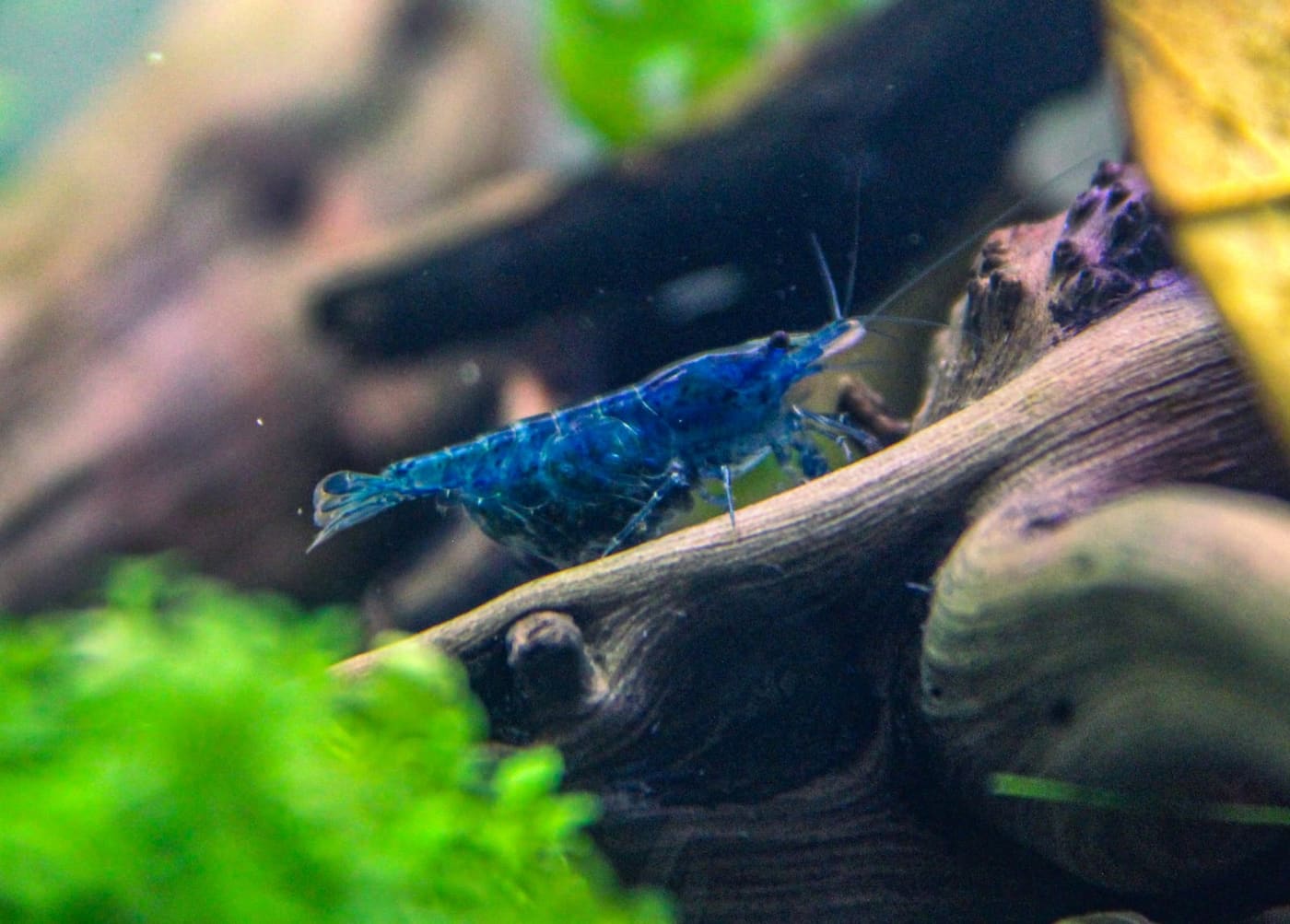
Cherry shrimp and other neocaridina (blue dream, blue velvet, yellow, and the rest) are the classic victims. They are small, soft, and slow, and they breed readily, which is why some keepers treat a cherry colony as self replenishing puffer food. If you want to keep and grow a cherry colony on its own, our cherry shrimp care guide is the better starting point, and breeding cherry shrimp covers how fast they recruit.
Amano shrimp are bigger, up to around two inches, so a full grown amano is a mouthful a one inch puffer cannot swallow whole. That is why amanos sometimes get listed as the safest shrimp option. Even so, a puffer can nip an amano to death over time, and amanos still molt, which drops them back into the soft and vulnerable window. Bigger helps. Bigger is not safe.
Ghost shrimp are cheap and slightly larger than cherries, which is why they are often sold as feeders in the first place. Keeping them with a puffer is really just feeding the puffer on a schedule.
Filter feeders like bamboo and vampire shrimp are a different animal entirely. They are large, they need strong flow and bigger tanks than a pea puffer setup usually provides, and pairing them with an aggressive nipper is a poor fit for reasons that have nothing to do with being eaten.
So the ranking, from most likely to be eaten to least, runs roughly: shrimplets, then adult cherries and other neocaridina, then adult amanos. None of them are a sure thing.
The One Setup Where It Can Work
If you have read this far and still want to try it, here is the version that gives shrimp a fighting chance. This is not a recommendation so much as an honest description of what the survivors have in common.
Start with a heavily planted tank. Dense moss, floating plants, and a tangle of cover give shrimp places to molt and hide where the puffer cannot follow. The best plants for shrimp tanks guide covers the species that build that kind of jungle. The thicker the planting, the more shrimp live to adulthood.
Establish the shrimp colony first, and make it large. A handful of cherries added to a puffer tank is a snack. A mature colony of dozens, already breeding hard behind the plants, can lose shrimplets to the puffer and still grow, because the birth rate outruns the predation rate. A sparse colony cannot.
Keep the puffer well fed. A pea puffer that gets daily frozen and live food hunts less out of boredom and hunger. Snails are the staple most keepers rely on, and a steady supply of small ramshorn or bladder snails keeps the puffer busy and worn down. Our ramshorn snail care guide explains how to culture a snail population for exactly this. Rotate in frozen bloodworms and other meaty foods so the puffer is never hunting on an empty stomach.
Introduce both young, ideally at the same time, so the puffer grows up treating the shrimp as scenery rather than as prey it just discovered. Puffers added to an established shrimp colony sometimes ignore the adults they grew alongside while still snapping up anything new and small.
Even with all of that, be clear eyed. On the care sites that disagree, the optimistic one still admits the puffer eats babies, and the pessimistic one calls the whole thing a lost cause. You are accepting ongoing losses in exchange for a mixed tank. If that trade bothers you, it is the wrong tank.
Better Options for Both Animals
If your real goal is a thriving shrimp colony, skip the puffer. Pea puffers are genuinely happiest in a species only tank anyway, where they can hunt snails and show off without stressing anyone. Give the puffer its own 5 to 10 gallon planted tank with a snail supply and enjoy it for what it is.
For the shrimp tank, pick tank mates that will not treat the colony as a buffet. Our guide to the best tank mates for cherry shrimp covers the small, peaceful, small mouthed fish that coexist with a breeding colony, and what fish eat shrimp lists the predators to keep well away from your tank. A pea puffer belongs firmly on the second list.
Frequently Asked Questions
◆Will a pea puffer eat cherry shrimp?
Usually yes, at least some of them. Cherry shrimp are small, slow, and soft, which is exactly what a pea puffer hunts. Shrimplets get eaten as they appear, and adults are most at risk right after a molt. Some keepers report a well fed puffer ignoring a large planted colony for months, but others lose the whole colony, so treat it as a gamble.
◆Can pea puffers live with amano shrimp?
Amano shrimp are bigger than cherries, up to around two inches, so a full grown amano is too large for a one inch puffer to swallow whole. That makes amanos the safest shrimp option, but not a safe one. A puffer can still nip an amano over time, and a freshly molted amano is soft and exposed. Bigger improves the odds, it does not remove the risk.
◆How many pea puffers can I keep in a tank?
A single pea puffer needs a 5 to 10 gallon tank depending on the source. For a group, start around 10 gallons and add a few gallons per extra fish, with heavy planting to break up sightlines, because the males are territorial. Most beginners do best with one puffer in its own planted nano tank.
◆What should I feed a pea puffer instead of shrimp?
Pea puffers are carnivores that want live and frozen meaty foods. Small snails such as ramshorn and bladder snails are the staple, and they help wear down the beak. Round that out with frozen bloodworms, mosquito larvae, daphnia, and brine shrimp. A well fed puffer is a calmer puffer.
The Bottom Line
Can shrimp live with pea puffers? Treat the answer as no. A pea puffer is a shrimp hunter, and in most tanks it eats the babies, picks off molting adults, and slowly empties the colony. The care sites disagree on the details, with The Shrimp Farm calling shrimp straight up puffer food and Fishkeeping World saying matched adults are often left alone, but even the optimistic view accepts losses. The only version that works is a big, heavily planted, well fed setup where you accept the puffer is cropping a breeding colony. If you want shrimp you can actually keep, give the puffer its own tank and build the shrimp a community from the best tank mates for cherry shrimp instead.
Found this helpful?
Check out our other shrimp care guides