Can Shrimp Live With Plecos? An Honest Verdict by Pleco Species
Can shrimp live with plecos? With a bristlenose or clown pleco, usually yes. With a common pleco or a carnivorous L-number, no. The verdict species by species.
📅 Published 2026-09-30
"Pleco" covers a fish that stays under 4 inches and eats driftwood, a fish that reaches 2 feet and needs a 180 gallon tank, and a fish that hunts insect larvae in 85F water. So when someone asks can shrimp live with plecos, the only honest answer starts with "which one?" A bristlenose in a planted 20 gallon with a cherry colony is one of the more relaxed community setups in the hobby. A common pleco in the same tank is a slow motion disaster, and not mainly because it eats shrimp.
This guide goes through the plecos you'll actually see for sale, what each one does to a shrimp colony, and the three problems that come up with every species: wafer competition, waste, and molting shrimp.
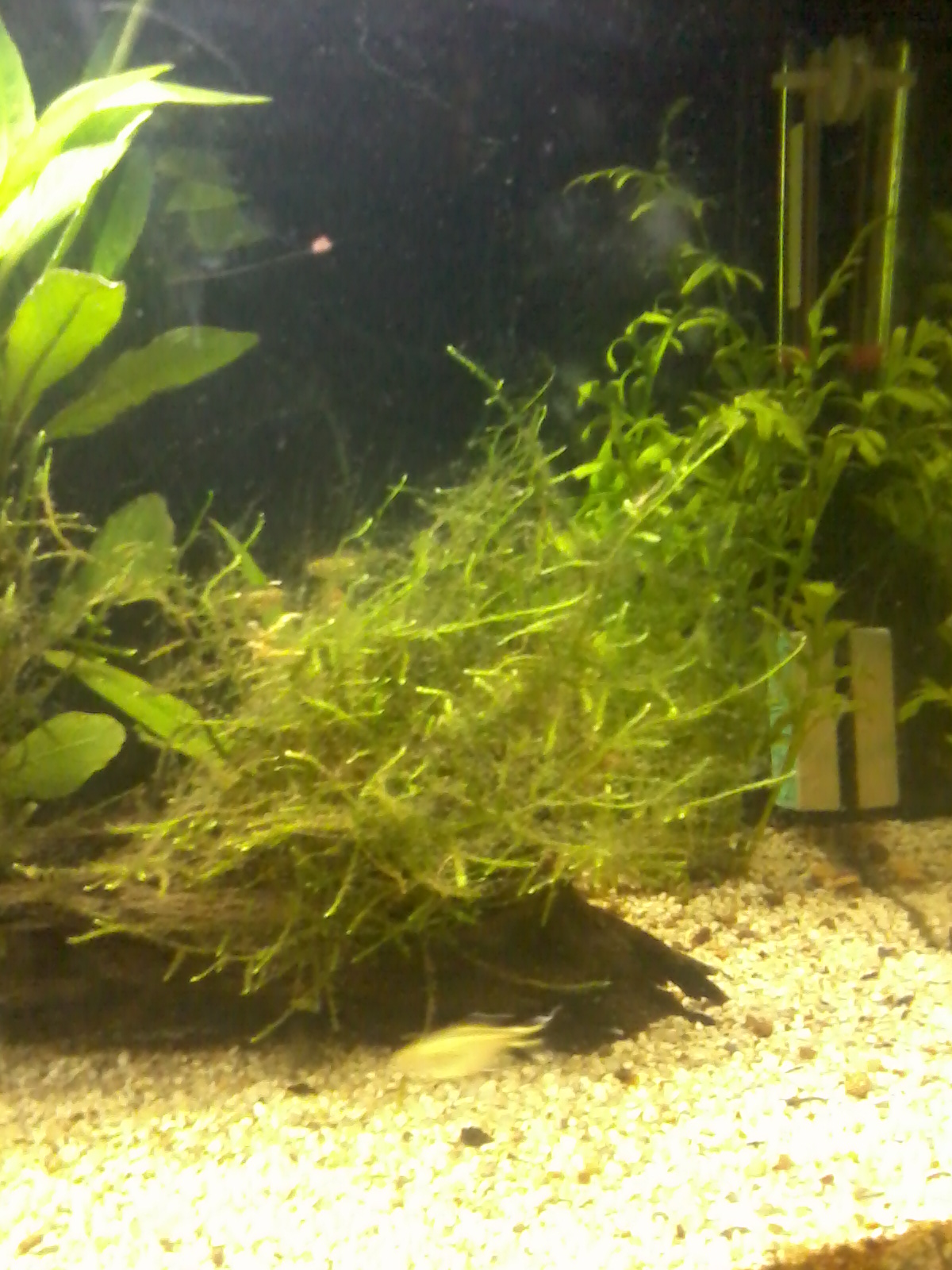
Quick Answer
It depends on the pleco. Bristlenose plecos (Ancistrus) and clown plecos (Panaqolus maccus) are small, plant and wood eaters, and are widely kept with cherry shrimp; no shrimp breeder we found has a reliable report of either hunting adult shrimp, and shrimplet losses are rare enough that colonies keep growing. Rubber lip plecos are similar but bigger. Common and sailfin plecos grow to 17 to 20 inches, produce a huge amount of waste, and belong in a 75 gallon or larger tank that isn't a shrimp tank. Zebra plecos and their carnivorous relatives eat meaty food in water that's too warm for most shrimp, and the sources disagree on whether they'll eat shrimp too.
Across every species, the risks that actually bite are a pleco hoovering up the algae wafers the shrimp needed, nitrate climbing from pleco waste, and a freshly molted shrimp being found by a fish that would otherwise ignore it.
Why "Pleco" Is the Wrong Question
The suckermouth catfish family (Loricariidae) has hundreds of species in the trade, and the hobby lumps most of them under one word. Aquarium Co-Op's pleco guide covers a "nearly 2-foot beast" and a bristlenose that stops at 4 to 6 inches on the same page. Wikipedia notes that most fish sold as "common pleco" aren't even the species the name refers to; they're usually Pterygoplichthys, not Hypostomus.
Diet splits them too. Bristlenose and rubber lips graze algae and vegetables. Clown plecos rasp wood and need it to live. Zebra plecos, per Seriously Fish, "prefer a meaty diet" of bloodworm, chopped mussel, and prawn. The first group shares a menu with shrimp. The last group shares a menu with things that eat shrimp.
Bristlenose Pleco: The One Most People Mean
If you say "pleco" in a shrimp forum, people assume bristlenose. It's the small, cheap, tank-bred Ancistrus sold everywhere, in brown, albino, super red, and longfin forms.
Size. Sources scatter more than you'd expect. Aquarium Co-Op says 4 to 6 inches, Seriously Fish gives 125mm (about 5 inches), Aquatropics 10 to 12cm, and Wikipedia allows up to 15cm for males. Aquarium Source's 3 to 5 inches is the low end. Plan on 5 inches and you'll rarely be surprised.
Water. Aquarium Co-Op gives 74 to 80F and pH 6.5 to 7.8; Seriously Fish 70 to 79F and pH 5.5 to 7.5; Aquatropics 72 to 81F and pH 6.0 to 7.8. Everyone overlaps at 74 to 79F and pH 6.5 to 7.5, which is cherry shrimp water. Caridina at 68 to 74F and pH below 6.5 sit at the cold, acidic edge of the bristlenose range; it can work at 72 to 74F, but it's a compromise for the fish.
Wood. Aquatropics calls driftwood essential because bristlenose rasp it constantly and need the fiber to digest properly. Aquarium Source frames it as an algae surface instead, so sources differ on why, but not on whether.
Waste. Aquatropics' phrasing is "plecos are messy," with a recommendation to filter for double the tank volume and change 30 percent weekly because "nitrate creeps up fast." Wikipedia says the same of clown plecos. This is the part shrimp keepers underestimate.
◆Will a bristlenose eat shrimp?
Adults, no. On the Petshrimp forum, Mustafa (the site's founder) reported keeping one in a 55 gallon shrimp tank for over six years, and on shrimplets said he had "yet to hear any reliable reports of that happening." Keeping Catfish lists bristlenose as suitable for a shrimp tank from 20 gallons. Aquarium Co-Op's general line on plecos is that they usually won't eat other animals unless those animals "have already passed away." One Fishlore thread from a keeper who'd gone from 20 adult cherries to 8 with a bristlenose in the tank is worth reading in full: the replies pointed out that adults were vanishing while shrimplets survived, which is backwards for a pleco, and that the guppies in the same tank were the more likely culprit.
Two caveats, though. Seriously Fish lists prawn and shrimp among foods a bristlenose accepts, so it isn't a strict vegetarian; a dead or dying shrimp will be eaten. And Practical Fishkeeping's answer on plecos and shrimp makes the point that every shrimp is "soft and totally defenceless for around 24 hours" after a molt. A bristlenose rooting through moss at night can find one. Our shrimp molting guide covers what a fresh molt looks like and why cover matters in that window.
Shrimplets: a bristlenose can take a newborn it bumps into and mostly doesn't bother. In a planted tank the colony grows regardless.
Clown Pleco: Smaller, Wood-Bound, Messier Than It Looks
Panaqolus maccus is the other pleco that shows up on cherry shrimp tank mate lists. Aquarium Co-Op's own list includes it, with the same caveat as otos: it "may opportunistically snack on a baby shrimp" but "generally leave[s] the adult shrimp alone." Keeping Catfish calls it "very peaceful and rarely aggressive" and not likely to attack live shrimp.
It tops out at 3.5 inches (Wikipedia and Tankarium agree), needs driftwood as food rather than furniture (Tankarium warns a clown pleco "can starve to death if their diet is deprived of driftwood for too long"), and produces, in Wikipedia's words, "large amounts of waste" for its size. Wikipedia and Keeping Catfish put the minimum tank at 15 gallons; Tankarium says 20. Temperature is where sourcing thins out: Tankarium gives 73 to 83F, and Aquarium Co-Op's general pleco range is 74 to 80F, so treat it as a warm-water fish that suits Neocaridina at 74 to 78F and not Caridina.
For shrimp, it's a bristlenose with a smaller mouth: same verdict, slightly better odds for shrimplets.
Rubber Lip Pleco: The Cool-Water Option
Chaetostoma milesi, sold as the rubber lip or rubber nose pleco (L146), is the one for keepers whose tank runs cool. Fish Laboratory gives 72 to 78F and notes it tolerates cooler water because of the highland streams it comes from; Aquarium Source says 72 to 80F. Both give pH 6.5 to 8.0. Size is disputed: Aquarium Co-Op groups it with bristlenose at 4 to 6 inches, Fish Laboratory says 5 to 7, Aquarium Source about 7. Both of the latter want 25 gallons or more.
Fish Laboratory lists shrimp as possible tank mates but warns "there is the potential for some juvenile fish to be mistaken for food," and Aquarium Source notes the species is "sensitive to parameter shifts" during water changes, which is a trait shrimp keepers already manage for. So: safe with adult shrimp, a bit riskier for shrimplets because it's larger, and a good match for a heaterless Neocaridina tank.
Common and Sailfin Plecos: Not a Shrimp Tank Fish
The 3 inch "algae eater" in the fish store's community tank is usually Pterygoplichthys pardalis or a relative. Wikipedia gives P. pardalis a maximum of 43cm (17 inches), and Hypostomus plecostomus up to 50cm in the wild and around 38cm in aquariums. Aquarium Co-Op says to start one in a 75 gallon and plan on "180 or even 500 gallons."
Will it eat shrimp? Practical Fishkeeping's answer to a reader with a common pleco and amanos was that adults are "unlikely to be immediately hoovered up," but that molting shrimp are defenceless for a day and the fix is caves "too small" for the pleco to enter. Aquarium Co-Op's rule that plecos eat animals that have already died applies too, and a 15 inch fish finds a lot of dead and molting shrimp.
But predation is the smaller problem. A common pleco's waste alone pushes nitrate past what a shrimp colony wants, it uproots plants and knocks over hardscape, and it eventually needs a tank most shrimp keepers will never own. Verdict: no.
Zebra Plecos and the Carnivorous L-Numbers
Hypancistrus zebra (L046) is the poster fish for the meat-eating plecos, and its relatives in Hypancistrus and Peckoltia share the diet. Seriously Fish lists it at 80mm, 79 to 86F, pH 6.0 to 7.5, carnivorous. Wikipedia gives 6.4cm, 79 to 88F, and a diet of "small invertebrates such as insect larvae."
Here the sources genuinely disagree. Keeping Catfish says tiger and zebra plecos (Peckoltia and Hypancistrus) "may attack shrimp, and small populations are vulnerable." Mustafa on Petshrimp flagged Hypancistrus as the plecos that "might eat shrimp babies" because of their meaty diet. Seriously Fish, on the other hand, says zebras can be kept with red cherry shrimp in a planted tank, while also recommending they be kept alone in a biotope. Our reading: a carnivorous fish will eat shrimplets and molting shrimp, and a fish that Seriously Fish says shouldn't be in a community tank isn't a candidate for a shrimp tank in the first place.
Temperature settles it anyway. Zebras want 79F and up. Caridina top out at 74F, and Neocaridina at 78F on our numbers. There's no overlap that suits both.
Verdict Table by Pleco Species
| Pleco | Adult size (sources vary) | Temp | Adult shrimp | Shrimplets | Verdict |
|---|---|---|---|---|---|
| Bristlenose (Ancistrus) | 4 to 6 in | 74 to 79F overlap | Safe | Rare losses | Yes, 20 gal and up, Neocaridina |
| Clown (Panaqolus maccus) | 3.5 in | 73 to 83F | Safe | Rare losses | Yes, needs driftwood, warm Neocaridina |
| Rubber lip (Chaetostoma) | 4 to 7 in | 72 to 78F | Safe | Some risk (larger fish) | Yes, cool Neocaridina, 25 gal |
| Common/sailfin (Pterygoplichthys) | 15 to 20 in | 74 to 80F | Molting shrimp at risk | High | No, tank size and waste |
| Zebra and Hypancistrus/Peckoltia | 2.5 to 4 in | 79F and up | Disputed | Likely eaten | No, carnivore, too warm |
The Three Problems Every Pleco Brings
Wafers. A bristlenose eats an algae wafer in minutes, and in Aquarium Co-Op's words plecos "do not live on feces," so they need real feeding. Shrimp graze biofilm all day and need a wafer only a few times a week, but if the pleco gets every one, the shrimp get none. Aquatropics' fix is to drop wafers and vegetables "after lights out so the other fish do not eat them first." For the shrimp, put a second, smaller portion of food deep in moss the pleco can't reach. Hikari Algae Wafers work for both animals and are cheap enough to feed two at a time.
Waste. Plecos graze continuously on a plant-heavy diet, so a lot passes through. Aquatropics recommends filtering for double the tank volume, 30 percent weekly water changes, and frequent filter cleaning. Shrimp want nitrate low and stable and hate big water changes, so the workable answer is an oversized filter with a sponge prefilter (a Hikari Bacto-Surge as a second filter works well), smaller more frequent water changes, and a nitrate test with the API Freshwater Master Test Kit every week or two. Our shrimp tank water changes guide explains how to change more water without shocking the colony.
Molts. Practical Fishkeeping's 24 hour window is the one time a peaceful pleco becomes a predator. Dense moss, leaf litter, and cholla or driftwood with gaps too small for the pleco give a soft shrimp somewhere to sit it out. It also helps the shrimplets, which is the same cover our how to raise shrimplets guide describes.
Setting Up a Bristlenose and Shrimp Tank
Size. Keeping Catfish, Aquarium Co-Op, and Aquatropics converge on 20 gallons for one bristlenose; Aquarium Source says 25. A 20 long with a cherry colony and a single bristlenose is the classic setup. Don't try it in a 10.
One pleco. Seriously Fish describes bristlenose as "territorial with conspecifics and similarly-shaped species." One is calmer than two, and a pair will breed.
Driftwood and caves. A big piece of wood for rasping, a cave the pleco fits in, and gaps and moss it doesn't. Sized right, the hardscape does the shrimp's protecting for you.
Add the pleco last. Let the shrimp colonize for two or three months. A colony of 50 shrugs off the occasional molting loss; a colony of 10 notices.
For how bristlenose stack up against otos, corys, and rasboras, our best tank mates for cherry shrimp guide ranks the field.
Frequently Asked Questions
◆Will a bristlenose pleco eat cherry shrimp?
Adults, no. Long-term keepers on the Petshrimp forum report years of bristlenose and cherry shrimp together with no reliable reports of predation. A bristlenose will eat a dead shrimp and may take a freshly molted one it finds at night, so give the colony moss and small gaps to hide in.
◆Do plecos eat baby shrimp?
Small algae eaters like bristlenose and clown plecos occasionally take a newborn shrimplet they bump into, but breeders who keep both say colonies grow normally. Carnivorous plecos such as zebra plecos (Hypancistrus) and Peckoltia species eat small invertebrates by nature and should be assumed to eat shrimplets.
◆What size tank do I need for a pleco and shrimp?
Twenty gallons for a bristlenose or clown pleco with a shrimp colony, per Keeping Catfish and Aquarium Co-Op, and 25 or more for a rubber lip. Common and sailfin plecos need 75 gallons to start and eventually far more, which is why they don't belong in a shrimp tank at all.
◆Can plecos live with Caridina shrimp?
Not comfortably. Bristlenose overlap with Caridina only at 72 to 74F and pH around 6.5, the edge of both ranges. Clown and zebra plecos want warmer water than bee shrimp tolerate. If you keep crystal or bee shrimp, otocinclus are a better algae eater than any pleco.
The Bottom Line
A bristlenose or clown pleco in a planted 20 gallon with cherry shrimp is a well-tested pairing: adults are safe, shrimplet losses are rare, and the real work is feeding both and keeping nitrate down under a messy fish. Rubber lips are the same story for cooler tanks. Common plecos and the carnivorous L-numbers fail on size, waste, temperature, or diet before you even get to whether they'd eat a shrimp.
Found this helpful?
Check out our other shrimp care guides