Cherry Shrimp Grades Explained: Cherry, Sakura, Fire Red, and More
Cherry shrimp grades run from plain Cherry up to Painted Fire Red. What each grade means, how breeders judge the color, and whether paying more is worth it.
📅 Published 2026-10-22
Walk into the shrimp section of any store and the same animal shows up at three different prices. One tank is labeled "red cherry shrimp" for a couple of dollars. Next to it, "fire red" costs three or four times as much, and the shrimp inside look like drops of paint. They're the same species. What you're paying for is the grade.
Cherry shrimp grades are a way of ranking how much red covers the shrimp and how solid that red is. The ladder runs from a see-through animal with a few scattered blotches up to one that's opaque crimson from its antennae to the tip of its tail. This guide walks the whole ladder, explains what breeders actually look at, and answers the question most buyers really have: does a higher grade make a better pet, or are you just paying for looks?
Quick Answer
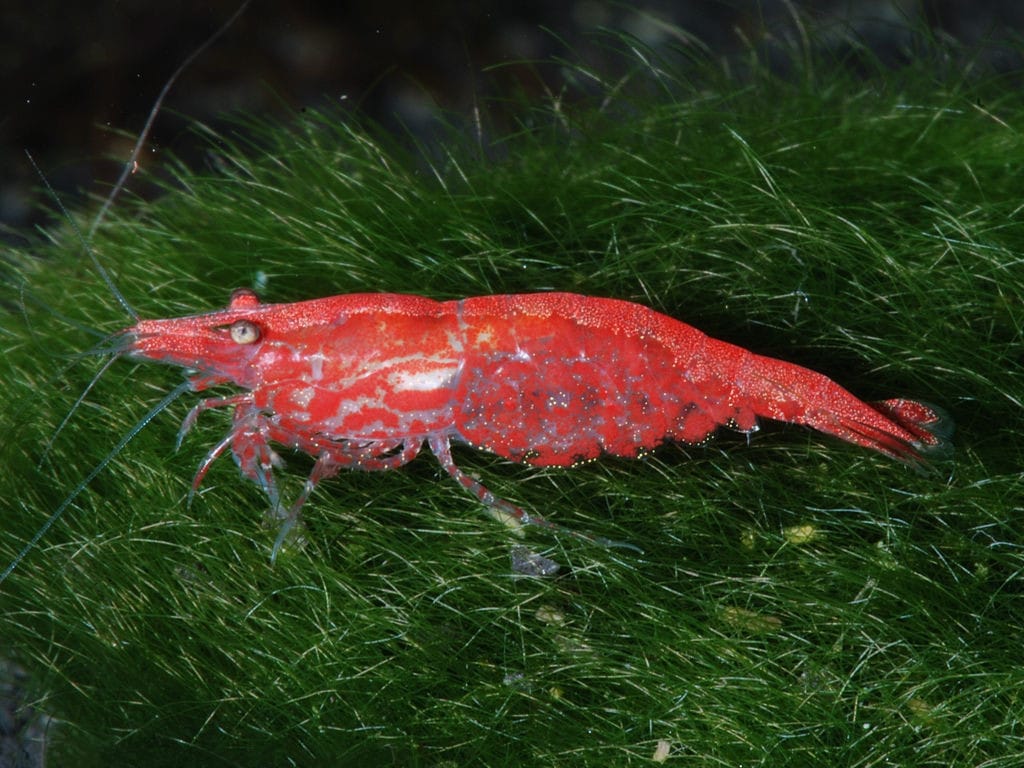
A cherry shrimp's grade describes how much of its body is covered in red and how opaque that red is. The common red ladder, from lowest to highest, is Cherry, Sakura, Fire Red, and Painted Fire Red, with Bloody Mary sitting near or above the top depending on who you ask. Lower grades are mostly clear with patches of color. Higher grades are solid, and the red reaches onto the legs and face.
There is no official grading body, so the lines between grades are fuzzy and shift from seller to seller. Grade is cosmetic. A plain Cherry is just as hardy, easy, and fun to keep as a Painted Fire Red. You pay more for higher grades because they're harder to breed and cull, not because they live longer or behave differently.
What a Shrimp Grade Actually Means
All of these shrimp are one species, Neocaridina davidi. The University of Florida's Featured Creatures profile puts it plainly: generations of selective breeding have produced the colors and patterns the hobby now sells under different common names. The wild animal is a mottled greenish brown. Every bright red shrimp in the trade traces back to breeders picking the reddest individuals, breeding them together, and repeating that for many generations.
Grade measures how far that selective breeding has pushed one line. Breeders and sellers look at a handful of things:
- •Coverage. How much of the body carries color versus how much stays clear.
- •Opacity. Whether the red is solid or you can see through it to the organs underneath.
- •Reach. Whether the color extends down onto the legs, the rostrum (the nose), and the underside, or stops at the back.
- •Evenness. Whether the color is uniform or broken up by clear patches and blotches.
The Shrimp Farm, an established US shrimp breeder, is upfront that grading is not an exact science and that charts differ. Gensou, an aquarium shop that publishes detailed grading guides, says the same thing: there's no international standard, only a hierarchy the hobby has broadly agreed on. So treat every grade name as a rough bucket, not a precise measurement. The "fire red" at one store might be the "high sakura" at another.
The Red Cherry Shrimp Grades, Lowest to Highest
Here's the standard red ladder. The descriptions below are drawn from The Shrimp Farm and Flip Aquatics, two US breeders, with Gensou's guides for the finer distinctions.
| Grade | What it looks like | Rough color coverage |
|---|---|---|
| Cherry | Mostly clear body with scattered red patches; legs and back often transparent | Patchy, well under half |
| Sakura | Red over most of the body, but clear gaps remain on the legs and underside | Roughly 60 to 80 percent |
| Fire Red | Near-solid red, legs colored evenly with little blotchiness | Almost complete |
| Painted Fire Red | Opaque crimson over the entire body, legs and underside included, no clear patches | Full, solid |
◆Cherry
The base grade, and the one the whole species is named after. A Cherry-grade shrimp is largely translucent with irregular red markings, and the males are often close to clear. Flip Aquatics describes plain cherry as the lowest grade of red Neocaridina, and that's what you get in most mixed starter tanks. These make great beginner shrimp and breed just as readily as any higher grade.
◆Sakura
A step up. Red now covers most of the body, though the legs and belly still show clear patches. The Shrimp Farm argues the Sakura band is too wide and suggests splitting it into low and high sub-grades, sometimes written AA, because a low Sakura and a high Sakura can look quite different while sharing one label. High Sakura shrimp are more opaque, and their red runs more intense.
◆Fire Red
Here the shrimp reads as solid red at a glance. The body is close to fully opaque, and the legs are colored too, without the blotchy clear spots of a Sakura. This is the grade where you stop seeing organs through the shell. The Shrimp Farm sums it up as evenly colored legs with no blotchiness.
◆Painted Fire Red
The top of the standard ladder. The name comes from how the color looks applied with a brush: a deep, even crimson with no transparent window anywhere, legs and underside included. Flip Aquatics describes painted fire reds as completely solid with no transparent patches. These fetch the highest prices in the red line because every shrimp in a batch has to hit that bar, which means heavy culling.
Where Bloody Mary Fits, and Why Sources Disagree
Bloody Mary is the grade that breaks the neat ladder. It's a deep, wine-dark red, and most keepers rank it at or near the top. The trouble is that sources don't agree on where it sits, or even whether it belongs on the red cherry chart at all.
The Shrimp Farm notes that Bloody Mary is a relatively recent addition and isn't in every chart yet, and describes its color as similar to Painted Fire Red but more intense. Gensou lists it above Painted Fire Red in one guide while calling Painted Fire Red the highest red grade in another. A common view among breeders is that Bloody Mary is a separate line with its own genetics rather than just the next rung above Painted Fire Red, which is why it usually gets its own tank and its own label.
The honest answer is that Bloody Mary is a premium deep-red shrimp whose exact placement depends on the seller. If you're buying, judge the animal in front of you, not the word on the tank.
Grades Are Not Species, and They Don't Breed True
This is the part that trips up new breeders. A tank of Painted Fire Reds will not produce all Painted Fire Reds. Grade is the visible result of genetics that don't pass down perfectly, so even top-grade parents throw a range of offspring, some of them paler than their parents.
Wikipedia's entry on Neocaridina davidi notes there's limited public information on exactly how color is inherited in these shrimp, so nobody can give you clean ratios. What breeders know from practice is that quality drifts downward on its own unless you push back. Left alone, a high-grade colony slowly produces more and more lower-grade shrimp, and over enough generations an unmanaged tank trends back toward the wild brown.
The tool that keeps a line high is culling, which in the shrimp hobby usually means moving the paler shrimp to a separate community tank rather than killing them. Gensou's breeding guide suggests keeping only the strongest-colored shrimp for breeding, on the order of the top third, and removing weaker ones once they're big enough to judge at around a centimeter. The reddest males matter as much as the females here, since males run paler by nature and are easy to overlook.
One more rule separates a stable grade from chaos: keep color lines apart. If a wild-type or a different color morph breeds into your reds, the offspring scatter back toward muddy brown fast. Our guide to mixing shrimp colors covers why that happens and which combinations are safe, and the full workflow lives in breeding cherry shrimp.
Grading Beyond Red: Blue, Yellow, Green, and Orange
Red cherries are the clearest grading example, but the same logic runs across the color morphs. The UF/IFAS profile lists the main ones: orange and yellow sakura, green jade, the blues (blue dream, blue velvet, blue jelly), and the striped rili patterns. Each color exists across a range of coverage and opacity, and that range is what sets the price within a color.
The blues are where naming gets genuinely confusing. Blue Dream and Blue Velvet are sometimes sold as two separate lines and sometimes treated as the same morph at different intensities. Most sources describe Blue Dream as the deeper, more saturated cobalt and Blue Velvet as a softer, more translucent periwinkle, but breeders disagree on whether that's a grade difference or a lineage difference, and the two names get used loosely. Blue Diamond, which Wikipedia lists among the recognized trade names, is another deep blue line that adds to the muddle. If you want a specific blue, look at photos of the actual stock rather than trusting the label.
For yellows, greens, and oranges, the grading information is thinner, but the same eye applies: more coverage, more opacity, and color that reaches onto the legs all push a shrimp up in grade and price.
Does a Higher Grade Mean a Better Pet?
No, and this one is worth saying plainly. Grade is about appearance and nothing else. A Cherry-grade shrimp and a Painted Fire Red are the same species with the same care needs, the same lifespan, the same diet, and the same temperament. Neither is hardier or more delicate because of its color. Our cherry shrimp care guide applies to every grade on the chart.
What a higher grade buys you is a more striking tank and, if you breed, a better starting point. What it costs you, beyond money, is a little more vigilance, because holding a high grade means culling and keeping the line clean. Plenty of keepers happily run a mixed low-grade colony and never think about grades again, which is a perfectly good way to keep shrimp.
Color also isn't fixed at purchase. Genetics set the ceiling, but diet, stress, substrate, and age all affect how much of that potential a shrimp shows day to day. A good shrimp food gives them the building blocks to color up to their genetic limit, though no food turns a Cherry into a Fire Red. You can browse color-supporting shrimp foods on Amazon, and our guide on how to make cherry shrimp more red covers what actually works and what's a myth.
How to Grade and Cull Your Own Colony
If you want to raise the average grade of your own tank, the method is simple to describe and slow to do:
- •Watch the whole colony in good light. Grade against a dark background, where red shows best, and judge shrimp when they're calm and settled, not right after a water change when stress can mute color.
- •Pick your breeders. Move the reddest, most opaque shrimp, including the reddest males, into a dedicated breeding tank. Aim for the top third or so.
- •Cull downward. As the babies grow, pull the pale and patchy ones out to a community or display tank once you can judge them, around a centimeter. They still make fine pets.
- •Keep the line pure. One stray wild-type or off-color male can set you back generations, so don't mix morphs in the breeding tank.
- •Give it time. Grade improves over generations, not weeks. Expect a year or more to see a clear shift.
This is the same work commercial breeders do, which is why Painted Fire Reds cost what they do.
Frequently Asked Questions
◆What is the highest grade of cherry shrimp?
Painted Fire Red is the top of the standard red ladder, a solid opaque crimson with no clear patches and color down to the legs. Bloody Mary is sometimes ranked above it, but sources disagree, and many treat Bloody Mary as a separate deep-red line rather than the next grade up.
◆Do higher grade cherry shrimp cost more?
Yes. A plain Cherry might cost a dollar or two, while Painted Fire Reds and Bloody Marys run several times that. You're paying for the heavy culling and clean breeding lines needed to produce consistent high-grade color, not for a hardier or longer-lived animal.
◆Will high grade shrimp breed true?
Not reliably. Even Painted Fire Red parents produce a spread of offspring, some paler than themselves, because color genetics in Neocaridina don't pass down perfectly. Without culling, a colony's average grade drifts lower over time and eventually back toward wild brown.
◆Is a Sakura the same as a Fire Red?
No, though the line between them is blurry. A Sakura has red over most of the body but keeps clear patches on the legs and belly, while a Fire Red is near-solid with evenly colored legs. Because there's no official standard, one store's high Sakura may be another's Fire Red.
◆Does grade affect how hard a shrimp is to keep?
No. Grade is cosmetic. A low-grade Cherry and a top-grade Painted Fire Red have identical care needs, hardiness, and lifespan. If you're new to shrimp, a cheap low grade is the smart place to start.
The Bottom Line
Cherry shrimp grades, from plain Cherry through Sakura, Fire Red, and Painted Fire Red, measure one thing: how much solid red covers the shrimp. There's no official standard, so the labels are rough, and Bloody Mary's spot on the chart is genuinely disputed. Higher grades cost more because they take constant culling and clean breeding lines to maintain, not because they're better pets. Pick the look you like, keep your color lines separate if you breed, and remember that a two-dollar Cherry is the same easygoing shrimp as the painted one beside it. When you're ready to buy, our guide on where to buy freshwater shrimp covers how to get healthy stock.
Found this helpful?
Check out our other shrimp care guides