How to Make Cherry Shrimp More Red: What Works and What Doesn't
How to make cherry shrimp more red: genetics set the ceiling, carotenoid foods fill it in over 4 to 8 weeks, dark substrate shows it off. Plus what won't work.
📅 Published 2026-09-13
If you're searching for how to make cherry shrimp more red, you've probably noticed the gap between the shrimp in the seller's photos and the ones in your tank. Some of that gap is real and fixable. Some of it is genetics you can't feed your way past, and some of it is the seller's black substrate and camera. This guide sorts the three apart so you spend money on the parts that move the needle.
Quick Answer
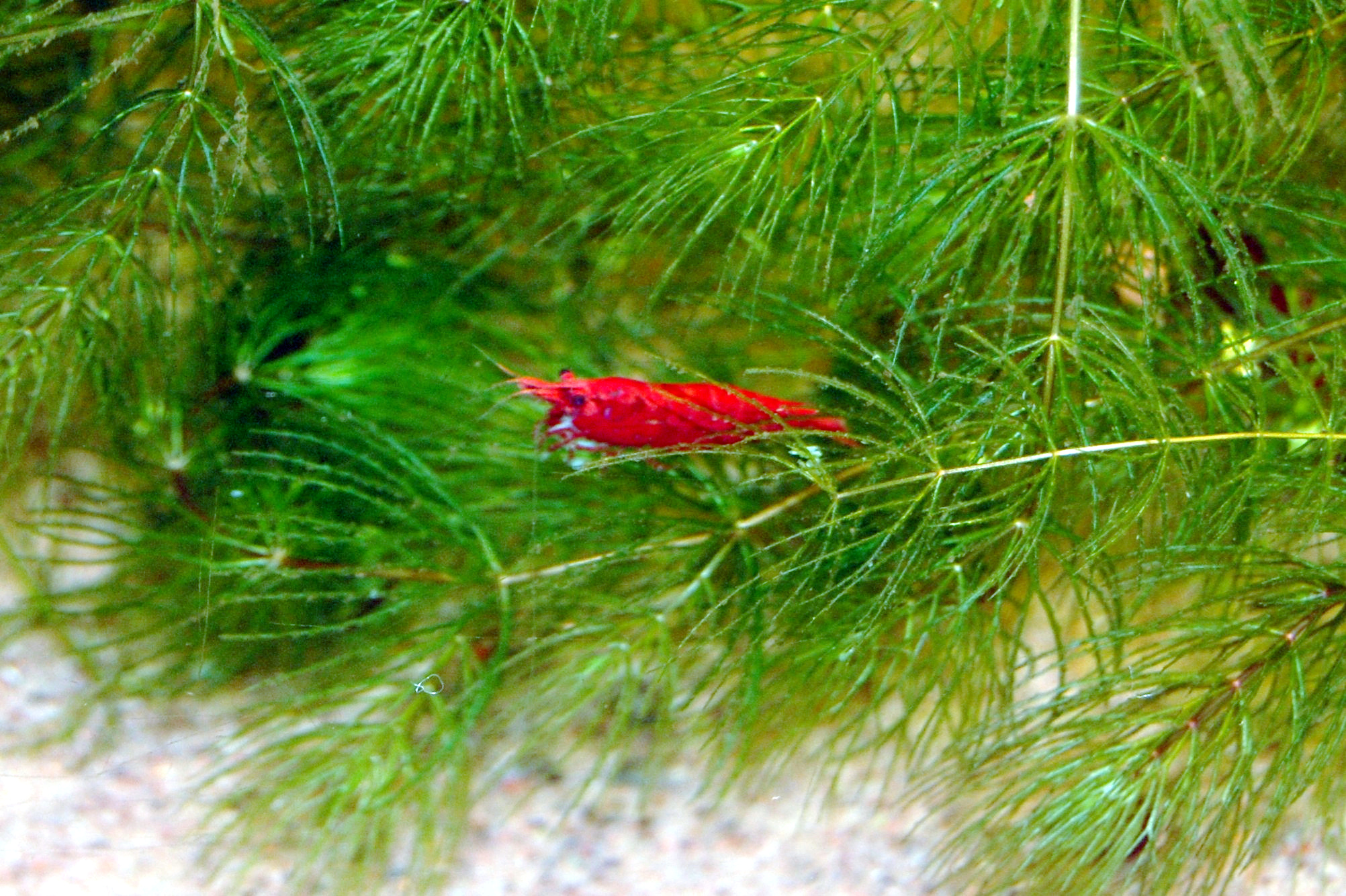
Red in a cherry shrimp comes from three things, in this order of importance. Genetics set the ceiling: a low grade cherry will never look like a painted fire red no matter what it eats. Diet fills in the ceiling: shrimp can't make their own red pigment, so a food with astaxanthin (from krill, spirulina, paprika, or Haematococcus algae) deepens color over 4 to 8 weeks. Environment decides how much of that color they show: dark substrate and a dark background make shrimp display their full red, while pale sand, bright open tanks, and stress wash them out.
Nothing you pour into the water will color a shrimp. And if a shrimp is going white or milky rather than pale, that's a health emergency, not a color question.
Genetics Set the Ceiling
Every red Neocaridina in the hobby descends from a brownish, mostly clear wild shrimp. The red you see is the result of breeders picking the reddest offspring and breeding those together, generation after generation, for decades. How far along that process a particular shrimp's line got is its grade, and grade is the single biggest factor in how red it can ever be.
The ladder runs like this, from least to most red:
- •Cherry is the entry grade: patches of red on a body that's largely clear, often with brown wild markings still visible.
- •Sakura has red over most of the body, with clear patches remaining on the head and underside.
- •Fire red is solid, opaque red across the whole body, though the legs and antennae are often still clear.
- •Painted fire red is opaque red everywhere, including legs and antennae. It's the ceiling of what red Neocaridina breeding has produced.
A cherry grade shrimp fed the best food in the world over black sand will look like a very good cherry grade shrimp. It will not turn into a painted fire red. FishTankSetups puts it plainly: diet can't lift entry grade shrimp to a higher grade appearance. If what you want is that deep, solid red, the honest answer is to buy that grade in the first place.
There's a second genetic trap. All the bred Neocaridina colors are recessive to wild type brown. Mix reds with blues or yellows and within two or three generations you get muddy, patchy, brownish offspring, and even a pure red colony drifts back down the ladder if nobody removes the paler shrimp. Our guide on mixing shrimp colors covers what happens when lines cross.
Diet: The Only Part of Color You Can Feed
Crustaceans can't manufacture carotenoids, the family of pigments that make a shrimp red, orange, or yellow. Every bit of red pigment in a cherry shrimp came in through its mouth. That's why diet is the one lever that changes the shrimp itself rather than how the shrimp is displayed.
The pigment that matters most is astaxanthin, and here the evidence is better than for almost anything else in shrimp keeping. A 2024 trial in PLOS One fed juvenile red cherry shrimp diets with 100 or 200 mg of astaxanthin per kilogram of feed for 56 days, measuring color every 14 days. The astaxanthin groups came out measurably redder, with the difference clearest between days 42 and 56. A separate feeding trial in the Journal of Fisheries and Environment used 200 mg per kg over 8 weeks and found the same thing: astaxanthin fed shrimp were significantly more pigmented than shrimp on the same diet without it.
Where does astaxanthin come from in a real product?
- •Krill meal and other small crustaceans, which are naturally loaded with it.
- •Spirulina and other microalgae.
- •Haematococcus algae, the richest natural source, used in some premium color foods.
- •Paprika and other red plant material. Dennerle's Shrimp King Color lists sweet paprika at 1.4 percent and Haematococcus algae at 0.5 percent, alongside hibiscus, rose hips, and tomato.
- •Synthetic astaxanthin, listed by name on the label.
You don't need a dedicated color food to get it. Hikari Shrimp Cuisine lists krill meal, spirulina, and astaxanthin in its ingredients, and so do the everyday Hikari Algae Wafers. A wafer twice a week gives your colony a steady carotenoid intake without a specialty purchase. If you want to go further, a dedicated color enhancing shrimp food with astaxanthin or Haematococcus near the top of the ingredient list is the upgrade. Feed it two or three times a week in place of a regular feeding rather than on top of it.
One caveat the trials raise: the doses that produced results were 100 to 200 mg per kg of food. Almost no retail shrimp food states its astaxanthin content, so you can't tell from the label whether a product is anywhere near that. Pick foods that name a carotenoid source high in the list and judge by results at 8 weeks. Our best food for shrimp roundup covers which staples carry real carotenoid ingredients.
Substrate and Background: Make Them Show What They've Got
Shrimp are prey. In the wild, standing out on a pale streambed gets you eaten, so Neocaridina adjust how much pigment they display to match their surroundings. This isn't a keeper's myth. The Journal of Fisheries and Environment trial above also kept shrimp over white, red, and black backgrounds, and pigmentation increased as the background got darker. Another study kept female cherry shrimp over black, white, and red backgrounds for 90 days, and the black background females finished with higher astaxanthin content and more colored area on the carapace than either other group.
Aquarium Co-Op says the same thing from the breeder's side: over light substrate the shrimp go pale or even transparent, and over dark substrate they take on a fuller, redder color. Shrimp Science adds that Neocaridina don't need an active buffering soil, so a plain inert black sand or gravel does the job without touching your water chemistry.
Practically, that means:
- •Black or dark brown substrate.
- •A dark background on the back glass. Black paint, black vinyl, or black card taped to the outside all work.
- •Dark hardscape and plenty of plant cover, so shrimp feel safe enough to sit out in the open.
If you already have white sand, a black background and a dense patch of moss get you part of the way without a teardown. Our guide to the best substrate for shrimp tanks covers dark inert options.
Light, Stress, and Why They Looked Better at the Store
Lighting is the one place where sources disagree, so here are both sides. Several keeper guides say color looks more vivid under bright, direct, white light and more muted under dim or indirect light, which is mostly a viewing effect: your eye needs light to see red. Other guides, ShrimpKeepers among them, warn that overly bright, open tanks stress shrimp, and stressed shrimp pull their color in. The compromise that fits both: moderate light with plenty of shade and cover, and a dark background so the light isn't bouncing off a white tank.
Stress is the bigger, and simpler, factor. Transport, a new tank, a water change with mismatched parameters, a temperature swing, or a new fish poking at them all fade cherry shrimp within hours. This is why shrimp that arrived pale from the bag often color up over the following week or two with nothing changed except being left alone. ShrimpKeepers puts stress related fading at one to two weeks to recover once the cause is gone, and forum threads on Fishlore and The Planted Tank describe the same pattern after a move.
If your shrimp were red at the store and pale at home, the order of suspects is: the store had black substrate and you have white, the shrimp just got shipped, and something in your water is off. Test before you buy food.
Sex, Age, and Molting
Three things fade shrimp that have nothing to do with anything you did.
Females are redder than males. Across every grade, adult females carry more pigment and more opaque coverage. Aquarium Co-Op calls the females "the most colorful" and describes males as smaller and less colorful. If your tank looks half pale, count the males before you blame the food.
Adults are redder than juveniles. Young shrimp of both sexes are paler and more transparent, and color keeps building well into adulthood. One published cherry shrimp study measured 180 day old females as significantly more colored than 90 day old females.
Molting fades them for a day or two. A freshly molted shrimp is soft and pale until the new shell hardens, and it usually hides during that time. Adults molt roughly every 3 to 4 weeks, juveniles every 1 to 2, so at any moment a few shrimp in a healthy colony are paler than the rest. Finding a clear empty shell nearby confirms it.
What Doesn't Work
No additive colors a shrimp. There is no fertilizer, conditioner, mineral supplement, or "color booster" you add to the water that puts red into a Neocaridina. Carotenoids enter through food, full stop. Anything marketed as a water additive for color is at best a mineral supplement with a color word on the label.
Copper kills shrimp. Copper based medications are lethal to shrimp at doses fish shrug off. Read every label before anything goes in a shrimp tank, whatever the packaging promises about color.
Colored LED modes change your eyes, not your shrimp. A red tinted light setting makes everything look redder on your phone and does nothing to the animal.
Most "color enhancing" claims are unverified. Astaxanthin has actual trial evidence behind it. What's missing is any evidence that a given brand contains enough of it to matter, because almost none of them print a number. Treat a color food as a carotenoid source to try for 8 weeks, not a guarantee.
What works in the long run is what breeders do: cull. Remove the palest shrimp from the breeding colony, or move them to a second tank, and keep the reddest. Do that over several generations and the average shifts, because you're changing the genetics instead of fighting them. It's slow, and it's the only method that produced fire reds and painted fire reds in the first place.
A Realistic Timeline
- •Stress fading: a week or two after the cause is removed, sometimes faster.
- •Substrate and background change: keeper guides say days to a few weeks for the camouflage response; the lab studies measured at 8 to 13 weeks.
- •Diet: 4 to 8 weeks of consistent feeding before you should judge. The trials saw the clearest difference at 6 to 8 weeks.
- •Juveniles coloring up: months. They're still building pigment at 6 months old.
- •Selective breeding: many months to years, over multiple generations.
Take a photo now, in the same spot with the same light, and compare in 8 weeks. Day to day you won't notice the change, and memory is a bad instrument for judging red.
When Fading Is a Health Warning
Pale is a color problem. White is a health problem, and the two get confused constantly.
A stressed or camouflaging cherry shrimp looks like a lighter version of itself: pinkish, more transparent, red concentrated in patches, but the body stays clear where it's clear. A sick shrimp looks different. The tail meat or the whole body goes milky, cloudy, or opaque white, the way cooked shrimp looks. That's muscle necrosis, and it's usually a bacterial infection or the aftermath of a severe stress event like an ammonia spike or a big temperature swing. Superior Shrimp Aquatics and other shrimp specialists agree that shrimp with milky, opaque tissue rarely recover, and that the early signs before the color change are lethargy, sitting alone, and no longer grazing.
If you see that, stop thinking about color foods. Test ammonia, nitrite, and temperature, do a careful water change with matched water, isolate the affected shrimp, and read our guide on why cherry shrimp turn white for the full diagnosis. A colony that's simply pale will eat, graze, and move normally. A colony that's going white will not.
Frequently Asked Questions
◆What food makes cherry shrimp more red?
Foods with astaxanthin or its natural sources: krill meal, spirulina, Haematococcus algae, or paprika. Hikari Shrimp Cuisine and Hikari Algae Wafers both list krill, spirulina, and astaxanthin. Dedicated color foods like Dennerle Shrimp King Color add paprika and Haematococcus. Feed for 4 to 8 weeks before judging; it doesn't work overnight.
◆Why are my cherry shrimp losing color?
The most common causes are pale substrate, stress from a move or water change, a colony that's mostly males or juveniles, and recent molts. All of those are fixable or temporary. If shrimp are going milky white rather than pale, that's necrosis or infection, and it needs water testing and isolation right away.
◆Does dark substrate really make cherry shrimp redder?
Yes, and it's one of the better documented effects in shrimp keeping. Two separate studies kept cherry shrimp over white, red, and black backgrounds and found the black background shrimp displayed the most pigment. Breeders see the same thing: shrimp over light sand go pale, and over dark substrate they show their full red.
◆Can a low grade cherry shrimp become a fire red?
No. Grade is genetic, and diet and substrate only let a shrimp show the color it already carries. A well fed cherry grade over black sand looks like a good cherry grade. The only way to a redder colony over time is buying a higher grade or culling the palest shrimp for several generations.
The Bottom Line
Buy the grade you want, feed a food with a real carotenoid source for two months, and put the shrimp over something dark with a dark background. Then leave them alone and let the females mature. If the change you're seeing is white rather than pale, skip all of this and test the water. For everything else about keeping the colony healthy enough to show its color, start with our cherry shrimp care guide.
Found this helpful?
Check out our other shrimp care guides