Shrimp Anatomy: A Keeper's Guide to What You're Looking At
Learn the parts of a freshwater shrimp and why each one matters for diagnosing molts, sexing your colony, and spotting problems early.
📅 Published 2026-09-19
Most anatomy guides are written for a biology exam. This one is written for someone standing in front of a tank trying to work out whether that shrimp is berried, about to molt, male or female, or in trouble. Knowing the parts pays off every time you look at your colony.
Quick Answer
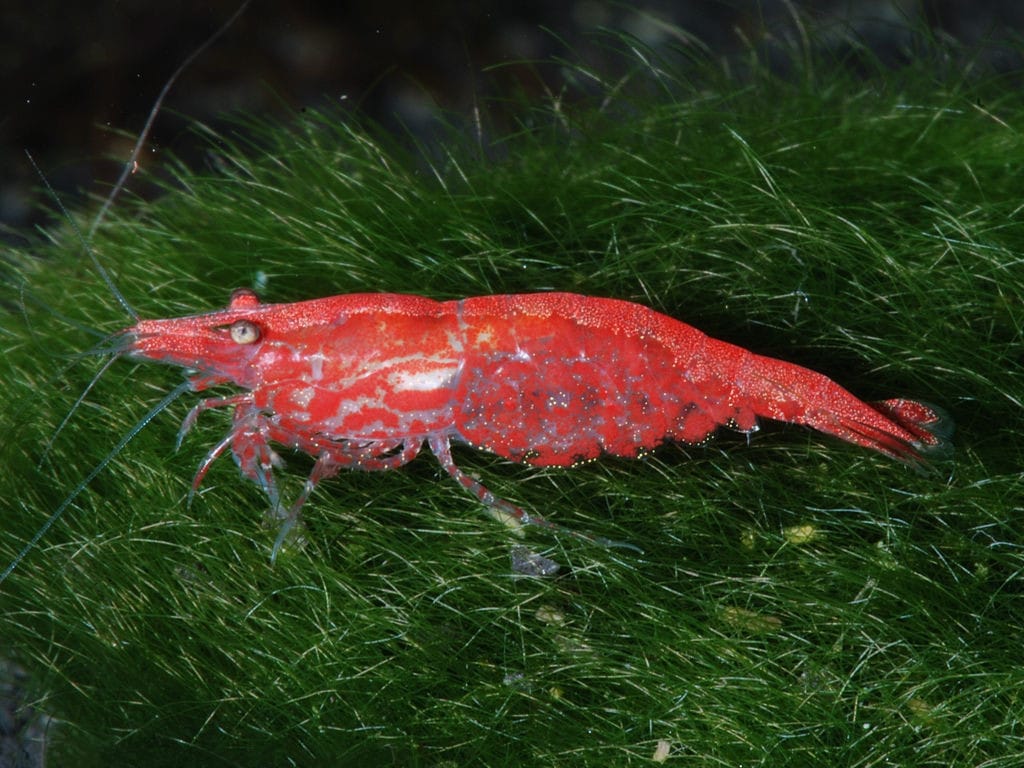
A freshwater shrimp has two main body regions: the cephalothorax at the front, covered by a shield called the carapace, and the segmented abdomen behind it. The pointed spike between the eyes is the rostrum. Under the abdomen are the swimmerets, which fan constantly and carry eggs in females. The fan shaped tail at the rear is the tail fan, used for the escape flick.
For keepers, the parts that earn their keep are the saddle (unfertilized eggs visible behind the head), the swimmerets (egg carrying and a life sign), and the gap between carapace and abdomen (where a molt splits).
The Two Body Regions
Unlike an insect with three body sections, a shrimp has two.
The cephalothorax is the front portion, combining the head and thorax into one unit. It holds the eyes, antennae, mouthparts, stomach, most of the digestive system, the heart, and the gills. It's covered by a single hard shield.
The abdomen is the segmented rear portion, made of six visible segments plus the tail fan. This is the muscular section, and it's what you eat when you eat a shrimp. In your tank it's the part that flexes for the escape response.
The joint between these two regions matters more than it sounds. That's where the shell splits during molting.
The Carapace
The carapace is the hard shield covering the cephalothorax. It's a single piece of exoskeleton protecting everything vital, and it doesn't grow. That's the central fact of shrimp biology: the shell is rigid, so growth only happens by discarding the old shell and expanding into a new one.
For a keeper, the carapace is where you look for several things:
The saddle. In females, a yellowish, greenish, or orange patch visible through the carapace behind the head. Those are developing eggs in the ovaries, and the shape gives it the name. A saddled female hasn't mated yet; she's carrying eggs that haven't been fertilized or moved to the swimmerets.
Color and clarity. A healthy shrimp has a clear, well defined shell. Cloudy or milky white through the body is a serious warning sign. Our guide on why cherry shrimp turn white covers the difference between a color issue and a dying shrimp.
The white ring of death. A distinct white gap at the junction between carapace and abdomen, appearing as a bright line rather than a natural split, signals a failed molt in progress. Our shrimp molting guide covers what causes it and how to prevent it.
The Rostrum
The rostrum is the pointed, often serrated spike extending forward between the eyes. It's a projection of the carapace, and its length, curve, and the number of teeth along it are used by biologists to tell species apart.
For keepers, the rostrum is mainly a species identification aid. Some species are named for it: the Pinocchio shrimp gets its name from an exceptionally long rostrum. The number and arrangement of teeth on the upper and lower edges is one of the features used to separate visually similar Caridina species.
It's also fragile. A shrimp can damage or break a rostrum in a net or against hardscape. This usually isn't serious and typically regrows at the next molt.
Eyes
Shrimp have compound eyes on short movable stalks, giving them a wide field of view. Compound eyes are excellent at detecting motion, which suits a prey animal, but poor at resolving fine detail. Your shrimp perceive shapes and movement rather than seeing you clearly.
There are no eyelids, which is why shrimp can't close their eyes and why rest in shrimp doesn't look like sleep. Our article on whether shrimp sleep covers what resting actually looks like.
Eye stalks are also a useful health cue. Shrimp under stress sometimes hold their eye stalks differently, and damage to an eye is visible at close range.
Antennae and Antennules
Shrimp have two pairs of sensory appendages at the front. The long pair, the antennae, sweep the environment and are largely tactile. The shorter, often branched pair are the antennules, and these carry chemical sensing, which is how a shrimp finds food it can't see.
This is why shrimp find a food pellet within minutes of it landing anywhere in the tank. They're smelling it, in effect, and then following the gradient.
Antenna movement is one of the most reliable life signs. A resting shrimp moves its antennae occasionally and slowly. Completely motionless antennae combined with motionless swimmerets is a bad sign.
Antennae break. A shrimp with one short antenna has usually had a rough encounter with a net, a filter intake, or a tank mate. It regrows over successive molts.
Legs: Pereiopods and Maxillipeds
Under the cephalothorax are five pairs of walking legs, the pereiopods. The front pairs end in small pincers, called chelae, which the shrimp uses to pick at biofilm and tear pieces off food. Watch a shrimp eat and you can see the front legs working continuously, passing material to the mouth.
Behind the mouth are the maxillipeds, modified appendages that handle and sort food before it's eaten.
Filter feeding species are the interesting exception. Bamboo shrimp and vampire shrimp have front appendages modified into feathery fans rather than pincers, which they hold open in the current to catch drifting particles. Our guides on bamboo shrimp and fan feeding shrimp cover the very different care those species need. A fan feeder in a tank with no flow will slowly starve, which is a common and avoidable mistake.
Swimmerets (Pleopods)
Under the abdomen are five pairs of small paddle like appendages called swimmerets, or pleopods. They're the single most useful structure for a keeper to watch.
They indicate life. Healthy shrimp fan their swimmerets more or less constantly to circulate water. A shrimp sitting still with fanning swimmerets is resting. A shrimp with completely still swimmerets over a long period is in trouble or already dead.
They carry eggs. After mating, a female moves her eggs from the ovaries to the swimmerets and holds them there, fanning constantly to keep them oxygenated and clean. A female carrying eggs this way is called berried. Our guide on how shrimp reproduce covers the process in full.
They help sex your shrimp. Females have a broader, deeper abdomen with more curved side plates to hold a clutch. Males are slimmer and straighter. Once you've seen a berried female, the difference becomes obvious across the colony.
Tail Fan: Uropods and Telson
At the rear, the tail fan is made of the telson (the central pointed section) and the uropods (the flat plates flanking it). Together they form the fan that gives the escape response its power.
When a shrimp is startled it flexes its abdomen sharply, driving the tail fan against the water and shooting backward. It's fast, and it's the main defense a shrimp has. Seeing it occasionally is normal. Seeing it constantly means something is stressing your colony, whether that's a tank mate, flow, or a parameter problem.
Gills
The gills sit under the carapace on either side of the cephalothorax, protected by the shell. Water is drawn over them continuously.
Two practical consequences follow. First, shrimp need well oxygenated water more than beginners generally expect, and low oxygen is a common hidden cause of losses in a warm tank. Surface agitation matters. Second, anything that damages gill tissue is serious. This is one of several reasons copper is lethal to shrimp at concentrations fish tolerate. Never put a copper containing medication in a shrimp tank, and read every label before dosing anything.
Why the Exoskeleton Shapes Everything
Every part above is covered by exoskeleton, and exoskeleton doesn't stretch. Growth therefore happens in steps: the shrimp builds a new soft shell underneath, splits the old one at the carapace and abdomen junction, backs out, and expands before the new shell hardens over the following hours to days.
This drives most of what shrimp keeping actually requires:
Minerals matter. Building a shell needs calcium and other minerals from the water, which is why GH matters and why remineralizing RO water is standard practice. Our guide on the best remineralizer for shrimp covers the options.
Stability matters. Sudden parameter swings, especially in TDS, are a leading cause of failed molts. A GH and KH test kit is worth owning alongside a standard master kit.
Molted shells are normal. Finding an empty translucent shell is good news, not a dead shrimp. Leave it in the tank; the shrimp will eat it back for the minerals.
Post molt shrimp are vulnerable. A freshly molted shrimp is soft and hides until it hardens. This is when planaria and predatory tank mates do damage.
Frequently Asked Questions
◆What is the saddle on a shrimp?
The saddle is the patch of developing eggs visible through the carapace behind a female's head, named for its shape. It means she has eggs maturing in her ovaries but has not yet mated and moved them to her swimmerets. A saddled female is a sign your colony is approaching breeding condition.
◆How do I tell a male shrimp from a female?
Females are larger, have a deeper and broader abdomen with more curved side plates, and often show a saddle or carry eggs on the swimmerets. Males are smaller, slimmer, straighter along the underside, and usually less intensely colored. The difference is easiest to see once you have a berried female for comparison.
◆Why is my shrimp's shell cloudy?
A cloudy or opaque body is usually serious. It can indicate bacterial infection, muscle necrosis, or a shrimp that has already died. This differs from the natural opacity of some color morphs. Our guides on cherry shrimp turning white and common shrimp diseases cover how to tell the difference.
◆Do shrimp regrow lost legs and antennae?
Yes. Shrimp regenerate damaged appendages over successive molts. A shrimp missing a leg or with a shortened antenna will usually rebuild it gradually. Full recovery can take several molt cycles.
◆What is the pointed spike on a shrimp's head?
That's the rostrum, a forward projection of the carapace between the eyes. Its length and the arrangement of teeth along it help identify species. It can break and generally regrows at the next molt.
The Bottom Line
You don't need anatomy for its own sake. You need it because a saddled female tells you your colony is about to breed, still swimmerets tell you something is wrong, a white ring at the carapace joint tells you a molt is failing, and a fan feeder's modified front limbs tell you it needs flow rather than pellets.
Spend a few minutes looking closely at one shrimp with this guide open and the whole tank becomes easier to read. For what to do with that information day to day, our complete shrimp tank setup guide and how to tell if shrimp are healthy are the natural next reads.
Found this helpful?
Check out our other shrimp care guides