Can Shrimp Live With African Dwarf Frogs? What Actually Happens
Can shrimp live with African dwarf frogs? Adult cherry shrimp usually survive, shrimplets get eaten, and the frog itself risks starving. The honest trade-offs.
📅 Published 2026-10-10
You want a planted shrimp tank with a little more going on in it, and a pair of African dwarf frogs paddling around looks like the friendliest predator you could pick. They're tiny, slow, and famously clumsy. So can shrimp live with African dwarf frogs, or are you about to feed your colony to a frog one shrimplet at a time?
The honest answer sits in the middle. Adult cherry shrimp usually survive alongside an African dwarf frog, and it's one of the more workable frog-and-invertebrate combinations in the hobby. But it's a trade-off. The frog picks off babies and soft, freshly molted shrimp when it finds them, and there's a second problem most people never see coming: the frog is a poor competitor at feeding time, and in a shrimp tank it can slowly starve. This guide covers both risks, the one lookalike frog that will end your colony, and how to set the tank up so both animals thrive.
Quick Answer
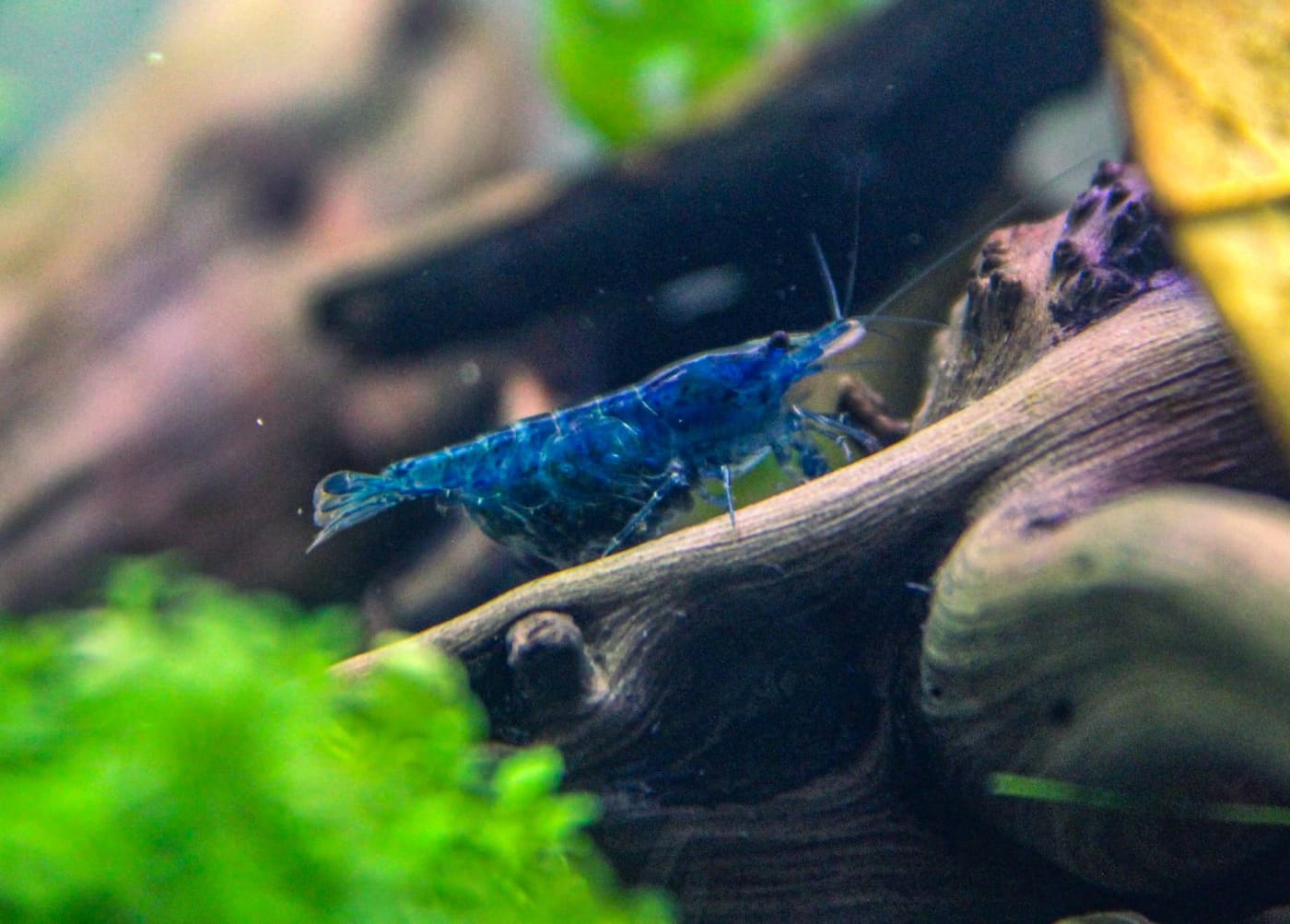
Yes, shrimp and African dwarf frogs can share a tank, and adult Neocaridina like cherry shrimp usually do fine. The frog is near-blind and hunts by smell and movement, so a healthy adult shrimp is too fast for it, and the shell often makes the frog spit a shrimp back out anyway. What the frog will eat is shrimplets and soft newly molted shrimp it happens to find. A dense, well-fed breeding colony in a planted tank outbreeds those losses.
The catch runs the other way too. African dwarf frogs are slow, fussy eaters that lose the feeding race to shrimp, snails, and fish, so a frog in a shrimp tank can go hungry. Feed it deliberately, keep adult shrimp rather than relying on babies, add heavy plant cover, and never mistake a dwarf frog for the much larger African clawed frog, which eats shrimp as a matter of course.
Meet the African Dwarf Frog
The African dwarf frog (Hymenochirus boettgeri, with a close relative Hymenochirus curtipes) is a fully aquatic frog. It spends its whole life underwater but breathes air with lungs rather than gills, so it swims up to the surface every few minutes to gulp a breath. That one fact shapes the tank setup later on.
They stay small. The Honolulu Zoo puts them at no more than about three inches, while a Wikipedia species page gives a body length closer to an inch and a half, and most pet-trade frogs land between. On lifespan the sources scatter widely: one retailer quotes two to four years, Aquarium Source says most don't pass five, Hepper and TankFlare stretch it to five to ten, and a Wikipedia-derived care page claims ten to twenty. Treat five years or so as realistic and anything beyond that as a bonus from good care.
The part that matters for your shrimp is how these frogs find food. Their eyes sit on the sides of the head, their eyesight is poor, and they locate prey by scent and by sensing vibration and movement in the water. Keepers describe them as slow, clumsy feeders that miss a meal sitting right in front of them. A predator that can barely see and barely catch anything isn't much of a threat to a quick adult shrimp. It's a real threat to a baby that wanders into its mouth.
The Lookalike That Ends Colonies
This is the one mistake that turns the plan into a disaster, so sort it out before you buy. African dwarf frogs get confused with African clawed frogs (Xenopus laevis), and juveniles of the two look almost identical in a shop tank. The adults could not be more different: a clawed frog grows to twice the size or more, is a serious predator, and needs a species-only tank. Drop one in with shrimp and you won't have shrimp for long.
Pipidae.org and the species pages agree the surest tell is the front feet. A dwarf frog has webbing on all four feet; a clawed frog has webbed back feet but free, finger-like digits up front. Other differences back it up: the dwarf's eyes sit on the sides of its head and the clawed frog's sit on top, the dwarf has a pointed snout against the clawed frog's flat rounded one, and the dwarf's skin is rougher. One handy rule is that there's no true albino African dwarf frog, so any "albino dwarf frog" on sale is a mislabeled clawed frog. See that pink-and-white frog tagged as a dwarf, walk away.
Will an African Dwarf Frog Eat Your Shrimp?
Here the sources genuinely disagree, and it's worth laying out because it maps onto two different outcomes.
The cautious camp treats anything small enough to fit in a frog's mouth as food. Build Your Aquarium warns that pricey cherry shrimp can end up as pricey snacks, and suggests only trying it with heavy vegetation and the expectation that you'll lose a few. The optimistic camp, led by Hepper's tank-mate guide, calls cherry shrimp a decent match and argues an adult's shell protects it, so a frog that grabs one often just spits it out. Both agree the smallest shrimp are the most vulnerable, and babies may be eaten.
Put those together and the picture is consistent. A slow, near-blind frog that often misses stationary food won't run down a healthy adult cherry shrimp. What it will do is hoover up the easy targets: shrimplets a few millimeters long, and soft shrimp in the hours after a molt when they barely move. So the real question isn't whether your adults survive. It's whether you care about the babies.
If your goal is a big breeding colony to grow out and share, a frog is a steady drain on your baby count. If you just want a planted tank with a visible group of shrimp and you don't track numbers, a dense colony breeds fast enough that the frog's snacking never dents the population you can see. Our how to raise shrimplets guide shows how fragile those first weeks are even without a predator in the tank.
The Bigger Risk: Your Frog Could Starve
Most "can they live together" articles stop at whether the frog eats the shrimp. The more common failure in a shrimp tank is the opposite, and it's a welfare problem for the frog.
African dwarf frogs are hopeless at the dinner table. Because they feed by smell and movement and swim slowly, faster tank mates clear the food before the frog arrives. Aquariadise and Aquarium Co-Op both describe frogs losing the feeding race in community tanks, and one forum keeper noted that even fish that never normally feed on the bottom come down to steal frog food. Shrimp swarm anything edible within seconds. In a tank set up around shrimp, where you feed tiny amounts so you don't foul the water, a frog can quietly waste away while you think everyone's being fed.
So if you keep a frog with shrimp, you have to feed the frog on purpose, not just trust it to find scraps. The methods that work are well agreed on:
- •Target-feed with a turkey baster, pipette, or long feeding tongs, delivering food right in front of the frog.
- •Feed after the lights dim, when the frogs are more active and the shrimp are a little less frantic.
- •Use a shallow feeding dish so the food stays in one spot the frog can learn to visit.
- •Offer small amounts and watch the frog actually eat before you walk away.
Good frog foods are the meaty, scent-heavy kinds: frozen bloodworms, brine shrimp, daphnia, and mysis, with sinking amphibian pellets as a hit-or-miss extra since some frogs ignore them until they dissolve. Thaw frozen food in a cup of tank water first so it sinks instead of floating out of reach. A pack of frozen bloodworms kept in the freezer makes target-feeding simple. One upside: the bits the frog drops become free food for the shrimp.
Do Their Water Parameters Match?
Reasonably well, which is the other reason this pairing works. Both animals want warm, stable, roughly neutral water, and the frogs just lean a little warmer than shrimp ideally prefer.
| Parameter | Cherry shrimp (Neocaridina) | African dwarf frog | Comfortable overlap |
|---|---|---|---|
| Temperature | 65 to 80F, best around 72 to 76F | 74 to 80F | 74 to 78F |
| pH | 6.5 to 8.0 | 6.5 to 7.8 | 7.0 to 7.6 |
| Hardness (GH) | 6 to 12 dGH | soft to moderately hard, not fussy | 6 to 10 dGH |
| Water flow | gentle | calm, must reach surface easily | gentle sponge filter |
| Tank size | happy from 5 gallons | 5 gallons for one, 10 for a group | 10 gallons or more |
The temperature line is where you make a choice. The frogs are happiest in the mid-to-high 70s, and cherry shrimp tolerate that fine, but warm water speeds a shrimp's metabolism and shortens its life, so you're running the shrimp at the warm end of their range to keep the frog comfortable. That's fine for hardy Neocaridina. It's a poor fit for Caridina such as crystal reds and bees, which want cooler, softer, more acidic water, so if you keep those, skip the frog. For the numbers on each shrimp type, see our shrimp water parameters guide.
Keep the tank cycled and clean, because frogs are sensitive to nitrate building up, and shrimp are sensitive to ammonia and nitrite reading anything above zero. An API Freshwater Master Test Kit covers all three and is the first thing to reach for if either animal starts acting off.
How to Set Up a Tank Where Both Can Live
A few deliberate choices turn a risky mix into a stable one.
Go with at least 10 gallons. A single frog can live in 5, but a pair plus a shrimp colony wants more water and more surface to graze, and the extra volume keeps parameters steadier.
Plant it heavily and add moss. Dense cover gives shrimplets and molting shrimp places the frog can't reach, and it grows the biofilm the colony grazes all day. Java moss is the classic choice. Our best moss for shrimp tanks guide covers which ones grow thick enough to shelter babies.
Use a gentle sponge filter. It won't suck up shrimplets, it keeps the flow calm for a weak-swimming frog, and the sponge grows biofilm the shrimp pick at. Avoid strong hang-on-back or canister flow that makes surfacing a fight.
Fit a tight lid with no gaps. This one is not optional. African dwarf frogs climb and slip out of any opening, and a frog on the floor dries out fast. Cover every gap around filters and cords.
Stock adults, not babies, and add the frog last. Grown cherry shrimp are the ones that reliably outrun the frog, so let the colony establish and start breeding before the frog goes in. Keep the frog in a pair, since they're social and two are no more of a threat to adult shrimp than one.
Safer Invertebrate Choices If You Want Zero Losses
If the thought of losing any shrimp bothers you, two options sidestep it. Snails are effectively frog-proof, since the hard shell means the frog never bothers trying, so nerites, mystery snails, and ramshorns all pair with a frog without drama. See can shrimp live with snails for how to add them without an outbreak. The other option is a bamboo shrimp, which grows far too big for a frog to swallow and ignores it right back. You give up the breeding colony and the swarm of color, but nothing in the tank is on the menu.
Frequently Asked Questions
◆Will African dwarf frogs eat cherry shrimp?
They'll eat the ones they can catch, which mostly means shrimplets and soft, freshly molted shrimp. Healthy adult cherry shrimp are too fast for a slow, near-blind frog, and the shell often makes a frog spit one back out. Expect to lose some babies but not your grown shrimp.
◆Can African dwarf frogs live with shrimp and snails together?
Yes, and that trio works well. Snails are frog-proof thanks to their shells, adult shrimp usually outrun the frog, and both invertebrates help keep the tank clean. Just make sure you feed the frog directly, since the shrimp and snails will clear loose food before the frog finds it.
◆How many African dwarf frogs can live with shrimp in a 10 gallon?
Two frogs suit a 10 gallon alongside a shrimp colony. Frogs are social and do better in a pair, and two are no harder on your adult shrimp than one. Going past two in that size crowds the tank and makes feeding each frog enough much harder.
◆Do African dwarf frogs eat baby shrimp?
Yes. Baby shrimp are the main casualty of this pairing. They're small enough to swallow and slow enough to catch, so a frog will pick them off as it forages. A heavily planted tank with lots of moss gives the babies hiding spots and lets enough survive to keep the colony growing.
◆Is it an African dwarf frog or an African clawed frog?
Check the front feet. An African dwarf frog has all four feet webbed and stays under a couple of inches. An African clawed frog has free, finger-like digits on its front feet, grows much larger, and will eat your whole colony. Any "albino dwarf frog" is really an albino clawed frog, since true albino dwarf frogs don't exist.
The Bottom Line
Shrimp can live with African dwarf frogs, and with hardy cherry shrimp it's one of the better frog pairings you can try. Your adults will almost always be fine; your shrimplets and soft molters won't, so treat it as a planted display rather than a breeding project. Watch the frog as closely as the shrimp, since a slow eater in a tank full of fast grazers is the one most likely to go hungry. Keep the water warm and stable, cover the tank, plant it thick, feed the frog on purpose, and make sure you bought a dwarf frog and not its colony-eating cousin. If you'd rather not risk any losses, pair the frog with snails or a bamboo shrimp instead.
Found this helpful?
Check out our other shrimp care guides