Can Shrimp Live With German Blue Rams? The Honest Answer
Can shrimp live with german blue rams? Adult amano shrimp usually can, but rams eat shrimplets and want warmer, softer water than cherry shrimp do.
📅 Published 2026-10-20
You've got a shrimp colony and you've fallen for the blue-and-gold glow of a german blue ram. So can shrimp live with german blue rams? The short version: adult amano shrimp usually manage it, adult cherries often scrape by, and baby shrimp get eaten, so a breeding colony quietly stalls. The bigger catch is the water, because a ram wants it warmer and softer than cherry shrimp do.
A german blue ram is a dwarf cichlid, not a shrimp-hunting terror like a pea puffer. It's a small, slow, mostly peaceful fish that picks at anything bite-sized drifting past its mouth. That one habit, plus a temperature preference that sits above where neocaridina are comfortable, is the whole story. Here's where your shrimp land on both counts.
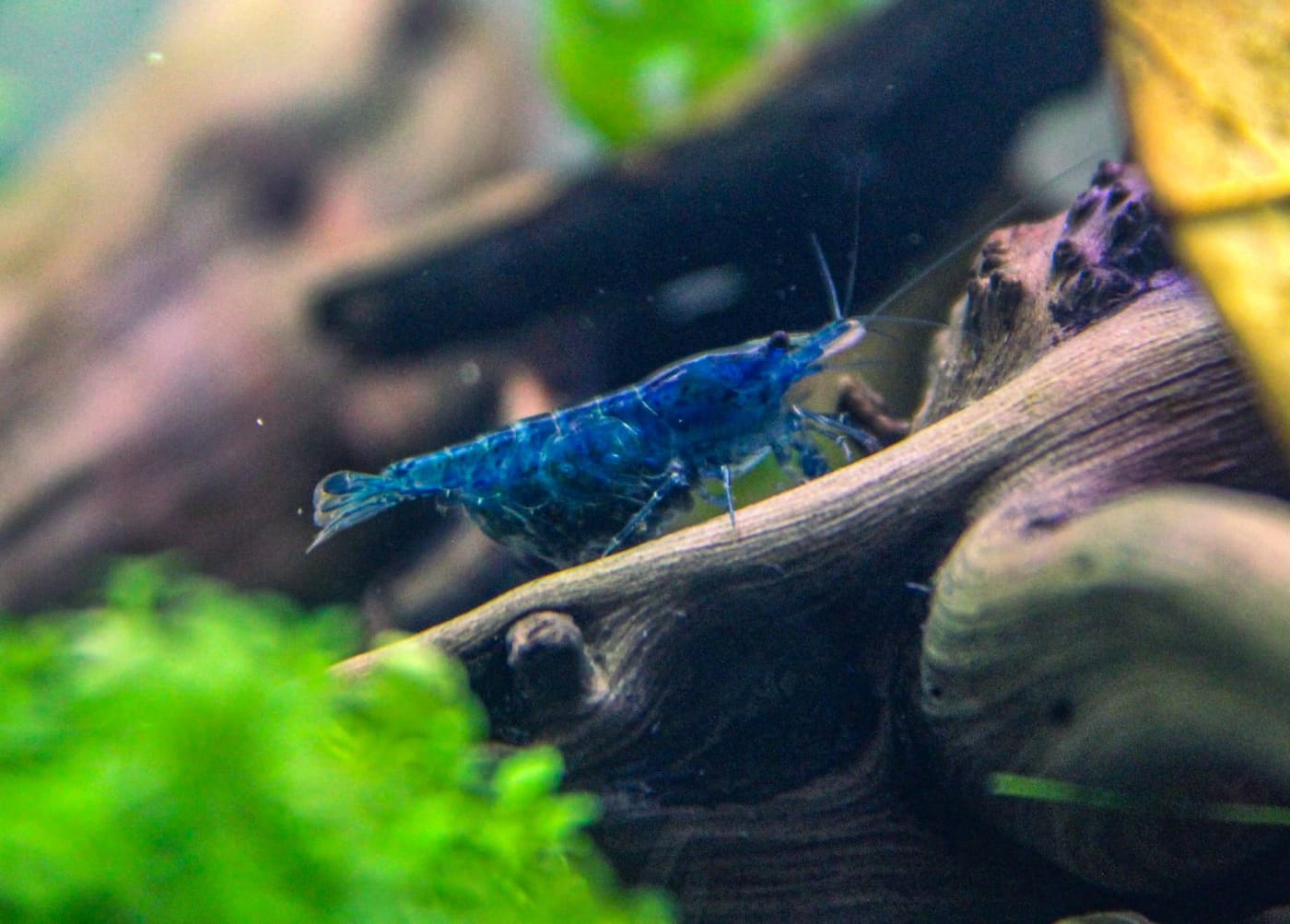
Quick Answer
Amano and ghost shrimp usually live alongside german blue rams as adults because they're too big for a ram's small mouth. Adult cherry and other neocaridina often survive in a planted tank, but rams eat shrimplets, so the colony stops growing. The quieter dealbreaker is water: rams want 80 to 84F and soft water, while neocaridina prefer 70 to 78F and harder water, so the two barely overlap. Caridina shrimp match a ram's soft, acidic chemistry but still clash on temperature, and they cost too much to risk. If you want shrimp that multiply, give them their own tank, or look at a Bolivian ram instead.
What a German Blue Ram Actually Is
The german blue ram (Mikrogeophagus ramirezi) is a dwarf cichlid from the Orinoco river basin in Colombia and Venezuela. It stays small, around 2 to 3 inches, and spends most of its time in the middle and lower water, cruising slowly and sifting the substrate. By cichlid standards it isn't aggressive. Tankflare rates its fin-nipping at zero and its territoriality at a mild two out of five, and most care guides call it peaceful except when a pair is guarding a spawning site.
Here are the numbers the care sheets land on, with the ranges where they disagree.
| Trait | German blue ram |
|---|---|
| Adult size | 2 to 3 in (5 to 8 cm) |
| Temperament | Peaceful, territorial only when breeding |
| Temperature | 80 to 84F typical, tolerates roughly 74 to 85F |
| pH | 6.0 to 7.5, a few guides go lower |
| Hardness | Soft, GH 3 to 6 |
| Minimum tank | 20 gallons for a pair |
| Lifespan | About 3 to 4 years |
| Diet | Omnivore, eats anything small enough for its mouth |
Two rows on that table matter for shrimp. The mouth is small, which is good news for big shrimp and bad news for little ones. And the temperature runs hot, which is where the real conflict lives. Modest Fish lists 80 to 83F in one spot and 80 to 84F in another, and Tankflare agrees on roughly 80 to 84F, so a healthy ram tank runs warm. Rams also have a reputation as a fussy, fragile fish that needs stable, clean water, which is worth knowing because the stress of a mismatched tank hits them before it hits the shrimp.
Will a German Blue Ram Eat Your Shrimp?
Yes, some of them, and which ones comes down to size. Modest Fish puts it plainly: rams "mix well with freshwater snails and shrimp," but "they will most likely eat baby shrimp that they find." The compatibility site guidarium tags cherry shrimp as small enough to be at risk and tags the ram itself as a fry predator. Put those together and you get the real outcome: adult shrimp too big to swallow usually live, and anything newborn becomes a snack.
That's why this isn't a clean yes or no. A tank can hold a dozen contented adult cherries and never show you a surviving baby, because the grown shrimp are too big to eat and the shrimplets aren't. People expect either a massacre or total success, and the usual result is neither.
One practical detail comes from keepers who run both animals: the order you add them matters. Hobbyists on the UK aquascaping forum report that shrimp settle in fine when they have cover, but that dropping fresh shrimp into a tank with established rams goes badly, because the rams treat the newcomers as food. Adding a ram to an established, breeding shrimp colony tends to go more smoothly, since the shrimp already know where to hide and the colony can absorb a few losses.
Which Shrimp Survive With Rams
Think of it as a sliding scale from safe to snack. Size decides almost everything.
| Shrimp | Adult size | Verdict with a german blue ram |
|---|---|---|
| Amano shrimp | about 2 in | Safest. Too big to eat, and no freshwater babies to lose |
| Ghost shrimp | about 1.5 in | Usually fine as adults |
| Cherry / neocaridina | about 1 to 1.5 in | Adults often survive, shrimplets eaten |
| Caridina (crystal, Taiwan bee) | about 1 in | Poor match on temperature and cost |
| Any shrimplet | under 1/4 in | Not safe, treated as live food |
Amano shrimp are the standout choice. At about 2 inches they're beyond what a ram can fit in its mouth, and because amanos don't breed in freshwater, there are no vulnerable babies for the ram to pick off. You keep the algae-eating cleanup crew and skip the predation heartbreak. Our amano shrimp care guide covers keeping them well.
Cherry shrimp are the gamble most people are actually asking about. A full-grown cherry sits right at the edge of what a ram can handle, so adults usually survive in a planted tank, while their offspring do not. If you were hoping the colony would grow, a ram quietly caps it. Our best tank mates for cherry shrimp guide is worth reading before you commit to any fish.
The Bigger Problem: The Water Pulls Opposite Ways
Predation gets the attention, but a quieter mismatch sinks more of these tanks: rams and cherry shrimp want different water.
Rams like it warm and soft. Most guides keep them at 80 to 84F in soft, slightly acidic water, with Modest Fish listing GH 3 to 6. Neocaridina want the opposite on both counts. The 2hrAquarist care guide puts cherry shrimp at 70 to 78F, and our own shrimp water parameters guide agrees that the upper 70s is already the warm edge for them. On hardness, cherry shrimp do best around GH 6 to 10, harder than a ram prefers.
| Parameter | German blue ram | Neocaridina (cherry) |
|---|---|---|
| Temperature | 80 to 84F | 70 to 78F |
| pH | 6.0 to 7.5 | 6.5 to 8.0 |
| Hardness (GH) | 3 to 6 (soft) | 6 to 10 (harder) |
Look at where those overlap. On temperature they meet only in a sliver around 78F, and holding a tank there keeps the ram a touch cool and the shrimp a touch warm, both at the edge of their range instead of the middle. On hardness they pull apart, the ram wanting soft water and the shrimp wanting it harder. You can split the difference, but you're compromising both animals at once.
Caridina shrimp are an interesting twist. Crystals and Taiwan bees want soft, acidic water, which actually suits a ram's chemistry better than neocaridina do. The catch is temperature: caridina like it cool, often 68 to 76F, which pulls hard against a ram's heat. Add in what high-grade caridina cost, and feeding one to a ram makes no sense. Our caridina vs neocaridina guide lays out the split.
A Better Ram for a Shrimp Tank: The Bolivian
If you love the ram look but want it to work with shrimp, the species matters more than anything else you can change. The Bolivian ram (Mikrogeophagus altispinosus) is the german blue ram's hardier cousin, and it's a far easier roommate for cherry shrimp.
The difference is temperature. Tankflare and fishtanksetups both put Bolivian rams at roughly 72 to 79F, against 78 to 85F for the german blue. That lower range lands right on top of where neocaridina are happiest, so you can run a single tank at 75 to 77F and keep both animals in the middle of their comfort zone instead of the edge. Tankflare also describes Bolivians as tolerating harder water and less-than-pristine conditions, which again matches what shrimp need, while german blues kept in the mid-70s tend to go sluggish, lose color, and get sick.
Bolivians are a little bigger and less flashy than a german blue, so you trade some color for a fish that genuinely fits a shrimp tank. They'll still eat shrimplets, so the cover and stocking advice below holds, but the water-parameter war disappears.
Don't Reach for Copper
One more warning has nothing to do with predation and everything to do with a wiped-out tank. Rams aren't the hardiest fish, and sooner or later one gets sick. Many of the medications people reach for, especially for parasites and ich, contain copper, and copper is lethal to shrimp even in trace amounts. Before you dose anything into a shared tank, read our shrimp-safe fish medications guide, because a treatment meant to save the ram can kill every shrimp overnight.
How to Give Shrimp the Best Odds
If you've decided it's worth trying, these are the levers that actually move the outcome.
Plant it heavily, then add more. Cover is the single biggest factor. A thick stand of aquarium moss, anubias, and floating plants gives shrimp and shrimplets somewhere a ram can't follow. The guidarium compatibility note and the forum keepers both land on the same point: shrimp do well with rams when they have enough hiding spots and poorly when they don't.
Add the shrimp first, as an established colony. Let a group of 20 or 30 settle and breed before the ram arrives, so the colony can absorb some losses. It also sidesteps the newcomer problem, since a ram is far more likely to hunt shrimp that show up after it does.
Keep the ram well fed. A hungry ram patrols; a full one lazes. Feed it a proper diet so a passing shrimp is a bonus rather than dinner, and drop in shrimp food too so the invertebrates aren't crowded out at mealtime.
Go bigger than the minimum. More water means more cover and more distance between the ram's patrol and the shrimp's grazing spots. A planted 20 gallon long holds a colony far better than a cramped 10 gallon.
Pick the right fish and the right shrimp. Everything above helps, but choosing amano shrimp over cherries, or a Bolivian ram over a german blue, does more than all of it combined. Too big to eat, or matched on water, beats a tankful of compromises.
A Setup That Actually Works
Picture a planted 20 gallon long sitting at 79F. A pair of german blue rams works the middle of the tank over a bed of sand and driftwood. Along the bottom, and buried in a back wall of moss, a dozen amano shrimp graze, ignored, because they're too big to bother with. Nothing is getting eaten, the ram has its warm water, and the amanos sit comfortably at the warm end of their tolerance.
Swap the amanos for cherries and the tank still looks great, but now you're running a colony of adults that never quite grows, holding both animals at the edge of their temperature range, and watching the hardness so neither suffers. Drop the temperature and swap in a Bolivian ram instead, and that tension eases: 76F suits the shrimp and the fish alike. Plenty of people run the german-blue-plus-cherry tank and enjoy it. Just go in knowing the babies won't make it and the colony won't expand.
Frequently Asked Questions
◆Will german blue rams eat cherry shrimp?
They'll eat baby cherry shrimp for certain, and newly added adults are at risk too. Established adult cherries in a heavily planted tank usually survive, since they sit near the upper limit of what a ram's small mouth can handle. The colony stops growing because the shrimplets keep getting picked off.
◆What is the best shrimp to keep with a german blue ram?
Amano shrimp, by a wide margin. At around 2 inches they're too big for a ram to eat, and they don't breed in freshwater, so there are no shrimplets to lose. You get the algae cleanup without the predation. Ghost shrimp are a cheaper adult-only alternative.
◆Can german blue rams and cherry shrimp live in the same water?
Barely. Rams want 80 to 84F and soft water, while cherry shrimp prefer 70 to 78F and harder water, so the two overlap only in a narrow band around 78F. You can hold that compromise, but both animals end up at the edge of their comfort zone. A Bolivian ram, happy at 72 to 79F, is a much better match.
◆Should I add shrimp or rams to the tank first?
Add the shrimp first and let them establish. Keepers who run both find that rams treat shrimp added after them as food, while a settled, breeding colony handles a new ram far better. Give the shrimp weeks to breed and find cover before the fish goes in.
◆Do german blue rams need warmer water than shrimp?
Yes, and that's the core of the problem. Rams are a warm-water fish that most guides keep at 80 to 84F, warmer than neocaridina shrimp like. Amano shrimp tolerate the warm end better than cherries, which is another reason they're the safer pick for a german blue ram tank.
The Bottom Line
Can shrimp live with german blue rams? Big shrimp can, small shrimp mostly can't, and babies never will. Amano and ghost shrimp are safe as adults because a ram can't fit them in its mouth, while adult cherries usually survive but their offspring get eaten, so the colony stalls. The quieter catch is the water, since rams want it warmer and softer than neocaridina do, leaving only a narrow band that suits both. If you want the ram look without the fight, a Bolivian ram runs cool enough to share a shrimp tank. And if you want a colony that actually grows, give it its own tank and read our best tank mates for cherry shrimp guide for safer company.
Found this helpful?
Check out our other shrimp care guides