Can Shrimp Live With Goldfish? An Honest Look at a Risky Pairing
Can shrimp live with goldfish? Usually no. Goldfish eat shrimp and foul the water shrimp need, but ghost shrimp in a big planted tank get a chance.
📅 Published 2026-09-25
You have a goldfish tank and a spare handful of cherry shrimp, or you saw a photo of shrimp cleaning up under a fancy goldfish and thought the two might make a tidy little team. It's one of the most common tank mate questions beginners ask, and the honest answer is that goldfish and dwarf shrimp are a poor match in most home tanks. Not because it can never work, but because the odds are stacked against the shrimp from the day you add them.
The good news is that the reasons are easy to understand, and once you see them you can decide whether your setup is the rare exception. This guide walks through why the pairing usually fails, clears up a temperature myth that gets repeated everywhere, and lays out the one shrimp and the one tank size that give it any real chance.
Quick Answer
In most tanks, no, shrimp cannot safely live with goldfish. Goldfish are opportunistic omnivores that eat anything they can fit in their mouth, and an adult goldfish's mouth is bigger than any dwarf shrimp. Cherry shrimp, and especially their babies, are treated as food. Aquarium Co-Op's cherry shrimp tank mate guide puts goldfish in the "avoid" column with other medium and large fish, and The Goldfish Tank reaches the same conclusion.
There's a narrow exception. Larger, faster ghost shrimp in a big, heavily planted tank with a small fancy goldfish sometimes survive long enough to breed a little faster than they're eaten. That's the best case, and it's still a gamble. If you want a colony that thrives rather than one that slowly disappears, keep shrimp and goldfish in separate tanks.
Why Goldfish and Shrimp Usually Do Not Mix
The core problem is simple. Goldfish eat shrimp. They aren't aggressive hunters the way a cichlid is, but they graze and forage all day, and a slow, soft, protein-rich shrimp is exactly the kind of snack they pick up without a second thought. Multiple goldfish care sites, including The Goldfish Tank and Betta Care Fish Guide, describe goldfish as opportunistic feeders that will eat almost anything small enough to swallow.
Size makes this worse over time. A fancy goldfish tops out around 6 to 8 inches, and a single-tail common or comet goldfish reaches 12 inches without much trouble and can push past that in good conditions, a figure the Wikipedia common goldfish page and AquariumStoreDepot both give. A cherry shrimp is about an inch. Even a goldfish that ignores your shrimp as a small juvenile grows into a fish that can inhale an adult shrimp whole, and it will keep growing whether or not you planned for it.
Then there are the babies. Even in the rare tank where adult shrimp survive, shrimplets are tiny, weak swimmers that drift in the open water column for their first days. To a goldfish, they're free food floating past. A shrimp colony grows only when babies survive to adulthood, so a goldfish that clears every shrimplet caps your colony at whatever adults you started with, and that number only falls. Our guide on what fish eat shrimp covers this predation pattern across species, and goldfish sit firmly on the wrong side of it.
The Temperature Myth Worth Clearing Up
You'll read a lot of confident claims that goldfish and shrimp can't share a tank because "goldfish are coldwater and shrimp are tropical." That's half right, and the half that's wrong matters, so here's the honest version.
Fancy goldfish do best around 68 to 74F, and common and comet goldfish prefer it a touch cooler at roughly 65 to 72F, ranges that The Goldfish Tank, Hepper, and Betta Care Fish Guide all land near. Neocaridina shrimp, the cherry shrimp family, are comfortable at about 72 to 73F and tolerate a wide band from the high 50s to the mid 80s, per The Shrimp Farm's temperature guide. Look at those numbers side by side and you'll see the truth: a fancy goldfish and a cherry shrimp actually overlap fine at around 72F. Temperature is not the dealbreaker for that combination.
Where temperature does bite is at the edges. A single-tail common goldfish kept cool, or a goldfish in an unheated room that drifts toward the low 60s, sits below where shrimp are at their best. And Caridina shrimp, like crystal reds, want cooler, more precise conditions and a stable low temperature that a warm fancy goldfish tank won't give them. So the temperature objection is real for pond-type commons and for fussy Caridina, but it's overstated for the fancy goldfish plus Neocaridina pairing most people are actually asking about. The real killers are the next two sections.
The Bioload Problem: Shrimp Need Clean Water
If predation is the fast way this pairing fails, water quality is the slow one. Shrimp are sensitive to ammonia and nitrite in a way goldfish are not, and goldfish are among the messiest fish in the hobby.
Goldfish lack a true stomach and eat more or less constantly, so they produce a near-continuous stream of waste. AquariumStoreDepot notes that per ounce of body weight a goldfish excretes roughly three times the ammonia of a typical tropical fish, and that they stir up the substrate all day while they forage. That's why the tank size numbers for goldfish are so large: fancy goldfish are usually given 20 gallons for the first fish plus 10 per additional, and single-tail commons need 40 gallons at a minimum, with many keepers pushing for 75 gallons or a pond.
Shrimp want the opposite of what a goldfish produces. Ammonia and nitrite should both read zero in a shrimp tank, and shrimp react to swings in nitrate, temperature, and TDS that a goldfish shrugs off. Put a waste machine and a delicate invertebrate in the same box and you're asking your filter and your water changes to do a very hard job. The heavy planting and large water volume that help shrimp survive predation also help here, by diluting waste and giving beneficial bacteria more surface to grow on. If you're going to try this, watch your parameters closely with something like an API Freshwater Master Test Kit, and read our shrimp water parameters guide so you know what "clean" actually means for shrimp rather than for fish.
Which Shrimp Have the Best Odds
Not all shrimp are equally doomed. If you're set on trying, the choice of species changes the math more than anything else you do.
| Shrimp | Adult size | Odds with goldfish | Why |
|---|---|---|---|
| Cherry (Neocaridina) | ~1 inch | Poor | Small, slow, brightly colored, breeds in-tank so babies get eaten |
| Amano | ~2 inches | Slightly better | Bigger and faster, but larvae need brackish water so no babies to protect anyway |
| Ghost | up to ~2 inches | Best of a bad set | Larger, faster, cheap, and clear so less of a visual target |
| Bamboo | ~2 to 3 inches | Situational | A filter feeder that stays put and doesn't compete for the bottom, but still bite-sized to a big goldfish |
Ghost shrimp usually come up as the top pick, and there's a blunt reason why. They're the shrimp most often sold as feeders for larger fish, so they're cheap enough that losing a few doesn't sting, and they're large and quick enough that some survive. The Wikipedia feeder shrimp page and several ghost shrimp care guides note this feeder role directly. That's a realistic frame for the whole project: you're not building a ghost shrimp colony next to a goldfish so much as adding hardy shrimp that might last and might breed a little.
Amano shrimp get recommended too because of their size and speed, but note the catch. AquariumInfo's Amano care page explicitly lists goldfish among the tank mates to avoid, and Amano larvae only survive in brackish water, so you'll never grow a colony in the tank regardless. If you want to actually keep and breed cherry shrimp, read our cherry shrimp care guide and give them their own tank, because in a goldfish tank they're the worst of the options here.
How to Give the Pairing Its Best Chance
Say you've weighed all that and you still want to run shrimp and a goldfish together, maybe as a cleanup experiment in a big tank you already own. Here's how keepers who have made it last stack the deck.
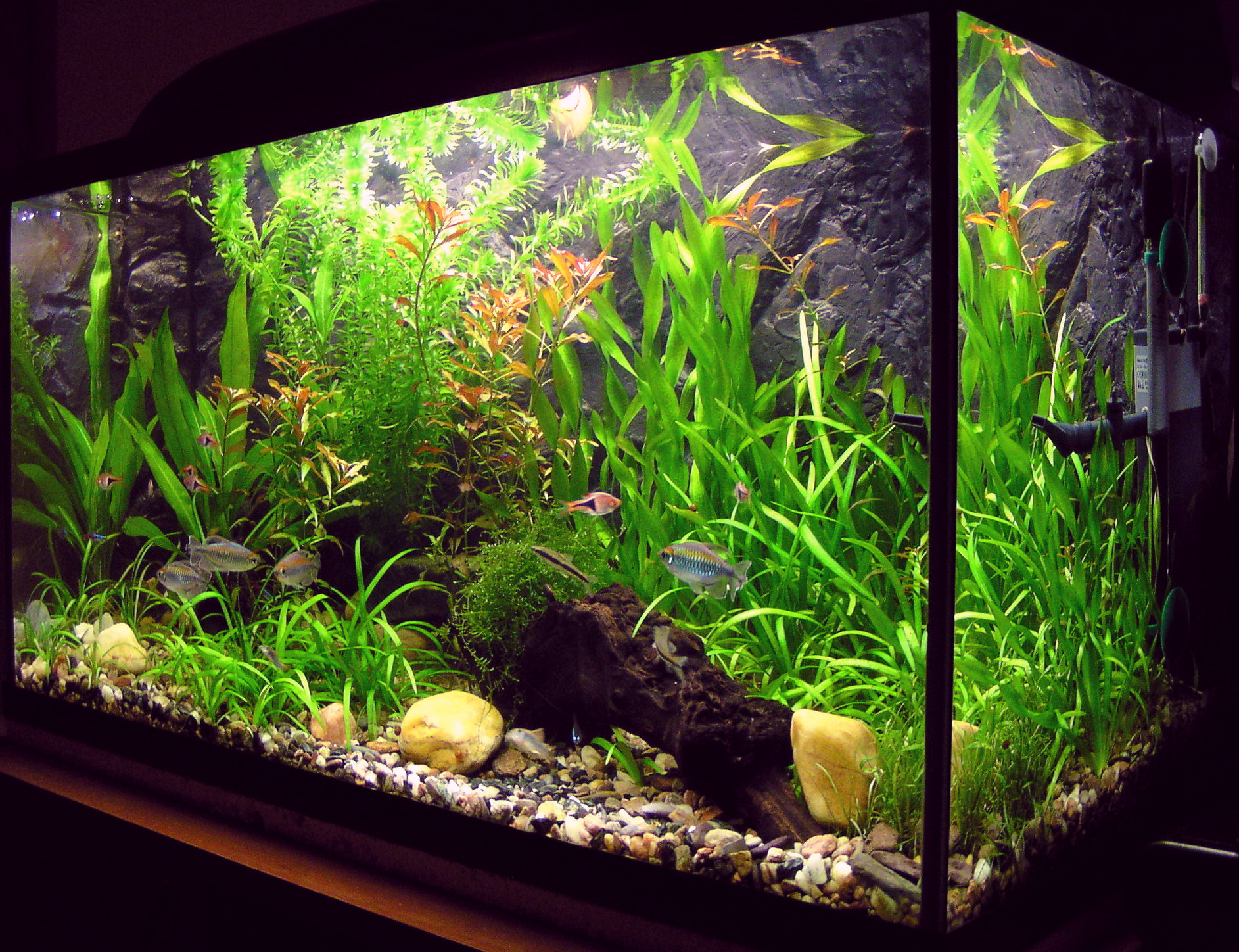
Go big and go planted. A larger tank dilutes waste, spreads the goldfish out, and, most important, gives shrimp somewhere to disappear. You want a jungle: dense moss, driftwood, rock piles, and thickets of stem plants that a goldfish can't push its body into. Bare gravel and a plastic castle won't cut it. Java moss and dense clumps of plants create the tangle shrimp hide in, and you can grab a starter portion with a quick search for aquarium java moss. Our best plants for shrimp tanks guide covers what actually holds up.
Pick a small, slow goldfish. A single round-bodied fancy, like a ranchu or a fantail, hunts far less effectively than a torpedo-shaped common or comet. Several compatibility guides point out that the fancy varieties are clumsier feeders, which works in the shrimp's favor. A tank full of fast single-tails is the worst case.
Establish the shrimp first, in numbers. Add a large group of shrimp to a mature, planted tank and let them settle and breed for weeks or months before the goldfish ever goes in. A colony that's already dense and hidden absorbs losses better than a handful of new shrimp dropped into a goldfish's territory. Read how to acclimate shrimp so the first batch survives the move.
Keep the goldfish well fed. A goldfish that's grazing on a full belly is a little less motivated to chase down a shrimp, though a well-fed goldfish will still eat one it stumbles on. Feeding well is damage control, not a fix.
Even with every one of these in place, treat the shrimp as a bonus rather than pets you're committed to. If you'd be upset to lose them, they don't belong in a goldfish tank.
What to Keep With Goldfish Instead
If your real goal is a cleanup crew for a goldfish tank rather than shrimp specifically, there are better fits. Nerite snails are hard-shelled, too big for a goldfish to swallow, and graze algae off the glass without breeding out of control in freshwater. They handle the same temperature range and don't care about the bioload the way shrimp do. Our nerite snail care guide covers keeping them, and they solve the "I want something eating algae in my goldfish tank" problem without feeding your invertebrates to your fish.
For the shrimp side, the answer is a dedicated tank with the right neighbors. Small, peaceful, upper-water fish like chili rasboras or a single betta in a well-planted setup coexist with shrimp far better than any goldfish will. Our best tank mates for cherry shrimp guide ranks the options from safest to riskiest.
Frequently Asked Questions
◆Will goldfish eat cherry shrimp?
Yes, in almost every case. Goldfish are opportunistic omnivores, and a cherry shrimp is small, slow, and soft. Adults get picked off over time and shrimplets are eaten almost immediately, so a cherry shrimp colony can't grow in a goldfish tank even if a few adults survive for a while.
◆Can ghost shrimp live with goldfish?
Ghost shrimp have the best odds of any shrimp, which is why they're often sold as feeders in the first place. In a large, heavily planted tank with a small fancy goldfish, some ghost shrimp survive and may breed. It's still a gamble, and you should expect to lose some. Treat them as a bonus, not a stable colony.
◆Do goldfish and shrimp need the same water temperature?
For fancy goldfish and cherry shrimp, roughly yes. Fancy goldfish like about 68 to 74F and cherry shrimp are comfortable near 72 to 73F, so they overlap. Cold-kept common goldfish and fussy Caridina shrimp are a worse temperature match. Temperature is rarely the reason this pairing fails; predation and water quality are.
◆What is the best shrimp to keep with goldfish?
Ghost shrimp, by a clear margin. They're large, fast, cheap, and clear, so fewer get spotted and eaten and losing a few doesn't hurt. Amano shrimp are a distant second on size alone, but care guides still list goldfish as a tank mate to avoid, and cherry shrimp are the worst choice of the three.
The Bottom Line
Goldfish and shrimp are a pairing you can attempt but shouldn't count on. Goldfish eat shrimp, out-produce them in waste, and grow into fish that treat a dwarf shrimp as a snack, and the tidy temperature objection you'll read everywhere barely applies to the fancy goldfish and cherry shrimp combo most people ask about. If you want the challenge, use ghost shrimp in a big, jungle-planted tank with a small fancy goldfish and accept that some will vanish. If you want a shrimp colony that actually grows, give them their own tank and pick from our best tank mates for cherry shrimp instead.
Found this helpful?
Check out our other shrimp care guides