Can Shrimp Live With Mollies? What Really Happens in a Shared Tank
Can shrimp live with mollies? Adult cherry shrimp often survive in a heavily planted tank, but mollies eat the babies, so you won't grow a colony.
📅 Published 2026-09-28
You've got a molly tank running well and you're wondering if a handful of cherry shrimp could join them to clean up algae and leftovers. It's a fair question, and the honest answer is a qualified yes. Adult shrimp can share a tank with mollies and live for months, as long as the tank is set up for it. What almost never works is keeping a breeding shrimp colony with mollies, because the babies disappear as fast as they're born.
So the real question isn't whether shrimp can survive mollies. It's what you want out of the shrimp. If you want a few adult cleaners in a community tank, mollies are workable. If you want a growing colony that fills the tank over a year, keep the shrimp on their own.
Quick Answer
Yes, adult cherry shrimp can live with mollies, but with two big caveats. First, mollies are omnivores that eat anything they can fit in their mouths, so baby shrimp get picked off almost completely and you won't grow a colony. Second, a molly is roughly four times the size of a cherry shrimp, so even adults need heavy cover to stay safe.
Water parameters are the easy part. Both mollies and Neocaridina shrimp (cherries, blue dreams, yellows) like hard, slightly alkaline water, so their needs overlap well around a pH of 7.5 to 8.0 and a temperature near 76F. The one thing to watch is salt: some keepers add aquarium salt for mollies, and that harms shrimp. Keep the tank fully freshwater if shrimp are in it. Bigger shrimp like amanos handle mollies better than tiny cherries.
Why Mollies and Shrimp Are a Tricky Mix
Mollies look peaceful, and toward other fish they usually are. The problem is their diet and their size, not their attitude.
Mollies are omnivores. In the wild and in the tank they graze algae and biofilm, but they also take protein wherever they find it, including insect larvae and small crustaceans. Aquarium Co-Op's molly care guide puts it plainly, warning that larger mollies kept with cherry shrimp "will most likely get eaten." AquariumNexus makes the same point from the shrimp's side, noting that invertebrates like cherry shrimp are part of a molly's food chain and that mollies "eat like there's no tomorrow." A molly doesn't need to be aggressive to be a problem. It just needs to be hungry and bigger than the shrimp.
And it is bigger. Most mollies grow to 3.5 to 4.5 inches, and sailfin varieties reach 5 to 6 inches, while a full-grown cherry shrimp sits at about an inch or a little less. PetMD lists molly adult size at 3 to 6 inches depending on species. That size gap is the whole story. An adult cherry shrimp is close to the upper limit of what a molly can swallow, which is why adults often survive when babies don't. A newborn shrimp the size of a comma is an easy snack.
This is the same pattern you see across the livebearer family. Our guide to whether shrimp can live with guppies lands in nearly the same place, because guppies and mollies hunt shrimp for the same reasons. Mollies are just larger, so the risk to adult shrimp is a notch higher.
Water Parameters: The Good News
Here's where mollies actually make a decent match. A lot of fish and shrimp pairings fail because one wants soft acidic water and the other wants hard alkaline water. Mollies and Neocaridina shrimp both want hard, alkaline water, so you can keep both happy at the same numbers.
| Parameter | Neocaridina shrimp | Mollies | Workable overlap |
|---|---|---|---|
| Temperature | 65 to 80F, best 72 to 76F | 72 to 82F, best 75 to 80F | Around 75 to 77F |
| pH | 6.5 to 8.0 | 7.5 to 8.5 | 7.5 to 8.0 |
| General hardness (GH) | 6 to 15 dGH | High, hard water preferred | Both like it hard |
| Salt | None, freshwater only | Tolerant, sometimes brackish | Only if kept salt free |
Molly parameters here come from PetMD and Aquarium Co-Op; shrimp parameters are the standard Neocaridina range echoed by The Shrimp Farm, Buce Plant, and other keeper guides. The temperature overlap is real but tight. Mollies do best a touch warmer than shrimp, and cherry shrimp kept at the warm end of their range burn through their lifespan faster and molt more often. Aim for about 76F and you land in both comfort zones. For the full breakdown of what shrimp need on their own, our shrimp water parameters guide covers each number in detail.
One warning that matters for Caridina keepers: this only works for Neocaridina. Caridina shrimp like crystal reds and blue bolts want soft, acidic water with a pH below 7, which is the opposite of what mollies want. Don't try mollies with Caridina. The parameter gap alone will stress one species or the other.
The Salt Problem
This is the detail that trips people up. Mollies are famous for tolerating and sometimes benefiting from a little salt, and many are bred in brackish water at the farm. PetMD notes that many molly species benefit from freshwater aquarium salt, with a target specific gravity around 1.004 if you use it. Aquarium Co-Op says the same, that plenty of mollies come from brackish stock and soft tap water can cause them trouble.
Cherry shrimp are strictly freshwater animals. Salt at the levels a molly might enjoy will stress them and eventually kill them. So you have to pick one plan. If you're keeping shrimp, run the tank as pure freshwater with a good remineralizer for hardness, skip the aquarium salt, and choose molly stock that's already living in freshwater at the store. Mollies do fine in freshwater when the water is hard and the pH is up, so you're not shortchanging them. You're just taking the salt option off the table because the shrimp can't handle it.
If a molly gets sick and you reach for a treatment, check the label the same way. Many fish medications contain copper, and copper kills shrimp even in trace amounts. Never dose copper in a shrimp tank, and move a sick fish to a hospital tank for any treatment rather than dosing the display. Our guide to what fish eat shrimp covers the broader predator picture, but medication is the quiet killer people forget.
Which Shrimp Survive Mollies Best
Not all shrimp face the same odds. Size is the deciding factor, so the bigger species do better.
| Shrimp | Adult size | Odds with mollies |
|---|---|---|
| Cherry (Neocaridina) | About 1 inch | Adults often survive in heavy cover; babies eaten |
| Amano | Up to 2 inches | Good; too big for most mollies to swallow |
| Ghost | 1.5 to 2 inches | Decent once full grown; cheap, so low stakes |
Amano shrimp are the safest bet. At close to 2 inches they're simply too large for a molly to eat, and they're strong algae grazers, which is often the job you wanted a cleanup crew for anyway. The catch is that amanos don't breed in freshwater, so there are no babies to lose in the first place. If your goal is a working cleanup crew rather than a colony, amanos with mollies is the pairing that gives you the fewest headaches. Read our amano shrimp care guide for their needs, which line up well with molly water.
Ghost shrimp fall in the middle. Full-grown adults handle mollies about as well as amanos, and they're cheap enough that losing a few doesn't sting. Their babies do get eaten, and even in a species tank ghost shrimp larvae are hard to raise, so you're not giving up much colony potential.
Cherry shrimp and the other Neocaridina colors are the ones people ask about most, and they're the trickiest. Adults survive in a well-planted tank, but you're keeping ornaments, not building a population. Every shrimplet that hatches is a target.
How to Give Shrimp the Best Odds
If you've decided to try it, a few setup choices swing the outcome a lot. None of them are optional if you care about the shrimp.
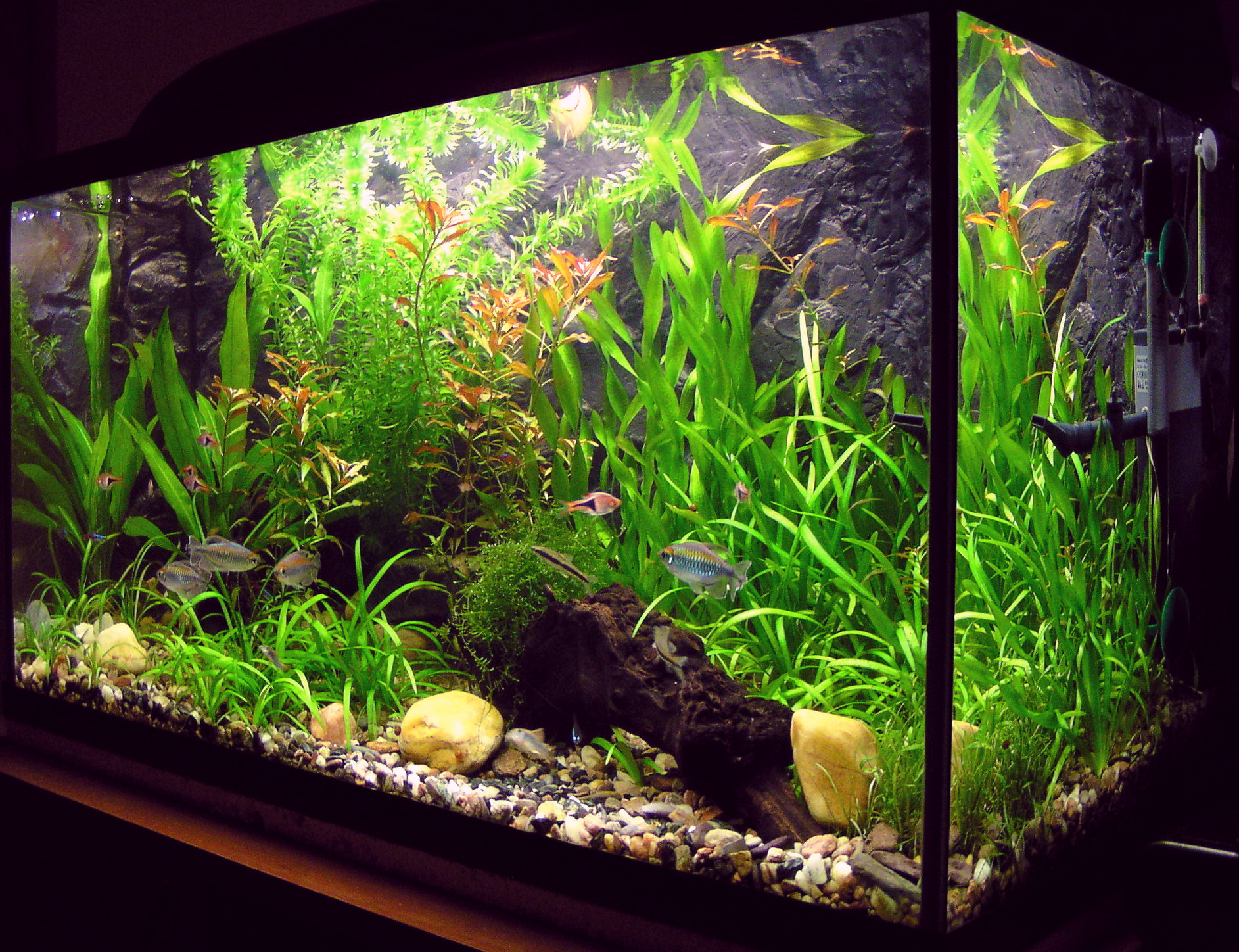
Plant it heavily first. Dense plants, moss, and hardscape are the whole game. Shrimp survive by staying out of open water, so give them a jungle. Java moss, a wall of stems, and some driftwood create the tangled cover where shrimp graze and babies hide. A bare tank with a plastic plant is a shrimp buffet.
Establish the shrimp before the mollies. Put shrimp in a mature, planted tank and let them settle and start grazing before fish arrive. Adding shrimp to a tank of hungry mollies that already own the space almost always ends badly. This is the same order we recommend for any fish and shrimp mix in our best tank mates for cherry shrimp guide.
Go bigger than the mollies alone need. Mollies want at least a 20 gallon, and 29 gallons or more for sailfins, because they're active and they grow. A larger footprint also means more surface area for biofilm and more room for shrimp to keep their distance. A 5 gallon shared between mollies and shrimp is too small for both.
Keep the mollies well fed. A molly that's grazing on quality food and blanched vegetables has less reason to hunt down a shrimp. It won't stop them entirely, but a fed molly is a lazier hunter than a hungry one.
Add more shrimp than you think you need. Losses are part of the deal. Starting with 15 or 20 shrimp instead of 5 means that even after the mollies take a few, you've still got a visible group. A group also behaves more boldly than a lonely pair.
Match your water and keep it stable. Use a remineralizer to hold GH in range and keep temperature steady near 76F. You can check your numbers with an API Freshwater Master Test Kit, which covers ammonia, nitrite, nitrate, and pH in one box. Stable water keeps molts clean, and a shrimp with a soft new shell right after molting is at its most vulnerable to a curious molly.
If you're building the plant cover from scratch, a search for aquarium moss and stem plants will turn up the fast-growing species shrimp use most.
What About Breeding?
This is the line in the sand. You will not raise a shrimp colony in a molly tank. Cherry shrimp breed readily and a healthy female carries 20 to 30 eggs, but a newborn shrimp is a speck a few millimeters long, and mollies patrol every surface looking for exactly that. AquariumNexus sums it up: when predators are around, the odds of a baby shrimp surviving are close to zero.
Heavy moss buys a handful of survivors here and there, and in a big, jungle-dense tank you might see the occasional juvenile grow up. It's the exception, not a plan. If your goal is a colony that fills the tank, the only reliable path is a dedicated shrimp tank with no fish. You can always run a small species tank for breeding and move a few adults into the community tank once they're big enough to hold their own. Our breeding cherry shrimp guide walks through setting that up.
Frequently Asked Questions
◆Will mollies eat adult cherry shrimp?
Sometimes. A molly can fit a full-grown cherry shrimp in its mouth, so a determined or hungry molly will try. In a heavily planted tank with well-fed mollies, most adult shrimp survive, but you should expect to lose a few, especially freshly molted shrimp with soft shells.
◆Do mollies and shrimp need the same water?
Mostly yes, which is what makes the pairing possible. Both Neocaridina shrimp and mollies like hard, slightly alkaline water, so a pH of 7.5 to 8.0 and a temperature near 76F suits both. The exception is salt: keep the tank freshwater for shrimp, and never pair mollies with soft-water Caridina shrimp.
◆Can baby shrimp survive with mollies?
Almost never. Baby shrimp are only a few millimeters long and mollies hunt them constantly. Even with dense moss, the vast majority get eaten within days. If you want shrimplets to survive, breed them in a separate tank with no fish.
◆Which shrimp is best to keep with mollies?
Amano shrimp. At close to 2 inches they're too big for a molly to eat, and they're excellent algae grazers. They don't breed in freshwater, so you're keeping them as cleaners rather than a colony, which fits a molly tank well anyway.
◆How many shrimp should I add to a molly tank?
Start with 15 to 20 rather than a handful. You'll lose some to the mollies, and a larger group behaves more boldly and stays visible. Add them to a mature, planted tank and let them settle before assuming the numbers you see are the numbers you have.
The Bottom Line
Can shrimp live with mollies? Adults can, in a big, heavily planted, salt-free tank with a well-fed molly group, and amano shrimp handle it best of all. What won't happen is a breeding colony, because mollies eat the babies as fast as they appear. Decide what you actually want first. For a cleanup crew, mollies and amanos get along fine. For a shrimp colony, give the shrimp a tank of their own and read our best tank mates for cherry shrimp guide to pick fish that won't treat your shrimp as lunch.
Found this helpful?
Check out our other shrimp care guides