Can Shrimp Live With Tiger Barbs? The Honest Answer
Can shrimp live with tiger barbs? Almost never. Barbs are fast, nippy fish that eat shrimp they catch, though adult amanos get a slim chance.
📅 Published 2026-10-27
Tiger barbs are one of the first fish a lot of people fall for: orange and black, always busy, cheap at any shop. So it's a fair question whether you can drop a few cherry shrimp in with them and call it a community tank. The short version is that you probably shouldn't, and this guide walks through why, where the rare exceptions sit, and what to do instead.
Shrimp and tiger barbs want roughly the same water, which is the part that fools people. The trouble isn't chemistry. It's that a tiger barb is a fast, curious, mouthy little fish that treats anything small and moving as a possible snack, and a dwarf shrimp is small and moving.
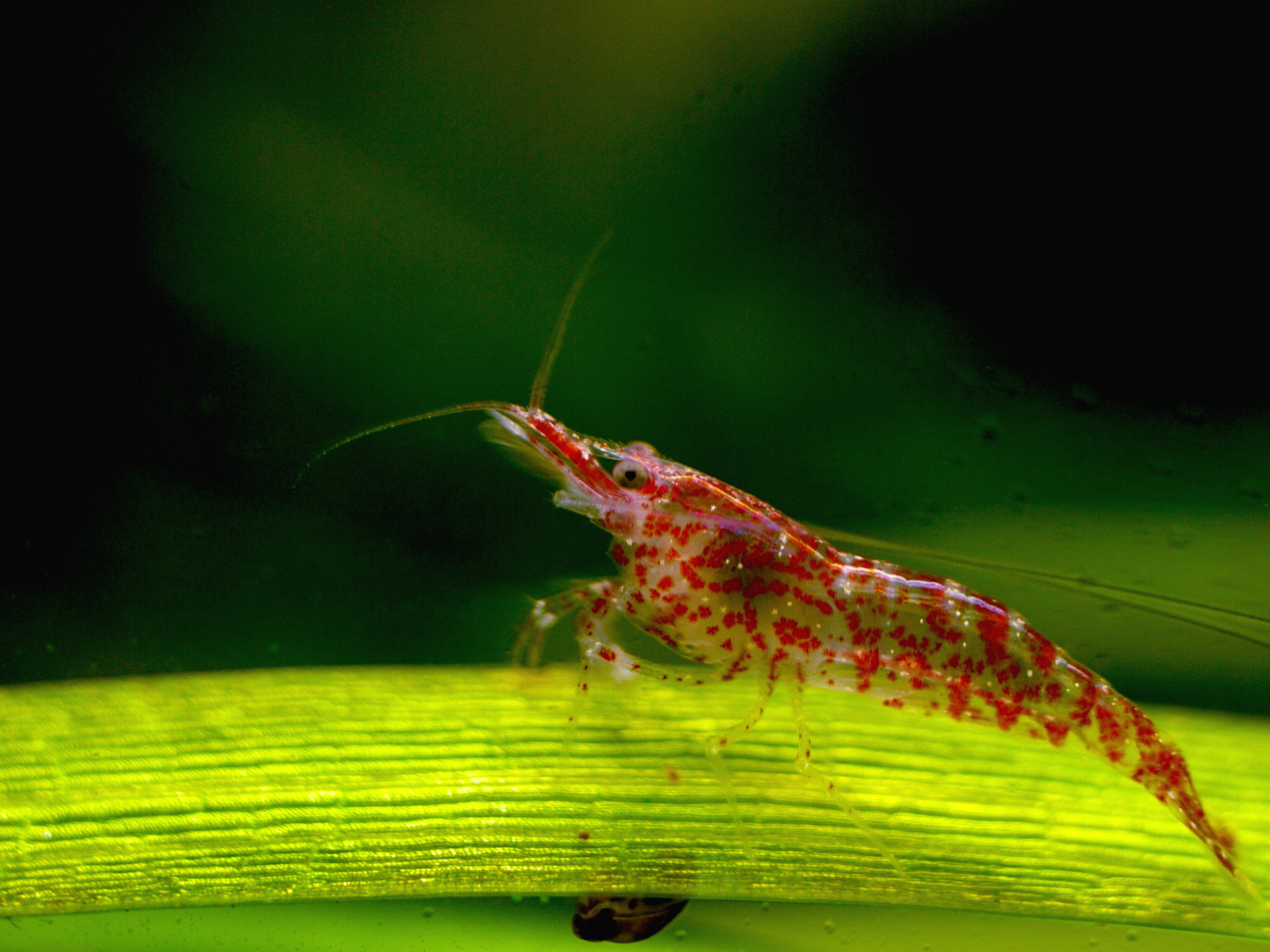
Quick Answer
Most of the time, no. Tiger barbs are semi-aggressive, fast, and happy to eat anything they can fit in their mouths, so cherry shrimp and any shrimplets will get picked off. Adult amano shrimp, which reach close to two inches, stand the best odds, and even they aren't safe in a tank full of hungry barbs.
If you still want to try, the only version with any chance is full-grown amanos, a large and heavily planted tank, and a big barb shoal that keeps the fish focused on each other instead of the shrimp. Expect losses, and don't count on a shrimp colony that can breed and grow. For a tank where shrimp actually thrive, skip the barbs.
Why Tiger Barbs and Shrimp Rarely Mix
Three things about tiger barbs make them a bad roommate for shrimp, and they stack.
First, they're fast and they hunt. Tiger barbs spend the day cruising the open water and poking into every corner. A cherry shrimp that leaves its moss to graze a leaf in the open is exactly the kind of movement that draws them in. The common keeper line, repeated on forum after forum, is that any fish big enough to get a shrimp in its mouth eventually will, and a 2.5 to 3 inch barb clears that bar for a 1 to 1.5 inch cherry with room to spare.
Second, they nip. Wikipedia's species page puts it plainly: tiger barbs "are often aggressive in numbers less than five, and are known fin nippers." That nipping instinct isn't limited to fins. Antennae, legs, and a soft freshly molted shrimp are all fair game to a fish wired to peck at things, and a shrimp doesn't have to be swallowed whole to die from a tankful of barbs taking bites.
Third, the aggression gets worse when the group is wrong. Under-school tiger barbs, or crowd them in a small tank, and they turn their energy on whatever else is in there. Several care guides make the same point: keep them in a proper group of six or more with enough space, and the fish mostly squabble among themselves. Keep three in a ten gallon and they'll harass everything, shrimp included. So the fix for barb aggression, a bigger shoal in a bigger tank, is also the setup that puts the most mouths in the water looking for shrimp.
Guidarium's compatibility profile rates a cherry shrimp's temperament at the bottom of the scale and a tiger barb's up in the semi-aggressive band, and calls the pairing possible only with caution: a large tank, lots of hiding spots, and close watching in the first few weeks. That's about as warm as any source gets on this match, and it still reads like a warning.
What a Tiger Barb Actually Is
It helps to know the fish you're weighing against your shrimp. Tiger barbs (Puntigrus tetrazona, once listed as Puntius tetrazona) come from the rivers of Sumatra and Borneo in Indonesia. They've been an aquarium staple for decades, which is why they're everywhere and cheap.
| Trait | Tiger barb |
|---|---|
| Adult size | 2.5 to 3 inches common in tanks, up to about 4 inches |
| Temperament | Semi-aggressive, fin nipper |
| Group size | Six or more (some sources say 8 to 10) |
| Minimum tank | 20 to 30 gallons |
| Temperature | Roughly 74 to 82F |
| pH | 6.0 to 7.5 |
| Hardness | 5 to 19 dGH |
| Lifespan | 5 to 7 years |
Sources don't all agree on the numbers. On size, most care guides put the usual adult at 2.5 to 3 inches, while Wikipedia's range runs to about 4 inches in good conditions. On the shoal, Wikipedia and several guides say six or more, while others push for 8 to 10 to spread the aggression thinner. The direction is the same whichever number you trust: this is an active, pushy, mid-sized fish that needs company of its own kind and plenty of room.
On diet, every source calls them omnivores that take flakes, pellets, and live or frozen foods like brine shrimp, daphnia, and bloodworms. Their wild diet is less settled, with some sources listing aquatic insects, worms, and other small invertebrates, and at least one claiming mostly phytoplankton. For our purposes the captive picture is what matters, and a fish that eagerly eats frozen brine shrimp and bloodworms isn't going to overlook a live shrimp it can catch.
The Verdict by Shrimp Species
Not all shrimp face the same odds, because size is most of the story.
Cherry shrimp and other neocaridina, at roughly 1 to 1.5 inches full grown, are the wrong size entirely. They're slow, they graze in the open, and they're the exact snack a barb is built to grab. A handful might survive for a while by living deep in a mat of moss, but the colony won't grow, because every shrimplet that hatches is bite-sized for weeks.
Amano shrimp are the one shrimp with a real argument. A full-grown female amano pushes close to two inches, which is a lot of shrimp to fit in a barb's mouth, and amanos are faster and bolder than cherries. In a big, planted tank a group of adult amanos can often hold their own against a barb shoal. Even then, a newly molted amano is soft and vulnerable, and a juvenile amano is still shrimp-sized prey. Amanos don't breed in freshwater either, so you never have babies at risk, which is part of why they fare better. Our amano shrimp care guide covers what a healthy adult group needs.
Baby shrimp of any species are lost. This isn't specific to barbs: almost every fish eats shrimplets, which is why a breeding colony wants a tank with no fish at all, or one with only the smallest, most peaceful species. A tank of tiger barbs is one of the worst places a shrimp fry could hatch into.
For the full list of who eats what, our guide on what fish eat shrimp lays it out, and larger barbs sit squarely on the side that picks off shrimp.
Water Parameters: The One Thing That Lines Up
Here's the twist that trips people up. With a lot of risky tank mates, like angelfish or discus, the water itself is part of the problem, because those fish want it warmer than shrimp like. Tiger barbs are different. They do fine in the mid-to-high 70s Fahrenheit, in slightly acidic to neutral water of moderate hardness, and that happens to overlap with what neocaridina and amano shrimp tolerate.
Neocaridina are comfortable from the upper 60s into the high 70s, and amanos take a similar band. Tiger barbs sit around 74 to 82F by Wikipedia's figures, with the mid-to-high 70s cited most often by care guides, at pH 6.0 to 7.5. Park both at about 76F and a near-neutral pH and neither one is stressed by the water.
So if you ever read that tiger barbs and shrimp "can" live together, this is the grain of truth behind it. The chemistry can be made to fit. The behavior is the dealbreaker, not the parameters, and no amount of perfect water changes the fact that a barb will eat a shrimp it catches.
If You Want to Try It Anyway
Some people will run the mix regardless, usually because they already have the barbs and want cleanup shrimp. If that's you, stack every odd you can in the shrimp's favor and go in expecting to lose some.
Use adult amanos only. Buy them at full size, not as juveniles, and don't bother with cherries or other small neocaridina unless you're fine with them being live food.
Make the tank big and planted. A larger footprint gives shrimp places to be that aren't near a barb, and dense planting isn't optional here. Pack it with moss, a tangle of stems, and floating cover so there's always a shadow within a shrimp's reach. A thick portion of java moss is the cheapest way to build the kind of jungle shrimp hide in, and our best plants for shrimp tanks guide covers the rest.
Keep a full barb shoal. Six is a floor, more is better, because a proper group keeps the barbs chasing and displaying at each other instead of patrolling for shrimp. A small, nervous group is the version most likely to turn the whole tank into a hunting ground.
Feed the barbs well. A barb with a full belly is a little less interested in working for a hidden shrimp. It won't stop a determined fish, but fed barbs beat hungry ones.
Even with all of that, treat the shrimp as a bonus population, not a colony. You might keep a dozen adult amanos ticking along for cleanup. You won't grow a self-sustaining shrimp colony in a tiger barb tank.
A Better Setup for Both
The honest recommendation is to stop trying to make one tank do two jobs. Shrimp and tiger barbs each do better apart.
Give the shrimp their own tank. A small, filtered, planted species-only setup is where a shrimp colony actually multiplies, and it's cheap to run. A starter group of ten can turn into dozens in a few months with no fish around to thin the babies.
If you want fish with your shrimp, pick peaceful nano species instead. Small, small-mouthed, calm fish like otocinclus, pygmy corydoras, chili rasboras, and small tetras share a shrimp tank far better than barbs do, and even those will take the odd shrimplet. Our best tank mates for cherry shrimp guide ranks the safe options, and our look at keeping shrimp with dwarf gouramis shows how to size up a semi-aggressive fish the same way we've sized up barbs here.
If you're set on tiger barbs, build the tank around them with tough, fast, similarly sized tank mates and leave the shrimp out. It's a livelier tank than a shrimp jar, just a different hobby.
Frequently Asked Questions
◆Will tiger barbs eat cherry shrimp?
Yes, in most tanks. Cherry shrimp are small enough to swallow and slow enough to catch, and tiger barbs are fast, curious hunters. A few cherries might survive by hiding in heavy plants, but the colony won't grow because every baby shrimp gets eaten.
◆Can amano shrimp live with tiger barbs?
Adult amanos have the best chance of any shrimp, since a full-grown one is close to two inches and hard to swallow. In a large, heavily planted tank with a proper barb shoal, adult amanos often hold their own. Juveniles and freshly molted amanos are still at risk, so it's never a sure thing.
◆Do tiger barbs and shrimp need different water?
No, and that's the surprise. Both are fine in the mid-to-high 70s Fahrenheit at a near-neutral pH, so the water can suit both at once. The problem is behavior, not chemistry. Matching the water doesn't stop a barb from eating a shrimp it catches.
◆What shrimp can live with tiger barbs?
If you insist on the mix, full-grown amano shrimp are the only reasonable pick, and only in a big, planted tank with a full barb shoal and realistic expectations. Skip small neocaridina like cherries or blue dreams, and forget a breeding colony, since shrimplets won't last a day.
The Bottom Line
Tiger barbs and shrimp want the same water, which is why the question comes up, but a tiger barb is a fast, nippy fish that eats what it can catch, and a dwarf shrimp fits that description. Cherry shrimp and babies get picked off; only adult amanos in a big, planted, properly stocked tank stand a real chance, and even they're a gamble. If you want a shrimp colony that grows, give it a tank without barbs, and build any barb tank around tougher company. For the peaceful fish that do belong with shrimp, start with our best tank mates for cherry shrimp guide.
Found this helpful?
Check out our other shrimp care guides