Can Shrimp Live With Killifish? It Depends on the Species
Can shrimp live with killifish? With tiny clown killis or lampeyes, often yes. With a golden wonder, no. The species by species breakdown for shrimp keepers.
📅 Published 2026-10-26
You have a planted shrimp tank, you have seen a photo of a clown killifish hanging at the surface like a floating candy cane, and you want both in the same glass box. Reasonable. The catch is that "killifish" is not one fish. It is a label stretched across more than a thousand species that run from a surface sprite shorter than your fingernail to a striped ambush hunter with a mouth built to grab.
So the honest answer to "can shrimp live with killifish" rests entirely on which killifish you mean. Pick a tiny micropredator and you can run it over a breeding cherry colony with only the smallest shrimplets at real risk. Pick a golden wonder and you are feeding shrimp to it one at a time. This guide splits the family into the ones worth trying and the ones to keep far away from an invertebrate tank.
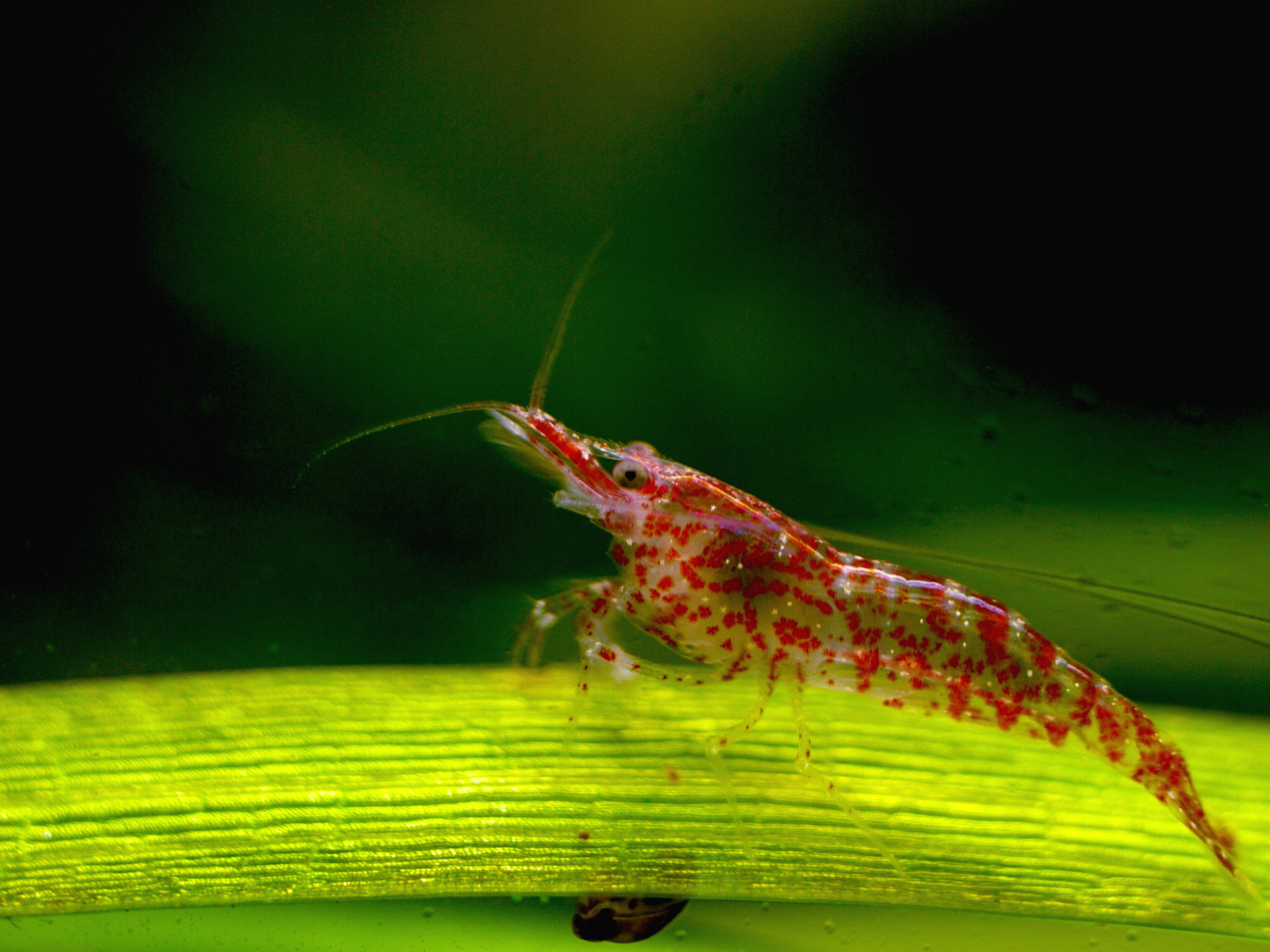
Quick Answer
Some killifish do fine with adult dwarf shrimp and some will hunt them, so the species is the whole question. The small surface dwellers, clown killifish (Epiplatys annulatus) and Norman's lampeye (Poropanchax normani), are the realistic shrimp-tank choices. Their mouths are too small to swallow a grown cherry shrimp, and they spend their day at the top of the water while shrimp graze the bottom, so the two rarely cross paths. Expect them to eat the odd newborn shrimplet.
Larger killifish are a different animal. A golden wonder killifish (Aplocheilus lineatus) reaches 3 to 4 inches with a wide, upturned mouth, and several care sources list small shrimp among its prey. Keep shrimp away from any killifish bigger than roughly 1.5 inches, give the small species a heavily planted tank with moss, and accept that no fish in a shrimp tank is ever fully shrimplet-proof.
Killifish Are a Family, Not a Fish
The word covers the egg-laying toothcarps, a sprawl of over a thousand described species across several continents. Some are annual fish from African pools that dry out every year, living fast and dying young. Others are steady community fish you can keep for years. They share a body plan and a reputation for color, and almost nothing else that matters to a shrimp keeper.
What matters is size and mouth. A fish that tops out at an inch and eats daphnia is no threat to a one-inch adult shrimp, because it physically cannot get the shrimp down. A fish that reaches four inches and ambushes prey at the surface will treat your colony as a buffet. Between those poles sits a middle tier of two-inch killis that can take shrimplets and freshly molted adults but struggle with a hard-shelled grown shrimp. Sorting any killifish into one of those three buckets tells you most of what you need before you ever check a care sheet.
One more thing to settle up front. The sources that rate fish pairings lean on general temperament tags, not on controlled trials, so treat every "safe" verdict as an odds statement rather than a promise. Individual fish vary, and a hungry fish of any species behaves worse than a well-fed one.
The Shrimp-Safe End: Clown Killifish and Lampeyes
◆Clown killifish (Epiplatys annulatus)
This is the killifish most shrimp keepers actually want, and the one most likely to work. Clown killis, also sold as rocket killifish or banded panchax, are tiny. Care guides put the adult length at about 1.2 to 1.5 inches, and even that includes a lot of tail. Practical Fishkeeping calls them a jewel for planted nano tanks, and that is the setup they belong in.
They live at the very top of the water column almost all the time, which is the single best thing about them for a shrimp tank. Your shrimp graze the substrate, hardscape, and lower plants; the killis patrol the surface film. The overlap is small by design. They are micropredators, taking baby brine shrimp, daphnia, copepods, and other tiny live or frozen foods, and they ignore the sinking pellets and wafers your shrimp work on.
On shrimp specifically, the compatibility sites rate the clown killi and cherry shrimp pairing as workable with caution, and they flag the same wrinkle every time: a clown killi is a fry predator. A grown cherry shrimp is safe, but a day-old shrimplet drifting near the surface is fair game. In a heavily planted tank with moss and floating cover, enough shrimplets survive out of sight that a colony still grows. In a sparse tank, the killis will crop the next generation hard. If you are counting on steady breeding, read our guide to raising shrimplets and build in more cover than you think you need.
Two practical notes. Clown killis are shoaling fish that do best in groups of six to ten or more, so plan for a group, not a pair. And they jump. Every care source stresses a tight lid, because a surface fish this small slips through small gaps. A snug aquarium mesh lid solves both the jumping and the problem of a shrimp tank's low water line tempting them over the rim.
◆Norman's lampeye (Poropanchax normani)
Lampeyes are the other small surface fish the hobby files under killifish, even though taxonomists put them in their own group. Norman's lampeye is a peaceful schooler with a glowing blue-green eye ring, and it earns a better shrimp reputation than most killis. The Shrimp Farm, a shrimp specialist, lists it as generally safe to keep with shrimp, and hobby care guides agree it is calm enough for a nano community with small inverts.
Like the clown killi, it stays near the top, wants a group of six or more, jumps, and needs a mature, fully cycled tank because it reacts badly to ammonia and nitrite swings. It takes the same small foods. The shrimplet caveat still applies, just more mildly, since a lampeye is a gentle feeder rather than an eager hunter. For a keeper who wants movement and a splash of color above a cherry colony without much predation risk, the lampeye is arguably the safest killifish-type fish on the menu.
There is also the least killifish (Heterandria formosa), which wears the killifish name but is actually a tiny livebearer. It is one of the smallest fish in the hobby, peaceful, and about as shrimp-safe as a fish gets, with only shrimplets at any risk. If the name drew you in but the egg-laying killis feel fussy, it is worth a look.
The Shrimp-Eating End: Golden Wonders and Bigger Killis
The golden wonder killifish is the fish that gives the whole family its predatory name among shrimp keepers, and the warning is earned. Aplocheilus lineatus reaches 3 to 4 inches, hangs at the surface, and carries an upturned mouth adapted to grab anything that lands or swims within reach. Care sources describe it as an opportunistic predator and list neon tetras, guppy fry, and small shrimp as the kind of tankmates it eats. Compatibility ratings put the golden wonder and cherry shrimp pairing squarely in the "not recommended" column, tagged as a shrimp eater.
The point is not the golden wonder alone. It stands in for every killifish past the two-inch mark. Gardner's killifish (Fundulopanchax gardneri), a popular and hardy striped species around 2.5 inches, lands in the cautious middle: pairing guides rate it possible with shrimp but warn of behavioral clashes and a real risk to shrimplets and smaller adults. A bigger or more aggressive killi than that is simply a predator you are asking to live with prey.
If a killifish can fit a shrimp in its mouth, assume that over months it will, no matter how peaceful it looks on a good day. The safe side of the line is drawn by size, and it sits low.
The Water Parameter Catch
Predation is only half the compatibility question. The other half is whether the two animals want the same water, and with killifish that gets interesting.
Many killis, clown killis included, come from soft, acidic blackwater. Care guides spread their numbers out, which is worth knowing: some put clown killi pH as low as 4.5 to 6.5, others at 6.0 to 7.5, with general hardness anywhere from 1 to 8 dGH depending on the source. The sources disagree, but they all point the same direction, toward soft and slightly acidic.
That soft, acidic profile is a near-perfect match for Caridina shrimp such as crystal reds and bees, which also want roughly pH 5.8 to 6.8 and low hardness. On paper, a clown killi and a crystal red colony like the same tank. The problem is that Caridina shrimp are the delicate, pricier end of the hobby, and adding any fry predator over a slow-breeding Caridina colony is a gamble with expensive shrimp. Our Caridina vs Neocaridina guide lays out why the two shrimp types need such different water.
Neocaridina shrimp like cherries are the forgiving, fast-breeding ones most people pair with fish, and they prefer neutral to slightly hard water, around pH 7 to 8 with more minerals. That overlaps the harder, more neutral end of a clown killi's tolerance but not its ideal. In practice keepers run clown killis with cherries at a compromise near neutral, and both do fine, because both are adaptable within reason as long as the water stays stable. You are not hitting either animal's bullseye; you are finding the band they share. A fast-breeding Neocaridina colony also shrugs off shrimplet losses in a way a Caridina colony cannot, which makes cherries the more sensible shrimp to risk even though the parameter match is looser.
How to Stack the Odds if You Try It
If you decide on one of the small killis over a shrimp colony, a few moves tilt the result your way.
Go heavy on plants. Moss, floating plants, and dense low growth give shrimplets places to hide where a surface fish never looks, and they break the open water a killi needs to chase. This is the difference between a colony that keeps growing and one that flatlines. Our best plants for shrimp tanks guide covers the species that do the most work here.
Start with an established, breeding colony, not a fresh handful. If shrimp are already reproducing faster than the fish can crop them, the odd lost shrimplet never dents the group. Adding a few killis to a mature colony is very different from dropping shrimp into a tank that already holds fish.
Keep the fish well fed. A full killi scavenges and loafs; a hungry one hunts. Regular small feedings of the tiny foods they prefer keep their attention off anything shrimp-sized.
Keep the water stable and the lid tight. These small killis dislike sudden swings, and they jump, so a mature tank and a close-fitting cover protect both the fish and the colony. For the full picture on choosing invert-safe tankmates, our roundup of the best tank mates for cherry shrimp sets the clown killi and lampeye in context with the other safe options.
A Quick Compatibility Table
| Killifish | Adult size | With adult shrimp | With shrimplets | Verdict |
|---|---|---|---|---|
| Clown killi (Epiplatys annulatus) | 1.2 to 1.5 in | Safe | Will eat some | Good, with heavy cover |
| Norman's lampeye (Poropanchax normani) | ~1.5 in | Safe | Low risk | Best of the bunch |
| Least killifish (Heterandria formosa) | ~1 in | Safe | Low risk | Very shrimp-safe |
| Gardner's killi (Fundulopanchax gardneri) | ~2.5 in | Some risk | Will eat | Caution only |
| Golden wonder (Aplocheilus lineatus) | 3 to 4 in | Eats them | Eats them | Avoid |
Frequently Asked Questions
◆Will clown killifish eat cherry shrimp?
A clown killifish cannot swallow a grown cherry shrimp; its mouth is too small, and it stays at the surface while adult shrimp graze the bottom. It will eat newborn shrimplets it finds near the top. In a well-planted tank enough shrimplets survive to keep a colony growing.
◆What is the most shrimp-safe killifish?
Norman's lampeye is the safest common choice. It is a peaceful, small surface schooler that a shrimp specialist rates as generally safe with shrimp, with only shrimplets at any real risk. Clown killifish run a close second when the tank has plenty of moss and cover.
◆Can shrimp live with golden wonder killifish?
No. A golden wonder reaches 3 to 4 inches with a wide, upturned predatory mouth, and care sources list small shrimp among its prey. It will pick off adult cherry shrimp over time, so keep the two in separate tanks.
◆Do killifish and shrimp need the same water?
Often yes, which helps. Many killis, including clown killis, prefer soft, slightly acidic water that matches Caridina shrimp well and overlaps the neutral end of what Neocaridina tolerate. Aim for stable readings in the band both animals share rather than either one's exact ideal.
◆Will killifish eat my shrimp fry?
Almost any killifish will take shrimplets that wander into open water, even the small, peaceful species. The fix is cover, not a different fish. Dense moss and floating plants hide enough of each generation that a fast-breeding colony stays ahead of the losses.
The Bottom Line
Can shrimp live with killifish? Yes, with the right killifish. Stick to the small surface dwellers, the clown killi and Norman's lampeye, and you get color above a cherry colony at the cost of a few shrimplets. Step up to a golden wonder or anything past an inch and a half, and you have put a predator in with its prey. Match the water to the band both share, plant the tank thick, start with an established colony, and the small killis earn their place. For everything else that pairs well with a shrimp tank, compare notes with our guide to keeping shrimp with guppies, another top-dwelling fish that works for the same reasons.
Found this helpful?
Check out our other shrimp care guides