Can Shrimp Live With Tetras? A Species by Species Answer
Can shrimp live with tetras? Embers are safest, neons and cardinals leave adults alone but eat babies, and four common tetras are predators. Species by species.
📅 Published 2026-09-10
"Tetra" covers well over a hundred species sold in the hobby, from an ember tetra you could lose in a teaspoon to a Congo tetra the length of your palm. So the honest answer to "can shrimp live with tetras" is that it depends on which tetra, and on whether you care about the babies.
The short version: ember tetras are the safest, neon and cardinal tetras are usually fine with adult shrimp and reliably eat shrimplets, and black skirt, serpae, Buenos Aires, and Congo tetras are shrimp predators you shouldn't pair with dwarf shrimp at all.
Quick Answer
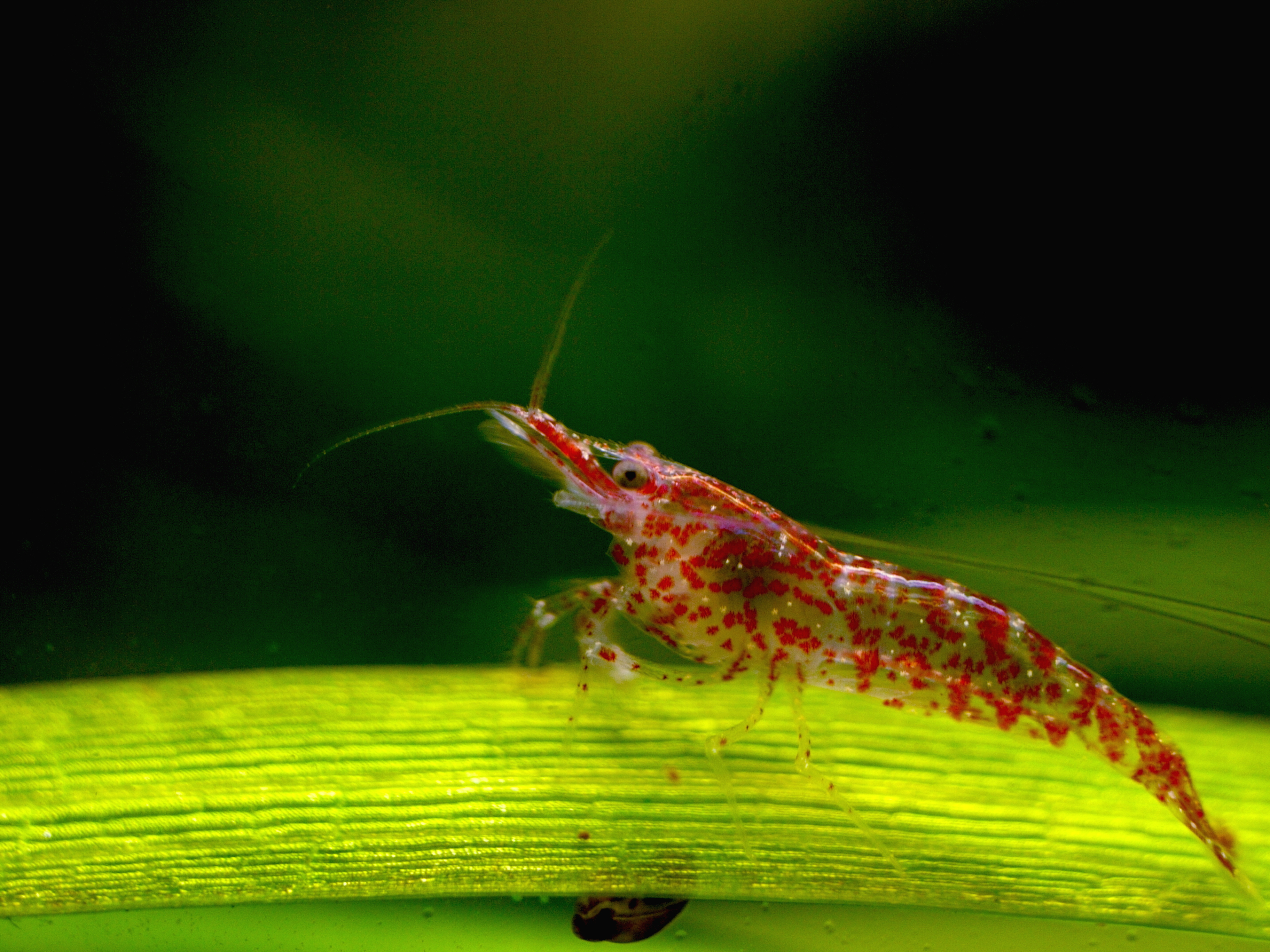
Yes, shrimp can live with tetras, as long as the tetra is small. Neon, cardinal, ember, glowlight, and rummy nose tetras have mouths too small to eat an adult cherry shrimp and will mostly ignore them. Every one of them will eat baby shrimp, which are about 2 mm long at birth and look like food to any fish.
Larger or nippier tetras are a different story. Black skirt, Buenos Aires, and Congo tetras reach 3 inches and treat a cherry shrimp as a meal. Serpae tetras are smaller but aggressive and hunt anything they can catch. If you want a breeding colony, keep the tetras small, the moss thick, and the fish well fed, or keep the shrimp on their own.
Tetra and Shrimp Compatibility Table
Sizes are adult lengths from Aquarium Co-Op, Fishkeeping World, and Wikipedia; where they disagree, the range is given.
| Tetra | Adult size | Adult shrimp | Baby shrimp | Verdict |
|---|---|---|---|---|
| Ember | 0.8 to 1 in | Safe | Will eat some | Safest tetra for shrimp |
| Neon | 1.25 to 1.5 in | Usually safe | Will eat them | Fine for a display tank |
| Cardinal | 1.75 to 2 in | Usually safe | Will eat them | Fine for a display tank |
| Glowlight | 1.5 to 2 in | Usually safe | Will eat them | Fine for a display tank |
| Rummy nose | 2 to 2.5 in | Usually safe | Will eat them | Fine, needs warm water |
| Serpae | 1.6 to 1.75 in | Risky | Will eat them | Skip |
| Black skirt | Up to 3 in | Eats them | Eats them | Predator |
| Buenos Aires | Up to 3 in | Eats them | Eats them | Predator |
| Congo | 2.75 to 3 in | Eats them | Eats them | Predator |
"Usually safe" means what it says. Aquariadise reports that neon tetras occasionally gang up on an adult cherry shrimp, and Aquarium Co-Op's cardinal sheet says they leave adults alone "as long as there are plenty of hiding spots." A freshly molted shrimp in a bare tank is fair game for anything.
Ember Tetras: The Safest Tetra for a Shrimp Tank
Ember tetras (Hyphessobrycon amandae) top out at 0.8 inch by the Aquarium Co-Op sheet, or "about an inch" by Aquariadise. Either way they're smaller than an adult cherry shrimp, and their mouths are built for tiny slow sinking food. Aquarium Co-Op lists dwarf shrimp as tank mates and says embers leave the adults alone. Aquariadise goes further and calls them safe with "even the smallest adult cherry shrimp."
They still eat shrimplets, as every fish does. But an ember's mouth is small enough that shrimplets past their first week or two are already too big for it, which makes embers the tetra most likely to coexist with a growing colony.
Care lines up too. Embers want 72 to 82F and a pH of 5.5 to 7.5; cherry shrimp are happy at 65 to 85F and pH 6.5 to 8. Set the tank at 74F and pH 6.8 to 7.0 and both are in range. Keep at least 6 to 10 embers; a small group hides.
Neon and Cardinal Tetras With Shrimp
These are the tetras most people are asking about, and the answer is the same for both.
Neon tetras reach 1.25 inches (Aquarium Co-Op) to 1.5 inches (Fishkeeping World). Cardinal tetras are a little larger at 1.75 to 2 inches. Both have small mouths, both are peaceful midwater fish, and both are listed as compatible with cherry shrimp by Fishkeeping World, Aquarium Co-Op, and most keepers on Fishlore. An adult cherry at 1 to 1.5 inches is a lot of shrimp for a neon to tackle.
Baby shrimp are another matter. Fishkeeping World's FAQ on the pairing says neons "will gladly eat cherry shrimp fry," and Aquarium Co-Op's cardinal sheet says they "opportunistically eat baby shrimp." That's the whole trade-off with neons and cardinals in one sentence: your adults are fine, your birth rate takes a hit.
One water chemistry note. Neons and cardinals come from soft, acidic blackwater. Neon sheets give pH 6.0 to 7.0; cardinal sheets range from 4.0 to 7.5, with Fishkeeping World calling 4.6 to 6.2 ideal. Cherry shrimp sheets bottom out at pH 6.5 and 4 dGH. The workable overlap is pH 6.5 to 7.0 with a GH around 6 to 8. Don't chase the cardinal's ideal range if you have shrimp; the shrimp will pay for it in failed molts.
Glowlight and Rummy Nose Tetras
Two more small tetras that act like neons around shrimp.
Glowlight tetras reach 1.5 to 2 inches, stay peaceful, and shoal in groups of 5 or more. Same rule as neons: adults safe, babies eaten.
Rummy nose tetras are the biggest fish in the "usually safe" group at 2 inches (Wikipedia) to 2.5 inches (Fishkeeping World). They're tight schoolers, peaceful, and small mouthed, but they want warm water. Wikipedia gives 75 to 88F, the upper end of the cherry shrimp range, so expect shorter shrimp lifespans and faster breeding. Keep at least six in 20 gallons or more.
Serpae Tetras: Small but Nippy
Serpae tetras (Hyphessobrycon eques) are only 1.6 to 1.75 inches, which would put them in the safe group on size alone. Behavior is the problem. Wikipedia describes them as "notoriously and widely known to be aggressive both to conspecifics and community aquarium tankmates," and every care sheet warns about fin nipping.
That aggression carries over to shrimp. Aquarium Source and other serpae sheets say small shrimp are "very often viewed as prey" and that only larger species like amanos are safe with them. Keeping 6 to 10 or more redirects the nipping inward, but that's about protecting other fish. For shrimp, skip them.
Black Skirt, Buenos Aires, and Congo Tetras: Shrimp Predators
These three are what people mean by "tetras eat shrimp."
Black skirt tetras (also sold as black widow tetras, and the base species for GloFish tetras) grow to 3 inches. Wikipedia lists their natural diet as "small crustaceans, insects, and worms," and a cherry shrimp is a small crustacean. There are threads on Fishlore of black skirts eating cherry shrimp outright, and Aquariadise says plainly that a black skirt is large enough to chase down and kill an adult cherry.
Buenos Aires tetras also reach 3 inches, and they come with two extra problems. They eat plants, starting with the soft leaved ones and working through your hairgrass and moss, so the cover you'd rely on disappears. And they bully anything smaller when underfed or kept in small groups. A shrimp has no chance.
Congo tetras are the biggest of the group, with males at 3 inches and females around 2.75. They're peaceful toward other fish, but care sheets are consistent: they eat anything that fits in their mouths, they chase small shrimp, and a Congo tank is no place for cherries.
If you want shrimp with any of these, the only candidates are amano shrimp at 2 inches or bamboo shrimp at 3 inches or more, added as adults. Our best tank mates for cherry shrimp guide lists what to keep with cherries instead.
What "Fine With Adults, Eats Babies" Means for a Breeding Colony
This phrase shows up in every tetra sheet and it's easy to read past. Here's what it does to a colony.
A cherry shrimp is about 2 mm long at birth and reaches roughly 10 mm, or 0.4 inch, at 4 to 6 weeks. Until then it's smaller than a neon's mouth and looks like a daphnia. A school of neons will find most shrimplets that wander into the open. The survivors are the ones that never left the moss.
In a shrimp only tank, a healthy female carries 20 to 30 eggs, they hatch in roughly 25 to 35 days, and most of the babies make it. With small tetras present, the adults keep breeding, so the colony doesn't crash, but it stops growing the way it would on its own. Fishkeeping World, Fishtopics, and Aquariadise all land in the same place: if breeding is the goal, small tetras aren't the ideal tank mate, and if the tank is planted heavily enough, some babies get through anyway.
Whether that's a problem depends on what you want. For a display tank where you'd cull anyway, tetras are free population control. If you're breeding for sale or for a color line, tetras cost you most of your growth. Our guide on how to raise shrimplets covers how to tip the odds back, including pulling berried females to a grow out tank.
Cover and Moss Density
If you're keeping shrimp with any tetra, moss is the difference between a colony that holds and one that dwindles.
A shrimplet's survival strategy is to never be seen. It needs a three dimensional tangle where a fish can't follow: java moss, Christmas moss, or subwassertang, packed dense enough that you can't see through it. A thin layer of moss glued to a rock is decoration. A fist sized clump is habitat. Aquariadise recommends java moss and dwarf hairgrass specifically, and keepers who report colonies breeding alongside neons describe the same thing: a tank you can barely see the back of.
Rough guide for a 10 gallon with a small tetra school:
- •At least two clumps of moss the size of your fist, ideally tied to wood so they don't drift.
- •A carpet or a corner of dwarf hairgrass or a similar fine leaved ground cover.
- •Leaf litter. Indian almond leaves give shrimplets a place to graze biofilm under cover.
- •Some hardscape with gaps too tight for a fish.
A portion of java moss is one of the cheapest plants in the hobby. Our best moss for shrimp tanks guide compares the options.
Feeding So Your Tetras Don't Hunt
A hungry fish looks harder. This is true of every species on the list, and it's the one variable you fully control.
Feed the tetras once or twice a day, small amounts they finish in a minute or two. Micro pellets or crushed flake that stays in the water column keeps them busy up top instead of picking over the substrate. A well fed neon still eats a shrimplet that swims past its face, but it doesn't go looking.
Feed the shrimp separately and out of the tetras' reach. A sinking Hikari algae wafer dropped into the moss or behind the wood gets to the shrimp before the fish notice it. Feed it two or three times a week and remove leftovers after a few hours. Don't overfeed to keep the fish "full." Extra food rots, ammonia rises, and shrimp are far more sensitive to that than tetras.
Matching Water for Tetras and Shrimp
Most small tetras and cherry shrimp overlap comfortably.
| Cherry shrimp | Neon tetra | Cardinal tetra | Ember tetra | |
|---|---|---|---|---|
| Temperature | 65 to 85F | 70 to 81F | 73 to 84F | 72 to 82F |
| pH | 6.5 to 8.0 | 6.0 to 7.0 | 4.0 to 7.5 | 5.5 to 7.5 |
| Hardness | 4 to 14 dGH | 2 to 10 dGH | Soft to moderate | Very soft to moderate |
A tank at 74 to 76F, pH 6.8 to 7.0, and GH 6 to 8 is inside every range on that table. The mistake to avoid is drifting toward the tetras' soft, acidic preference. Cherry shrimp need dissolved minerals to build a shell, and a tank at pH 6.0 and GH 2 will grow beautiful cardinals and produce shrimp that die in the molt. If your tap water is soft, remineralize it for the shrimp; tetras tolerate moderate hardness far better than shrimp tolerate the absence of it.
If you're weighing tetras against livebearers, our can shrimp live with guppies guide covers the other common pairing.
Frequently Asked Questions
◆Will neon tetras eat cherry shrimp?
Neon tetras almost never eat an adult cherry shrimp, which at 1 to 1.5 inches is close to their own size and far too big for their mouths. They do eat baby shrimp readily. Expect your adults to be fine and your colony to grow slowly or hold steady rather than expand.
◆What is the safest tetra to keep with shrimp?
Ember tetras. At 0.8 to 1 inch with tiny mouths, they can't harm an adult shrimp and can only take the smallest shrimplets. They want 72 to 82F and pH 5.5 to 7.5, which overlaps with cherry shrimp, and a school of 8 to 10 fits in a 10 gallon shrimp tank.
◆Can cardinal tetras live with shrimp?
Yes. Cardinals reach 1.75 to 2 inches and leave adult dwarf shrimp alone when there's cover, though they eat shrimplets. The catch is water chemistry: cardinals prefer pH below 6.5, and shrimp need it above. Keep the tank around pH 6.8 and moderate hardness, and both will manage.
◆Which tetras should never be kept with shrimp?
Black skirt, Buenos Aires, and Congo tetras, all of which reach about 3 inches and eat adult cherry shrimp. Serpae tetras are smaller but aggressive enough to hunt shrimp anyway. With any of these, the only shrimp with a chance are adult amanos or bamboo shrimp.
The Bottom Line
Small tetras and adult shrimp get along; small tetras and baby shrimp don't, and the big tetras eat everything. Pick embers if breeding matters, neons or cardinals for a display tank with a stable shrimp population, and keep the predators in a different tank. Then plant it thick, because moss density is what turns "usually safe" into a colony that actually grows. For more on building that colony, our guide to breeding cherry shrimp is the next read.
Found this helpful?
Check out our other shrimp care guides