Can Shrimp Live With White Cloud Minnows? A Cool Water Guide
Can shrimp live with white cloud minnows? Yes, if you keep the tank cool. Here is the temperature overlap, the risk to shrimplets, and how to set it up.
📅 Published 2026-10-17
Most of the fish people pair with dwarf shrimp are tropical, so you pick a temperature that suits the fish and hope the shrimp cope. White cloud mountain minnows flip that around. They are a cool water fish, happiest in the same mild range that neocaridina shrimp do well in, so for once the fish and the shrimp want the same thermostat setting.
That makes white clouds one of the easier small fish to keep with a shrimp colony, with two honest caveats. The tank has to stay on the cool side, and any baby shrimp that hatch are fair game. This guide covers where the two species overlap, where they don't, and how to build a tank that keeps both happy.
Quick Answer
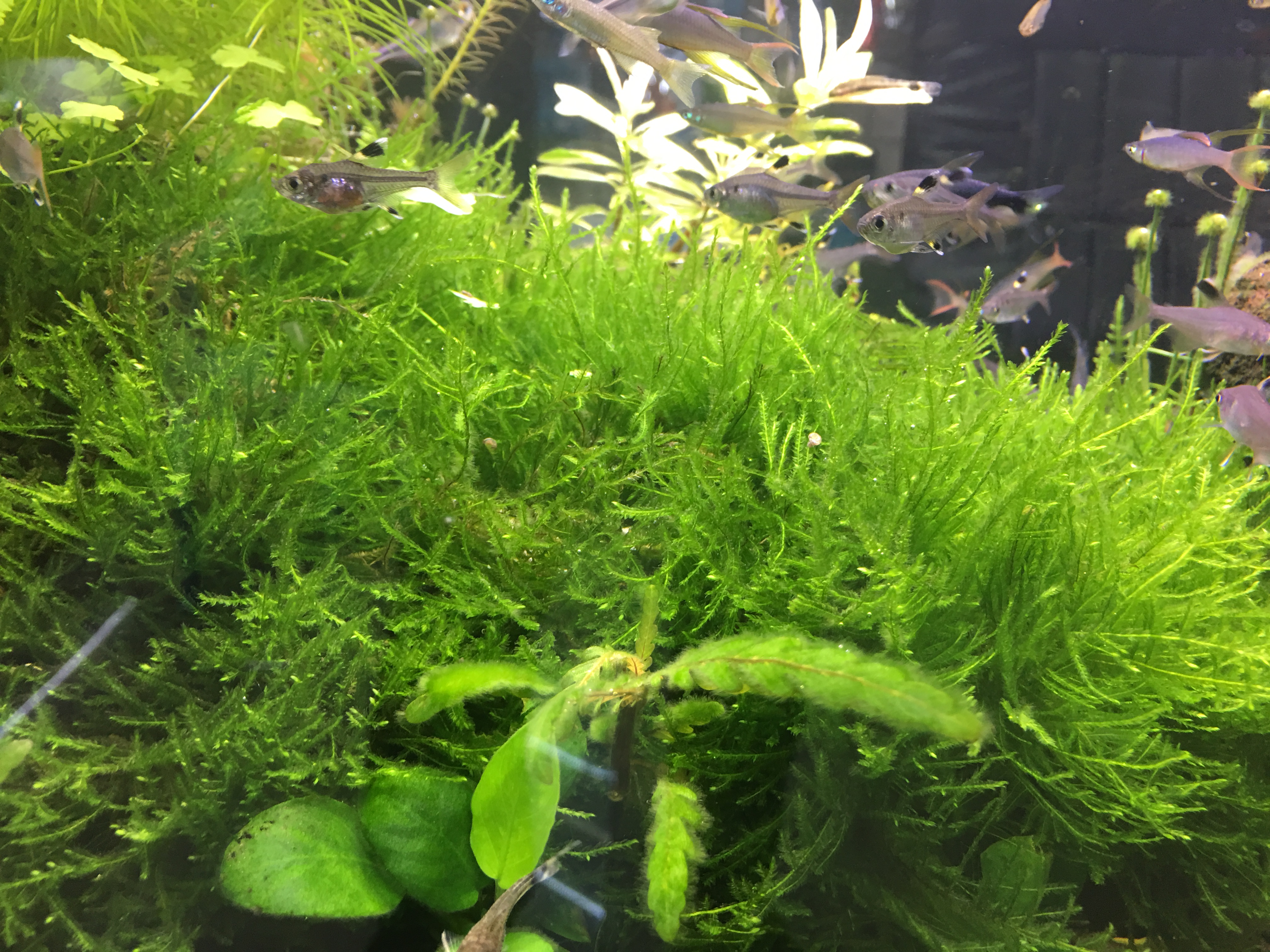
Yes, adult cherry shrimp and other neocaridina can live with white cloud mountain minnows, and the pairing works better than most shrimp and fish combinations because both like cool water. White clouds are small, peaceful, and not built to chase down a grown shrimp. The catch is shrimplets. White clouds pick off baby shrimp that drift into open water, so a colony only grows if the tank is heavily planted and the shrimp breed faster than the fish can eat them.
Keep the water around 68 to 72°F, give the tank dense moss and plants, add a lid because white clouds jump, and feed the fish well so they pester the shrimp less. Do that and you can run a busy community tank with no heater at all in most homes.
What Makes White Cloud Minnows Different
The white cloud mountain minnow (Tanichthys albonubes) is a small cyprinid from southern China. Seriously Fish lists its maximum size at about 40 mm, or 1.6 inches, and most of the ones you buy stay nearer 1.5 inches. It swims in loose shoals, shows a bright lateral stripe and red fin edges, and spends most of its time in the middle and upper water.
Two things set it apart from the usual shrimp tankmates. The first is temperature, which gets its own section below. The second is temperament. White clouds are gentle fish that rarely nip, and the compatibility databases that rate aggression put them near the bottom of the scale. They are closer to a schooling nano fish than to a predator, and that calm streak is why they work around shrimp.
One warning before you buy. Seriously Fish notes that heavy inbreeding in farm raised stock has left many white clouds genetically weak and prone to disease or deformity. Buy from a shop with healthy, active fish rather than the cheapest batch you can find, because a weak fish is more likely to arrive with something it can pass to the rest of the tank.
White clouds are also committed jumpers. They sit high in the water and will launch through any gap, so a lid or a tight hood is not optional. That matters in a shrimp tank, where people sometimes run an open top to fit a hang on back filter or a light arm.
The Temperature Overlap Is the Whole Story
Here is the reason this pairing comes up at all. Shrimp and white clouds share a comfort band that sits at room temperature in a lot of homes, so you can skip the heater.
Neocaridina are not strictly tropical. Their wild range in eastern China and Taiwan runs through seasons, and keepers report colonies shrugging off cool spells. Hobby care guides converge on roughly 65 to 78°F, with the low to mid 70s as the sweet spot for breeding and shell health. Our shrimp tank temperature guide works through the full range and why the upper end is riskier than the lower end.
White clouds pull the other way. Seriously Fish gives them 14 to 22°C, which is 57 to 72°F. This is where sources start to disagree. Several care guides stretch the top of the range to 24 or 25°C, around 75 to 77°F, but they also warn that the fish fade in color and live shorter lives when kept warm. Seriously Fish makes the same point plainly, that permanent exposure to warmer water is likely to shorten their lifespan. So treat anything above the low 70s as tolerated, not ideal.
| Temperature | Neocaridina shrimp | White cloud minnows |
|---|---|---|
| 60 to 64°F | Fine, slower breeding | Ideal, bright color |
| 65 to 72°F | Comfortable, good breeding | Comfortable |
| 73 to 77°F | Comfortable, faster but shorter lives | Tolerated, color fades |
| 78°F and up | Upper limit, stress climbs | Too warm, lifespan drops |
The shared zone is roughly 68 to 72°F, and that is the number to aim for. It is warm enough that cherry shrimp breed steadily and cool enough that white clouds stay healthy and keep their color. In most heated homes a tank will settle right about there on its own, which is the whole appeal: a planted community with shrimp and a small school of fish, no heater, no tropical temperature fight.
The flip side is the failure mode. If you push the tank up to 78 to 82°F for some other reason, maybe a tropical centerpiece fish or a warm room in summer, the white clouds are the ones that suffer. And if you let it ride cold through winter, down into the upper 50s, the shrimp keep living but breeding slows to a crawl. The pairing only pays off when you commit to the cool middle.
Will White Cloud Minnows Eat Your Shrimp?
Adult neocaridina are safe with white clouds. A grown cherry shrimp is too big and too armored for a 1.5 inch minnow to swallow, and white clouds are not aggressive enough to harass one. In a planted tank the adults and the fish mostly ignore each other, with the shrimp grazing the bottom and hardscape while the fish shoal up top.
Shrimplets are a different matter. A newly hatched cherry shrimp is a speck a couple of millimeters long, and that is exactly the size of food white clouds hunt in the wild. Any baby that strays into open water is likely to be eaten. This is the same trade off you get with almost every fish, and it is why our best tank mates for cherry shrimp guide treats small peaceful fish as compatible with the colony, not with every individual shrimp.
The way around it is cover, and lots of it. A thick carpet of moss, a tangle of plants, and some leaf litter give shrimplets places to hide and graze where the fish cannot follow. In a tank set up like that, enough babies survive to keep the colony growing, even though you will never see the survival rate of a shrimp only tank. The rule of thumb keepers use is simple: the colony has to breed faster than the fish can eat. A mature neocaridina colony in a well planted tank usually can. Our how to raise shrimplets guide covers the hiding spots and feeding that tip the odds toward the babies.
If you want the highest shrimplet survival, start the shrimp colony first and let it establish for a couple of months before the fish go in. Add the white clouds only once the shrimp are breeding and you have a visible population across several size classes. A big, settled colony absorbs predation that would wipe out a handful of new shrimp.
Matching the Rest of the Water
Temperature is the headline, but the other parameters have to line up too. The good news is that both species are forgiving and their ranges overlap cleanly.
| Parameter | Neocaridina shrimp | White cloud minnows |
|---|---|---|
| pH | 7.0 to 8.0 | 6.0 to 8.5 |
| GH | 6 to 8 dGH | 5 to 20 dGH |
| Temperature | 65 to 78°F | 57 to 72°F |
| Ammonia / nitrite | 0 | 0 |
Neocaridina like neutral to slightly alkaline water with enough minerals to harden their shells, and white clouds tolerate a broad pH from 6.0 to 8.5, with neutral being fine. Keep the GH in the single digits to the mid teens and both are content. The one line that never moves is ammonia and nitrite, which must read zero for shrimp; the fish are hardier there, but a shrimp tank gives you no slack.
Before you mix the two, confirm your water sits in the shared band. An API Freshwater Master Test Kit covers ammonia, nitrite, nitrate, and pH, and a liquid GH test fills in the hardness. For the full shrimp side of the picture, our cherry shrimp care guide lays out the target numbers and how to hit them with tap or remineralized water.
Because the temperature window is narrow, a reliable aquarium thermometer earns its keep here more than in a heated tank. A heated tank holds a set point. An unheated one drifts with the room, and you want to catch a summer creep toward 78°F before the white clouds start to pale.
Setting Up a Shrimp and White Cloud Tank
A few setup choices make the difference between a colony that grows and one that slowly vanishes.
Tank size. Sources differ on the floor. Some retailers call a 10 gallon enough for a small school, while Seriously Fish prefers a footprint of about 60 by 30 cm, roughly 14 US gallons. For a shrimp and fish community, lean toward the larger end. A 15 to 20 gallon gives the shrimp room to build numbers, the fish room to shoal, and a water volume that stays steadier through the day.
School size. White clouds are shoaling fish and get timid and washed out when kept in twos and threes. Here the sources split again. Many care guides set the minimum at six, while Seriously Fish recommends a group of ten or more. Either way, buy them as a group, not as singles, and a larger school both looks better and spreads the fish out so no single shrimp area gets patrolled too hard.
Plants and hardscape. This is where shrimplets live or die. Pile in moss, which doubles as grazing surface and nursery. Our best moss for shrimp tanks guide compares the options, with java moss being the usual workhorse. Add some leaf litter and a piece of driftwood or cholla, and give the fish open swimming space above the plant line so the two species use different parts of the tank.
Filtration. A gentle filter protects shrimplets from being sucked in. A sponge filter is the classic shrimp choice, and it suits white clouds fine since they are not strong current lovers.
Lid. Worth repeating, because white clouds jump. Cover the tank, and mind any gaps around cords and the filter.
Feeding. Feed the fish properly with a quality micro pellet or flake plus the occasional frozen treat. A well fed white cloud is far less interested in chasing shrimplets than a hungry one. Feed the shrimp their own food on the bottom, where the fish are less likely to clean it out first.
Neocaridina or Caridina With White Clouds?
The guide so far assumes neocaridina, the cherry shrimp family, because they are the most common and the easiest match. On temperature alone, caridina such as crystal reds and Taiwan bees are an even better fit for white clouds, since caridina also prefer cooler water in the high 60s to low 70s. Our caridina vs neocaridina comparison covers the differences in full.
The complication is chemistry. Caridina need soft, acidic water, often pH 5.8 to 6.8 over an active soil substrate, which sits at the low edge of what white clouds accept. You can keep white clouds in a caridina tank on temperature, but for most people a neocaridina tank in the neutral range is the simpler, more forgiving home for both.
Frequently Asked Questions
◆Can white cloud minnows and cherry shrimp live together?
Yes. Adult cherry shrimp are safe with white clouds because the fish are small, peaceful, and cannot eat a grown shrimp. Both like cool water around 68 to 72°F, so the temperatures match better than most shrimp and fish pairings. The only real loss is baby shrimp, which the fish will eat unless the tank is heavily planted.
◆Will white cloud minnows eat baby shrimp?
Yes, they eat shrimplets that wander into open water. A newly hatched shrimp is the size of the tiny prey white clouds hunt naturally. A thick carpet of moss and plants lets enough babies hide and survive, so a mature colony keeps growing even with the fish present, just more slowly than in a shrimp only tank.
◆Do white cloud minnows need a heater with shrimp?
Usually not. White clouds prefer 57 to 72°F and neocaridina are comfortable from the mid 60s up, so a room temperature tank around 68 to 72°F suits both without a heater in most homes. Watch for summer heat instead, since white clouds fade and live shorter lives above the mid 70s.
◆How many white cloud minnows should I keep with shrimp?
Keep them as a school. Care guides set the minimum around six, and Seriously Fish recommends ten or more. A bigger school is calmer and more colorful, and it spreads the fish across the tank so they do not concentrate on any one shrimp area. Pair that school with at least a 15 to 20 gallon tank for a shrimp community.
◆Are white cloud minnows aggressive toward shrimp?
No. White clouds are among the most peaceful community fish and almost never nip. They ignore adult shrimp and spend their time shoaling in open water. The predation on shrimplets is ordinary feeding behavior, not aggression, and it is managed with cover rather than by trying to change the fish.
The Bottom Line
White cloud mountain minnows are one of the few fish that genuinely want the same water as your shrimp. Hold the tank at 68 to 72°F, plant it heavily, cap it with a lid, and feed both species well, and you get a cool water community where adult neocaridina thrive and a steady trickle of shrimplets grows up in the moss. Expect to lose some babies to the fish, start the shrimp colony first so it can absorb that, and you have a tank that needs no heater and runs itself. For the next step, line up your parameters with the cherry shrimp care guide before the fish go in.
Found this helpful?
Check out our other shrimp care guides